Claude Sonnet 4.6 Drops, SaaSpocalypse Wipes $1T, Adani Bets $100B, Pentagon vs. Anthropic
Anthropic releases a mid-tier model that matches flagship performance at a fraction of the cost — accelerating the very disruption that just erased a trillion dollars from software stocks. India's richest man pledges $100 billion for AI infrastructure. The Pentagon threatens to cut ties with Anthropic over weapons safeguards. And Google sets the date for I/O 2026. Here's what enterprise leaders need to know this Tuesday.
1. Anthropic Releases Claude Sonnet 4.6 — Flagship Performance at One-Fifth the Cost
Anthropic on Tuesday released Claude Sonnet 4.6, a mid-tier model that VentureBeat called "a seismic repricing event for the AI industry." The new model matches or exceeds the performance of many flagship models — including its own Opus 4.6, released just twelve days earlier — while costing approximately one-fifth as much to run. Sonnet 4.6 is now the default model for all Free and Pro plan users on Claude.ai.
The improvements are broad and significant. Anthropic emphasized stronger capabilities in coding, instruction-following, computer use, long-context reasoning, agent planning, and design tasks. SiliconANGLE reported that the model adds "stronger computer-use skills, long-context reasoning, agent planning and improved performance for knowledge work and design." For the free tier, Anthropic is also unlocking file creation, connectors, skills, and compaction — features previously reserved for paid users.
The computer use improvements are particularly notable. Bloomberg reported that Anthropic's new model "is better at using computers," building on the company's 2024 introduction of screen-analysis capabilities that enable AI to browse the web and take actions autonomously. OpenAI and Google have since launched competing computer-use models, but Anthropic's iterative refinement has kept it at the frontier of agentic capabilities.
"Performance that would have previously required a flagship model is now available at the mid-tier," 9to5Mac noted, adding that Anthropic now uses Sonnet 4.6 by default with "file creation, connectors, skills, and compaction" included for free users.
The pricing implications are staggering. VentureBeat's framing as a "seismic repricing event" reflects a broader industry dynamic: as mid-tier models approach flagship quality, enterprise customers face a fundamental question about whether premium pricing for top-tier models remains justified. Sonnet 4.6 is priced identically to its predecessor Sonnet 4.5, meaning the performance-per-dollar ratio has jumped dramatically without any price increase.
Source: TechCrunch, VentureBeat, CNBC, SiliconANGLE, Bloomberg
This release crystallizes a trend we've been tracking: the "good enough" tier of AI is getting very, very good. For enterprises currently paying premium rates for flagship models, Sonnet 4.6 is a wake-up call — you may be overpaying for capabilities you can now access at 80% lower cost. The enhanced computer use and agent planning features are especially relevant for businesses building automated workflows. Our recommendation: audit your current model usage immediately. If you're running Opus-class models for tasks that Sonnet 4.6 can handle (and that's likely most of them), you could be cutting your AI compute costs by 80% this quarter. The free tier improvements also matter — they lower the barrier for employees to experiment with AI-assisted work, which accelerates internal adoption.
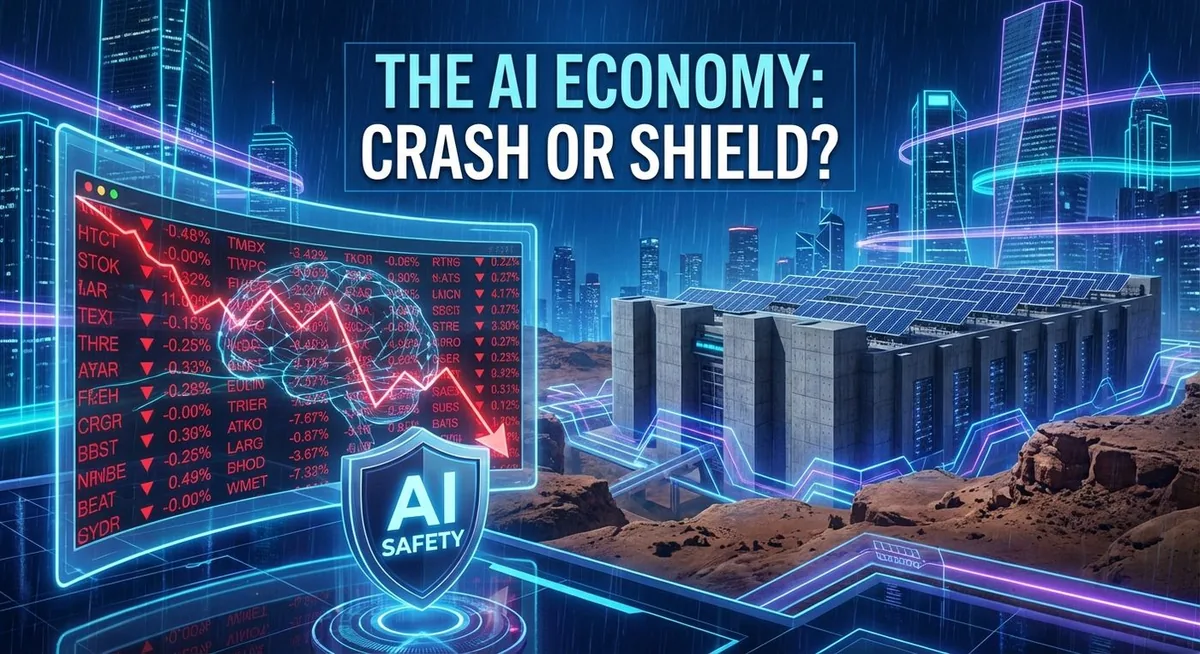
2. The "SaaSpocalypse": $1 Trillion Erased From Software Stocks as AI Agents Threaten SaaS
Wall Street is in the grip of what Jefferies traders have dubbed the "SaaSpocalypse" — a massive, ongoing selloff in enterprise software stocks that has erased an estimated $1 trillion in market capitalization since early February. J.P. Morgan reported that some $2 trillion has been wiped from software market caps broadly, as investors rapidly reprice the entire sector in light of AI agent capabilities that threaten to replace large swaths of traditional SaaS functionality.
The rout was triggered in large part by Anthropic's Claude Cowork product launch and similar agentic AI announcements from OpenAI and Google, which demonstrated that AI systems can now perform many of the tasks that companies currently pay subscription software to handle. Stocks of major SaaS firms — including Salesforce, Workday, Atlassian, and ServiceNow — fell sharply as investors questioned whether AI agents could replace large parts of their business models.
The Straits Times reported that the selloff has spread beyond equities into corporate debt markets, with "the massive decline in SaaS stocks triggering a major sell-off in the industry's debt over fears the disruption will crush revenue growth of tech companies that relied heavily on borrowing." Private software companies have begun releasing earnings early in an attempt to calm investor nerves.
Fortune's analysis was blunt: the wipeout happened because "investors banked that 'almost every tech company would come out a winner'" from the AI revolution. Instead, a new reality is emerging — one where AI infrastructure companies (energy, chips, cloud) gain while traditional software vendors face existential disruption. Axios noted that tech companies are projected to issue over $1 trillion in debt to fund AI goals this year alone, even as the market questions whether those investments will pay off.
"Nearly $1 trillion in market cap exits the sector," reported MarketMinute, noting that "the rotation into energy, utilities, and AI infrastructure highlights a new market reality where physical constraints — like power and hardware — are more valuable than virtual ones."
Source: Fortune, The Straits Times, Axios, Reuters
The SaaSpocalypse isn't just a stock market story — it's a strategic planning signal for every enterprise. If Wall Street is repricing SaaS companies because AI agents can do what their software does, then enterprises should be asking the same question: which of our software subscriptions could be replaced or augmented by AI agents? This doesn't mean ripping out Salesforce tomorrow, but it does mean your next software renewal should include an AI alternatives analysis. The companies that will thrive are those that embed AI deeply into their products (and pricing); the ones that don't will see their value propositions erode. For enterprises in distribution, eCommerce, and manufacturing — sectors heavily dependent on SaaS tools for operations — this is the moment to start building an AI-first software strategy.
3. Adani Pledges $100 Billion for Renewable-Powered AI Data Centers by 2035
In the biggest infrastructure announcement to emerge from the India AI Impact Summit, Indian conglomerate Adani Group said it will invest $100 billion over the next decade to build renewable-powered, AI-ready data centers across India. The pledge, announced during Day 2 of the summit in New Delhi, is expected to create a $250 billion AI infrastructure ecosystem in India, according to the company.
The scale is staggering — $100 billion would make this the largest single AI infrastructure investment ever announced by a non-tech company, dwarfing even the hyperscaler commitments from Microsoft, Google, and Amazon. Reuters reported that Adani Enterprises will build the centers powered by renewable energy, positioning the investment as both an AI play and a green energy initiative.
The announcement comes as India's AI Impact Summit enters its second day, with Prime Minister Narendra Modi and French President Emmanuel Macron both using the event to assert their countries' AI ambitions. Bloomberg reported that Modi is "seizing the AI summit to assert India's global ambitions after a tough year," while TechCrunch noted that Indian startup Sarvam launched its "Kaze" model during the event.
However, The Register offered a note of caution, observing that Adani's plan calls for a "slower pace than Big Tech companies plan to bring their own bit barns online" — suggesting the decade-long timeline is a hedge against the rapid pace of change in AI hardware requirements. Critics also note that Adani Group continues to face questions stemming from a 2023 short-seller report, though the company has denied all allegations of wrongdoing.
"The blockbuster investment is expected to create a $250 billion AI infrastructure ecosystem in India over the next decade," CNBC reported, adding that the announcement underscores India's bid to gain a stronger foothold in the global AI race.
Source: TechCrunch, Reuters, CNBC, Bloomberg
Adani's $100 billion bet signals that AI infrastructure is becoming a geopolitical asset, not just a commercial one. For enterprises with global operations, this reshapes the compute geography: Indian data centers powered by cheap renewable energy, staffed by Indian engineers, and supported by favorable government policy could become a serious alternative to US and European cloud regions within 3-5 years. The renewable energy angle is also significant — as ESG requirements tighten, having your AI workloads running on green power becomes a compliance advantage, not just a PR talking point. Companies in manufacturing and distribution with existing India operations should start evaluating how local AI compute could reduce latency and costs for their Asian supply chains.
4. Pentagon Threatens to Cut Ties With Anthropic Over AI Weapons Safeguards
The tension between Anthropic's safety-first positioning and the realities of government contracting reached a breaking point this week. CNBC reported that the Pentagon is pushing four AI companies to let the military use their tools for "all lawful purposes," including weapons development, intelligence collection, and battlefield operations — and Anthropic has not agreed to those terms.
The dispute centers on Anthropic's usage restrictions for its Claude models. While Claude was used during the U.S. military's operation to capture Venezuelan leader Nicolás Maduro in January, Anthropic has maintained that certain applications — particularly those involving lethal autonomous weapons — fall outside its acceptable use policy. The Pentagon, backed by the Trump administration, is now reviewing whether to continue the relationship entirely.
The Hill reported that the Pentagon is "reviewing its relationship with Anthropic over the terms of use of its AI model," while Bloomberg noted that talks about extending the contract "snagged on AI for surveillance and weapons." Yahoo News reported that "Trump administration officials are now considering cutting ties with Anthropic over the company's limits on its contract."
The situation puts Anthropic in an impossible position: maintaining safety restrictions risks losing one of the world's most important customers, while relaxing them would undermine the trust-based brand the company has spent years building — a brand that just drove an 11% spike in consumer signups after its Super Bowl campaign.
"The Pentagon is pushing four AI companies to let the military use their tools for 'all lawful purposes,' including in areas of weapons development, intelligence collection and battlefield operations," CNBC reported, "but Anthropic has not agreed to those terms."
Source: TechCrunch, CNBC, The Hill, Bloomberg
This story matters far beyond defense contracting. It establishes a precedent for how AI companies handle government pressure to relax safety restrictions — and every enterprise should be watching closely. If Anthropic caves, it signals that commercial pressure will always override safety commitments. If it holds firm, it validates the "responsible AI" brand as a durable competitive moat. For enterprises in regulated industries evaluating AI vendors, this is a litmus test: does your AI partner have the conviction to say no to their biggest customer? The answer to that question tells you everything about how they'll handle your data, your compliance requirements, and your trust. Companies in defense, government services, and security should be particularly attentive to how this dispute resolves — it will shape AI procurement policy for years.
5. Google Confirms I/O 2026 for May 19–20 — Gemini, Android 17, and AI Agents in Focus
Google CEO Sundar Pichai confirmed on Tuesday that Google I/O 2026 will take place May 19–20 at the Shoreline Amphitheatre in Mountain View, California. Pichai revealed the dates through an online puzzle featuring Gemini-powered minigames — a playful tease that hints at the conference's heavy AI focus.
Expected announcements include major updates to Gemini AI models, Android 17, Chrome AI integrations, AI Search enhancements (including the new "Mode" feature), and deeper integration of AI agents across Google's product ecosystem. News18 reported that "possible integrations of AI agents with other products should also be on the agenda," suggesting Google will push further into the agentic AI space that's currently roiling software markets.
The timing is strategic. By May, the dust from the current SaaSpocalypse should have settled enough for Google to position its AI agent capabilities as enterprise-ready solutions — potentially offering an alternative to the SaaS tools that investors are currently abandoning. Google's massive infrastructure advantage (its own chips, data centers, and energy contracts) positions it uniquely to offer AI-native products at scale.
"See you all at Google I/O starting May 19th!" Pichai posted on X, linking to a save-the-date page featuring Gemini-powered interactive puzzles.
Source: Gadgets360, News18
Mark May 19–20 on your calendar. Google I/O has historically been a developer event, but in the current climate it's shaping up to be a business strategy event. If Google announces deep AI agent integration across Workspace, Cloud, and Search — which all signals suggest — it could accelerate the SaaS disruption narrative significantly. For enterprises currently embedded in the Google ecosystem, this is your preview of where your tools are headed. For those evaluating platforms, I/O will be the clearest signal yet of whether Google can translate its AI research advantage into enterprise products that compete with (or replace) standalone SaaS vendors.
6. India AI Summit Day 2: Cybersecurity Warnings, Social Media Curbs, and the "Dark Side" of AI
As the India AI Impact Summit entered its second day on February 17, the conversation shifted from optimistic investment announcements to harder questions about AI's risks. A dedicated session on "AI for Secure India: Combating AI-Enabled Cybercrime, Deepfakes, Darkweb Threats & Data Breaches" grounded the discussion in constitutional and practical concerns about AI misuse.
India's Technology Minister Ashwini Vaishnaw revealed that the government is actively discussing age-based social media restrictions with platform companies — a regulatory approach that could have significant implications for how AI-powered content recommendation systems operate in one of the world's largest digital markets. Vaishnaw also addressed Day 1's organizational chaos, promising a "war room" was monitoring issues and ensuring smoother operations.
Outlook India reported on the summit's exploration of "the dark side of tech," with speakers highlighting how AI is being weaponized for cybercrime, deepfake generation, and dark web operations. The session attracted significant attention given India's position as both a major AI developer and a frequent target of AI-enabled fraud and disinformation campaigns.
Meanwhile, Bloomberg reported that "the chaos that gripped day one gave way to a steadier rhythm on Tuesday" as attendees navigated the sprawling Bharat Mandapam complex. French President Macron's presence underscored the geopolitical dimensions of the summit, with France and India positioning themselves as a counterweight to US-China AI dominance.
"We are discussing age-based social media curbs with social media companies," Minister Vaishnaw told reporters, signaling potential regulation that could reshape how AI recommendation algorithms target younger users in India's 800-million-strong internet market.
Source: Mint, Outlook India, Bloomberg
India's dual focus — massive AI investment alongside serious safety conversation — is the model that every country should be following. The age-based social media discussion is particularly relevant for enterprises in digital marketing and eCommerce: if India implements AI-specific content restrictions for younger users, it could create compliance requirements for any company using AI-powered personalization or recommendation engines in the Indian market. With 800 million internet users, India's regulatory decisions have global ripple effects. Companies doing business in India should begin reviewing their AI-powered customer engagement systems for compliance readiness now, rather than scrambling when regulations drop.
🔍 Why It Matters for Business
Today's stories are bound together by a single, unmistakable thread: AI is repricing everything — models, software, infrastructure, and geopolitical alliances. Sonnet 4.6 reprices what "good AI" costs. The SaaSpocalypse reprices what software companies are worth. Adani reprices where AI infrastructure lives. And the Pentagon-Anthropic standoff reprices what "responsible AI" really means when the stakes are existential.
For enterprise leaders, the strategic imperative has never been clearer: this is not a technology you can watch from the sidelines. Every month of delay in developing an AI strategy now carries measurable competitive risk — whether that's overpaying for SaaS tools that AI agents can replace, missing infrastructure cost advantages in emerging markets, or failing to position your organization on the right side of rapidly evolving regulations.
The SaaSpocalypse is the most urgent signal. When $1 trillion in market value vanishes because investors believe AI agents can replace traditional software, that's not speculation — it's the market telling you the future has arrived. The question isn't whether AI will transform your business. It's whether you'll be the one transforming it, or the one being disrupted.
Need help navigating AI for your business?
Our team turns these developments into actionable strategy — from architecture to deployment.
Contact SEN-X →