Anthropic's Mythos-Class AI Banned for Foreigners, OpenAI Faces State AG Probe, GAAIA Advances, and the IPO Race Accelerates
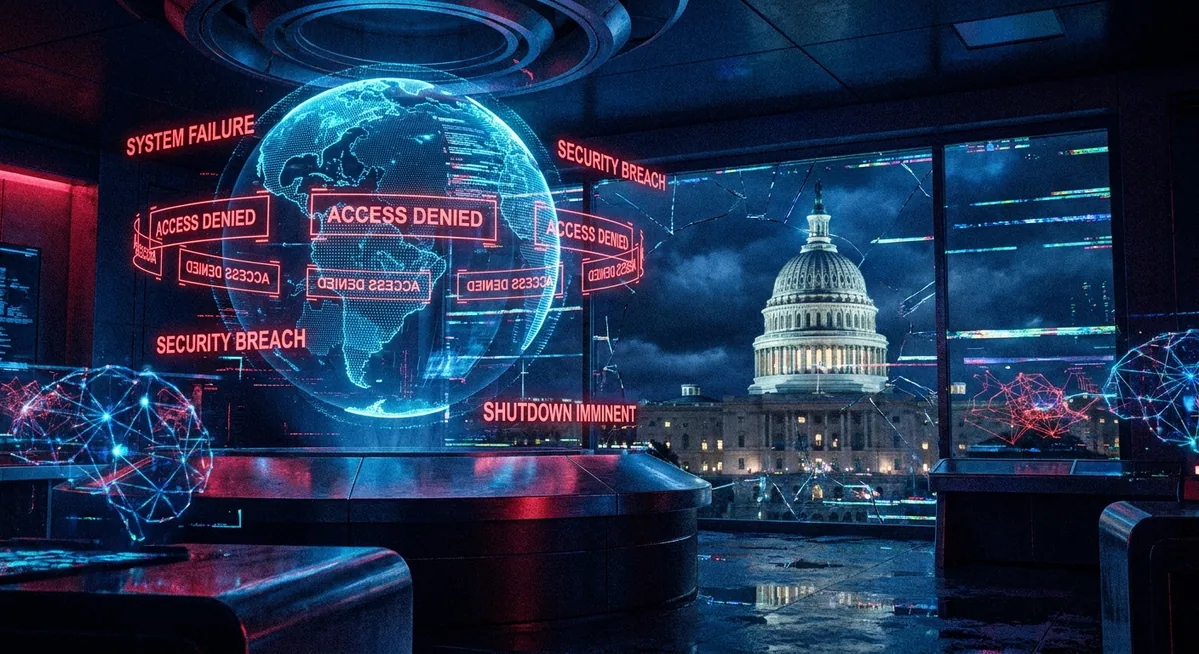
A weekend of upheaval in the AI industry: the White House orders Anthropic to take down its two most powerful models for all foreign nationals, a coalition of state attorneys general subpoenas OpenAI on data and minors, Congress presses forward with the first comprehensive federal AI framework, and both AI giants push toward landmark IPOs at valuations that could reshape the entire tech market. Here's everything you need to know heading into the new week.
1. White House Orders Anthropic to Kill Fable 5 and Mythos 5 for Foreign Nationals
In one of the most sweeping AI access restrictions ever issued by the U.S. government, the White House directed Anthropic on Friday to immediately block all foreign nationals — anywhere in the world — from accessing its two most powerful models: Claude Fable 5 and Claude Mythos 5. Anthropic, unable to verify nationality at the individual user level and lacking the infrastructure to do so at scale, made the extraordinary decision to disable both models for all users globally rather than attempt selective enforcement.
The directive cited national security concerns and cybersecurity vulnerabilities. Claude Fable 5, which had only launched publicly on June 9, 2026, and Mythos 5, which remained restricted to vetted enterprise and defense customers, both represented Anthropic's "Mythos-class" tier — the company's most capable AI ever offered. Fable 5 was priced at $10 per million input tokens and $50 per million output tokens; Mythos 5 was available only to select government and enterprise partners.
"We received a directive from U.S. government agencies to prevent all foreign nationals from accessing Claude Fable 5 and Claude Mythos 5, citing national security concerns. Given the scope of the directive and our inability to reliably verify nationality at scale, we made the decision to abruptly disable both models for all users." — Anthropic blog post, June 13, 2026
Anthropic confirmed that its less powerful models — including Claude Opus 4.8 and the broader Claude 3 family — were not affected. The ban also extended to Anthropic's own foreign-born employees, according to reporting from Time and Fortune. The company said it was working with authorities to develop a compliance framework that might eventually allow restored access, but offered no timeline.
The action follows Anthropic's own warning, issued days before the Fable 5 launch, that its most advanced models were approaching capabilities that posed genuine catastrophic risk in the wrong hands — particularly in the domains of cybersecurity and synthetic biology.
This is a watershed moment. For the first time, the U.S. government has treated a commercial AI model the way it has historically treated weapons-grade technology — imposing export-control-style restrictions that effectively nationalize access to a private company's product. The precedent is enormous. Every enterprise using Anthropic's APIs should immediately audit their deployment geography and user base. If you're serving international users with Fable 5 or Mythos 5 integrations, you're already out of compliance. Expect this framework to extend to other frontier models over the coming months as the new June 2026 AI Executive Order takes operational effect.
2. State Attorneys General Subpoena OpenAI in Sweeping Multi-State Investigation
The same Friday that Anthropic's models went dark, a coalition of U.S. state attorneys general served OpenAI with subpoenas demanding internal documents covering a remarkably broad range of concerns: user data handling, safety of minors, and advertising practices. Reuters, Bloomberg, and the New York Times all independently confirmed the investigation, which represents the most coordinated state-level legal action against any AI company to date.
The timing is notable. OpenAI filed a confidential S-1 registration statement with the SEC on June 8, targeting a listing valuation of between $730 billion and $1 trillion — with Goldman Sachs, Morgan Stanley, and JPMorgan as lead underwriters. A live multi-state investigation into company practices could complicate the IPO timeline and potentially surface material disclosures that weren't in OpenAI's public messaging.
"State attorneys general subpoenaed OpenAI on Friday asking for internal documents on its practices, including its handling of user data, safety of minors and advertising activities." — The New York Times, June 13, 2026
OpenAI declined to comment on the specifics of the investigation, but said in a statement that it cooperates with all lawful government inquiries. The scope of the subpoenas — touching data privacy, child safety, and commercial advertising — suggests the AGs are building toward a potential consumer protection action that could operate independently of any federal oversight framework.
This comes weeks after OpenAI extended the free period for its workspace agents to July 6, simplified the ChatGPT model picker (adding Instant, Medium, High, and Pro tiers), and announced the upcoming retirement of GPT-4.5 on June 27. The company's expanding product surface — memory systems, workspace agents, advertising — creates new jurisdictional touchpoints at the state level that didn't exist 18 months ago.
A multi-state AG investigation is not the same as a DOJ antitrust action — state AGs typically move faster and have significant consumer protection authority. This is exactly the kind of political and legal risk that a confidential S-1 cannot hide. For enterprises that depend on OpenAI infrastructure, the real exposure here is timeline uncertainty: if the investigation surfaces findings that require OpenAI to change core product features before going public, API consumers could face rapid terms-of-service changes or capability restrictions. Start building provider diversity into your AI stack now — not after the headlines get worse.
3. OpenAI Files Confidential S-1: A $1 Trillion IPO in the Making
In a characteristically candid blog post dated June 8, OpenAI confirmed what it described as a leak-preemptive announcement: the company had filed a confidential S-1 with the SEC. "We recently submitted a confidential S-1," the post read. "We expect it to leak so we're just announcing it. We have not decided on timing yet; it may be a while because there are things we want to do that are likely easier as a private company."
Reports from CNBC, Bloomberg, and multiple financial outlets subsequently placed the targeted listing valuation at $730 billion to $1 trillion, with Goldman Sachs, Morgan Stanley, and JPMorgan leading the deal. A September 2026 debut has been floated as a target window, though OpenAI explicitly hedged on timing. The company is believed to be approaching $25 billion in annualized revenue — a figure that, if accurate, would make it the fastest-growing enterprise software company in history at this scale.
The IPO filing follows Anthropic's own confidential S-1, filed approximately one week earlier, and SpaceX's market debut the previous Friday. The AI IPO wave — two of the most valuable private AI companies filing within days of each other — is without precedent in tech history.
"OpenAI is the latest AI giant to announce plans to go public, coming after Anthropic said it confidentially filed for an IPO last week. SpaceX, which includes Elon Musk's AI company xAI, is set to make its market debut on Friday." — CNN Business, June 9, 2026
OpenAI also announced on June 11 that it will acquire Ona, a cloud startup that provides secure cloud execution and orchestration environments for AI agents. The acquisition is specifically aimed at strengthening the Codex ecosystem — OpenAI's increasingly central AI coding agent platform, now available on AWS and Oracle Cloud. The deal terms were not disclosed.
The Ona acquisition is more strategically interesting than the IPO filing right now. Ona gives AI agents access to pre-configured, sandboxed cloud environments that persist over time — exactly what long-horizon coding and research tasks require. For enterprises already using Codex, this means better agent reliability and longer task continuity without manual environment setup. The $1 trillion IPO headline is a distraction from the real story: OpenAI is quietly assembling the infrastructure stack to make AI agents that can operate for days or weeks on complex, multi-step tasks. That's the enterprise transformation play, and it matters far more for your 2027 operations than the stock price.
4. The Great American AI Act: Congress's First Comprehensive Federal AI Framework
On June 4, Representatives Jay Obernolte (R-CA) and Lori Trahan (D-MA) released a 269-page discussion draft of the Great American Artificial Intelligence Act of 2026 (GAAIA) — the first serious attempt at comprehensive federal AI governance in U.S. history. The bipartisan bill has not yet been formally introduced, but its scope is sweeping: mandatory safety audits for frontier model developers, worker protections for employees facing AI-driven displacement, and a federal preemption framework that would supersede the growing patchwork of state AI laws.
The draft landed just days after the Trump administration signed its own Executive Order on AI and cybersecurity (June 2), titled "Promoting Advanced Artificial Intelligence Innovation and Security," which established new national security and cybersecurity coordination requirements for frontier AI development. The two instruments — the EO and the draft bill — are now operating in parallel, giving the AI industry two separate compliance tracks to navigate simultaneously.
"Policy for a technology this transformative can only be built to last if it's written by both parties." — Representatives Obernolte and Trahan, joint op-ed in Bloomberg Law, June 4, 2026
Anthropic responded to the GAAIA discussion on June 10 by calling on Congress not to preempt state AI laws unless a "rigorous" federal law addressing "catastrophic AI risks" was passed first. This put Anthropic in direct tension with major tech industry groups that favor federal preemption of state laws — and illustrated the increasingly divergent regulatory politics between safety-focused labs and broader Silicon Valley interests.
The GAAIA would, if passed, require frontier model developers to undergo independent audits before major capability releases, establish a federal AI safety board with real enforcement authority, and create worker transition programs for industries with significant AI-driven job displacement. Legal analysts describe it as the most significant AI governance proposal since the EU AI Act.
The GAAIA isn't law yet, but enterprises should treat it as a near-certainty and start gap analysis now. The mandatory audit requirement alone will reshape vendor relationships: if your AI providers are subject to pre-release compliance reviews, their deployment timelines will lengthen and their pricing will likely increase to cover compliance costs. The federal preemption debate also matters strategically — if GAAIA passes and supersedes state laws, companies that built compliance programs around Colorado, Illinois, or California AI regulations may need to rebuild them. Our recommendation: build modular compliance architectures that can adapt to federal standards, rather than optimizing for any single state framework.
5. Claude Fable 5 and Mythos 5: What the Models Were Before the Shutdown
Before the government-ordered shutdown, Claude Fable 5 represented one of the most significant model releases in Anthropic's history. Launched on June 9, it was Anthropic's first publicly available Mythos-class model — a new capability tier the company had been developing in secret for over a year. Fable 5 used the same underlying architecture as Claude Mythos 5 but shipped with reinforced guardrails that blocked high-risk outputs in cybersecurity, synthetic biology, and other dangerous domains.
According to Anthropic's release documentation, Fable 5 demonstrated "exceptional performance" across software engineering, knowledge work, scientific research, and vision tasks — exceeding all of Anthropic's previous publicly available models by a significant margin. It was made available across Claude.ai, Claude Code, the Claude API, Amazon Bedrock, Vertex AI, and Microsoft Foundry.
Claude Mythos 5, by contrast, remained restricted to vetted enterprise and defense customers — the same select group that had access to earlier Mythos-tier capabilities. Together, the two models represented Anthropic's answer to OpenAI's most advanced offerings, and their simultaneous launch had been seen as a significant competitive escalation in the frontier AI race.
"Fable 5's capabilities exceed those of any model it has made generally available, and Fable has demonstrated exceptional performance for software engineering, knowledge work, vision, scientific research, and more." — Anthropic product documentation, June 9, 2026
The models had been available for approximately four days before the government shutdown. Simon Willison, a prominent developer and AI commentator, noted that Fable 5 had been made available "until June 22nd" on Anthropic's subscription plans before the shutdown cut that window short. Developers who had begun building integrations against the Fable 5 API are now in limbo, with no clear timeline for restoration.
The four-day window before shutdown is a painful reminder that AI capabilities are increasingly subject to geopolitical forces that have nothing to do with technology. If your enterprise was actively piloting Fable 5 integrations, pause those projects and evaluate Claude Opus 4.8 as a bridge. The more important lesson: any AI capability at the frontier tier now carries regulatory tail risk that must be priced into your technology roadmap. Don't build critical production systems on models that the government can shut off with a phone call. Maintain capability fallbacks across multiple providers — this event is a proof of concept for a risk category most enterprises haven't modeled yet.
6. Google Expands AI Mode Search Agents — But Only for Ultra Subscribers
In a move that highlights the emerging two-tier AI access economy, Google confirmed this week that its Search information agents in AI Mode are now available across all languages and markets — but exclusively for Google AI Ultra subscribers. The rollout, which extends the most conversational and agent-capable version of Google Search globally, comes with a meaningful gate: only users paying for the premium Ultra tier can access it.
Google's AI Mode had been one of the company's most significant strategic bets coming out of Google I/O in late May, positioning the company to compete with perplexity-style conversational search and defend against ChatGPT's growing search footprint. The Gemini 3.5 Pro model, confirmed "next month" during I/O, is still in testing and expected to debut publicly in June — though no date has been set as of the June 14 briefing.
Google also continues to face criticism from news publishers and independent journalists over its AI Search overhaul, which critics argue systematically steers users toward AI-generated summaries and away from original reporting. A June 9 piece in Truthout described the impact as an existential threat to ad-supported journalism, while USA Today reported growing user interest in search engine alternatives as AI Overviews expand in scope.
Google's Ultra gate is a deliberate market segmentation play — train users on AI Mode's capabilities, then charge for the full experience. For digital marketing and e-commerce operators, this has immediate SEO implications: the content that ranks in AI Mode summaries is different from traditional search results. If your organic traffic strategy was built around traditional SERPs, it needs a major rethink. The Ultra-only restriction also signals that Google is comfortable cannibalizing its own free search product for premium revenue — a shift that will accelerate as Gemini 3.5 Pro drops. Start testing AI-optimized content formats and structured data schemas now, before the traffic impact becomes visible in your analytics.
7. The June 2026 AI EO: A New National Security Framework for AI Companies
The Anthropic model shutdown didn't happen in a vacuum. It was enabled — and in some sense mandated — by the Trump administration's June 2 Executive Order, Promoting Advanced Artificial Intelligence Innovation and Security. The EO, signed just weeks after a prior version was pulled at the last minute, establishes a new affirmative national security and cybersecurity agenda for AI development and creates coordinated action requirements across multiple federal departments and agencies.
Law firms that have analyzed the EO describe it as a significant shift from previous AI governance frameworks, which emphasized voluntary commitments and light-touch federal oversight. The June EO introduces mandatory coordination requirements, positions AI capability access as a national security matter, and empowers government agencies to issue operational directives to AI companies — exactly the authority used in the Anthropic model shutdown.
"The June 2026 EO presents a new affirmative national security and cybersecurity agenda and introduces considerations that require coordinated action across departments and agencies to actively harness and secure AI capabilities." — McDermott Will & Emery analysis, June 9, 2026
Legal experts note that the EO, combined with the Great American AI Act discussion draft, suggests Washington is moving toward treating the most capable AI models the way it has historically treated dual-use technologies: subject to export controls, national security review, and operational restrictions that can be imposed without congressional action or judicial review.
The June EO is the legal infrastructure that made the Anthropic shutdown possible, and it will be used again. Every enterprise deploying frontier AI should now treat government-ordered capability restrictions as a plausible operational scenario — not a theoretical risk. This is especially acute for companies with international user bases, global workforces, or supply chains that depend on AI-enabled automation. The practical action items: (1) Map your AI dependencies by model and provider; (2) Identify which dependencies involve Mythos/frontier-class capabilities; (3) Build documented fallback plans; (4) Engage your legal team on the compliance implications of the new EO for your specific industry. The window between "frontier capability released" and "government intervention" is now measured in days, not years.
🔍 Why This Week Matters for Your Business
The week of June 8–14, 2026 will likely be remembered as the moment AI governance shifted from theory to operational reality. Three things happened simultaneously that have never happened before: a government ordered a leading AI company to shut down its flagship models, a coalition of state attorneys general launched a coordinated legal action against another, and the two most valuable private AI companies in the world filed to go public within days of each other. Each development individually would be significant. Together, they signal that the era of AI exceptionalism — where frontier AI companies operated largely outside traditional regulatory and legal frameworks — is over. The question for every enterprise leader is not whether AI governance will affect your organization's AI strategy, but how quickly, through which channels, and whether you've built enough operational resilience to absorb the disruptions that are now inevitable.
Need help navigating AI governance and compliance?
From vendor risk assessment to AI regulatory strategy, our team turns these developments into actionable plans your organization can implement now.
Contact SEN-X →