FERC Fast-Tracks AI Power, Fable 5 Ban Day 10, OpenAI's Talent Blitz Goes Deeper & Gemini 3.5 Pro Countdown
Federal regulators took their boldest step yet to solve America's AI power problem. The Anthropic export ban grinds into its tenth day with zero resolution. OpenAI's pre-IPO talent haul deepens with a Nobel Prize-level ecosystem play. And the clock is ticking loudly on Google's most anticipated model release. Here's what you need to know for June 22, 2026.
1. FERC Takes Its "Interventionist" Turn: 90-Day Grid Hookups for AI Data Centers
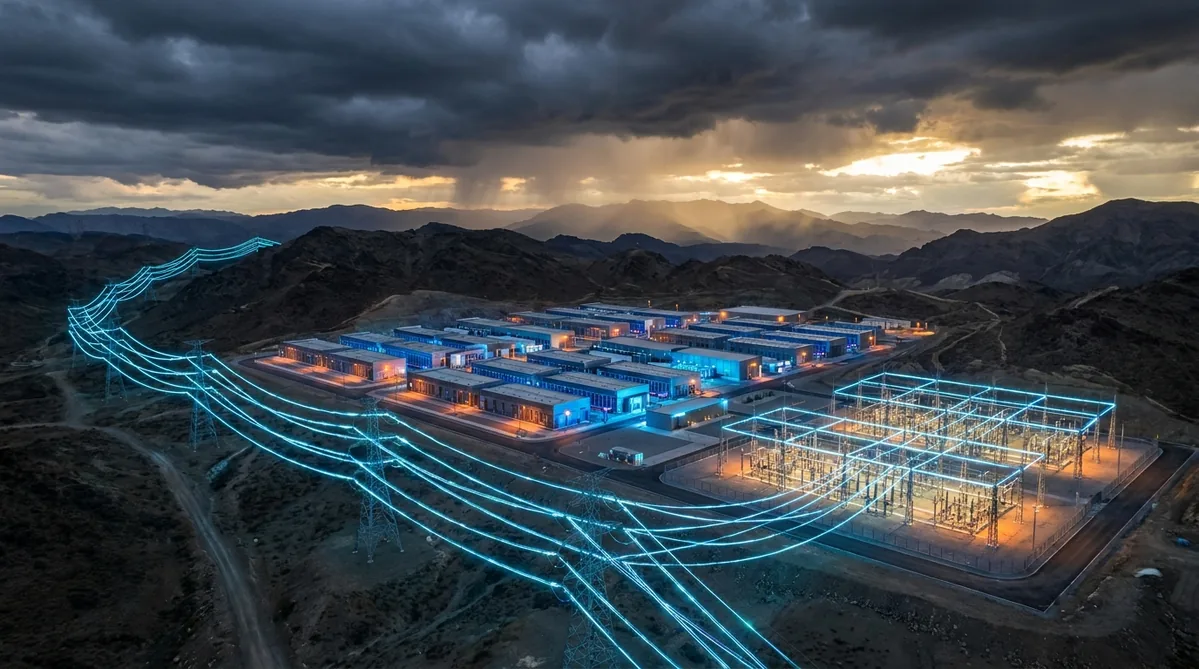
In what its own chairman described as a deliberately "interventionist" pivot, the Federal Energy Regulatory Commission this week approved a sweeping package of orders directing all six major regional grid operators — covering the vast majority of U.S. electricity — to accelerate grid connections for artificial intelligence data centers and other large energy users. The mandate is blunt: handle hyperscaler interconnection requests within 90 days, or justify why your current tariff structure makes that impossible.
FERC issued six tailored orders on June 18, each aimed at a specific regional transmission organization, including PJM, MISO, SPP, CAISO, ISO-NE, and NYISO. The commission framed the action as a dual mandate — speed up the AI infrastructure buildout without routing its costs onto ordinary ratepayers, who have already been hit by surging utility bills that regulators describe as a growing political flashpoint.
"We are taking a more interventionist approach because the status quo is not working fast enough. The country's AI leadership depends on whether we can actually plug these facilities into the grid in a reasonable timeframe."
— FERC Chairman, quoted by Bloomberg and Insurance Journal, June 22, 2026
The backstory is a years-long interconnection queue crisis. As of early 2026, data center projects representing hundreds of gigawatts of demand were stuck in multi-year review processes designed for an era when a 50-megawatt industrial customer was considered a large load. The six largest hyperscalers — Google, Microsoft, Amazon, Meta, Apple, and Oracle — have collectively announced more than $500 billion in U.S. data center investment over the next five years, and many of those projects have been bottlenecked at the grid application stage. FERC's orders effectively tell grid operators: your old rules are a national competitiveness problem, not just a regulatory technicality.
The orders also ask grid operators to demonstrate whether their current interconnection tariffs are just and reasonable for large-load applicants, implicitly threatening follow-on rulemaking if the answers are unsatisfactory. Analysts at American Action Forum described this as FERC effectively setting the table for a future mandate if voluntary compliance proves inadequate.
This is the most consequential infrastructure move for AI since the CHIPS Act. Data center operators who have been stuck in multi-year queue hell should treat this as a real unlock, not a press release — FERC's 90-day framing gives them a legitimate hammer to push back on tardy grid operators. For businesses evaluating where to site AI compute workloads, states within PJM and CAISO interconnection zones will benefit the fastest. The dual mandate — speed plus consumer cost protection — also signals FERC is trying to get ahead of what could become an AI-related electricity affordability crisis, particularly in the Southeast and Midwest. Watch for follow-on rulemaking before end of Q3. Source: FERC.gov, Insurance Journal
2. The Fable 5 Ban Grinds Into Day 10 — And the Regulatory Fallout Is Getting Louder
As of Sunday morning, June 22, Claude Fable 5 and Mythos 5 remain suspended for all users worldwide, including Americans who cannot access the models through third-party API wrappers. The U.S. Commerce Department issued its export control directive to Anthropic at 5:21 PM Eastern on June 12, requiring the company to immediately suspend access for all foreign nationals — a move so broadly drafted that Anthropic took down the models globally rather than attempt to implement nationality-screening on its existing user base.
The ban is now in its tenth day with no official restoration timeline from either Anthropic or the Commerce Department. What began as a dispute over Mythos 5's cybersecurity capabilities — the model was described by Anthropic as "extremely adept at finding security flaws," which attracted Pentagon attention — has metastasized into a much larger argument about whether the U.S. government can unilaterally control access to commercial AI models, and whether doing so undermines the very AI leadership it claims to protect.
"The government's action comes after Anthropic disagreed with the Pentagon over requested modifications to its AI systems' guardrails for military use — leading the Department of Defense to blacklist Anthropic by labeling it a 'supply chain risk.'"
— CNN Business, June 21, 2026
The G7 angle, which emerged last week, has not gone away. Diplomatic sources told the Jerusalem Post that G7 leaders at Évian discussed a framework for granting "trusted partner" nations access to advanced U.S. AI models — effectively a carve-out from export controls for allied governments. That framework has not been finalized. Meanwhile, the New Stack reported that four open-weight models — including at least two from European labs — announced accelerated releases in the window immediately following the Fable 5 shutdown, positioning themselves explicitly as "always available" alternatives to U.S. frontier models subject to export control risk.
The political temperature is also shifting. TechTimes reported that Trump softened his public rhetoric toward Anthropic around June 20 — telling reporters the company is "not a national security threat" — but the Commerce Department directive remains in force and no official rollback has been announced. Experts cited by CNN Business are increasingly arguing that the episode exposes a regulatory gap: the U.S. has no coherent framework for applying export controls to software-as-a-service AI products, which are fundamentally different from the hardware and physical goods the export control regime was designed to govern.
The Fable 5 ban is a preview of a future in which AI capability is itself a controlled export — and every enterprise that built workflows on frontier API access needs to be thinking about this now. The playbook isn't "wait for the ban to lift." It's: audit your critical AI dependencies, identify which ones are single-source U.S. frontier models, and build at least one fallback into your production architecture. The open-weight movement's response — four labs announcing accelerated releases within days of the ban — is a natural market reaction that will make hedging easier over the next 12 months. Source: The New Stack, CNN Business
3. OpenAI's IPO Talent War: Shazeer, Ball — and Now Google's Nobel Laureate Is at Anthropic
The AI talent redistribution of mid-June 2026 is historic in scope, and the full picture came into focus this week. On June 18, Noam Shazeer — co-author of the 2017 "Attention Is All You Need" paper that introduced the Transformer architecture underpinning virtually every modern large language model — announced he was leaving Google DeepMind to join OpenAI as Lead of Architecture Research. Google had paid a reported $2.7 billion to bring Shazeer back from Character.AI just two years earlier. The loss is symbolic as much as operational: Shazeer is not merely a marquee hire, he is one of the eight people who directly invented the technical substrate the entire industry runs on.
Reuters quoted Shazeer saying he was "incredibly proud of the amazing team at Google and everything we've built together" and was "excited" to join OpenAI. Google's response was a statement expressing gratitude for his contributions and nothing more — a notably muted reaction to losing one of its most consequential researchers for the second time in three years.
"OpenAI is bringing on some big guns in the lead-up to its IPO, landing Transformer co-inventor Noam Shazeer from Google DeepMind and former Trump AI policy official Dean Ball in the same week."
— TechCrunch, June 18, 2026
Alongside Shazeer, OpenAI also added Dean Ball — a former Trump White House AI policy official who served on the National Security Council — as a senior policy hire. Ball's appointment is a direct signal to investors ahead of the IPO: OpenAI is building the political and regulatory infrastructure it needs to survive in a Washington where AI governance is increasingly weaponized. The company simultaneously announced new enterprise usage analytics and updated spend controls for business customers, suggesting the IPO roadshow is very much underway in product form.
Then, one day after Shazeer's announcement, John Jumper — the computational chemist who co-created AlphaFold and shared the 2024 Nobel Prize in Chemistry with Google DeepMind CEO Demis Hassabis — announced he was leaving DeepMind after nearly nine years to join Anthropic. Jumper's AlphaFold predicted over 200 million protein structures and is widely credited with cutting years off drug discovery timelines. His move to Anthropic, still reeling from the Fable 5 ban, signals that the company's fundamental research agenda — particularly in AI-for-science applications — remains compelling enough to attract the field's most credentialed talent even at its lowest political moment.
What you're watching is the Great Sorting of AI talent into three camps ahead of a period when each lab's architectural choices will define the next decade of AI capability. Shazeer at OpenAI means the company that will IPO is now led by the person who invented its underlying architecture — that is a substantial R&D credibility signal for institutional investors. Jumper at Anthropic means the lab has quietly built a world-class AI-for-science bench even as its regulatory situation has been chaotic. For enterprise buyers, the talent moves matter less than the products they ship — but they're a leading indicator of which labs will be technically differentiated 18–24 months from now. Source: Reuters, Bloomberg
4. Gemini 3.5 Pro: 8 Days Left on Google's Self-Imposed Deadline
Google made a public commitment at Google I/O in May 2026: Gemini 3.5 Pro would ship before the end of June. That deadline is now 8 days away, and the model has not yet launched. The pressure is visible in the coverage — growwingassistant.com published a detailed breakdown of every confirmed spec and the shrinking launch window, while devflokers.com noted that Google DeepMind's Gemini 3.5 Pro had been described internally as incorporating a "2-million-token context window and a specialized Deep Think cognitive mode," alongside a companion Gemini 3.5 Flash for high-speed inference.
The timing matters because Gemini 3.5 Pro is expected to be Google's response to OpenAI's GPT-5 series in the enterprise reasoning market. The 2M-token context window — double anything currently available at scale from a major U.S. lab — would be a genuine structural advantage for enterprise RAG workloads, legal document review, large codebase analysis, and multi-document research tasks. The "Deep Think" mode is described as a hybrid reasoning chain that combines fast intuitive responses with slower, more deliberate chain-of-thought reasoning for complex queries.
Meanwhile, Google did ship the June 2026 Pixel Drop, which includes Gemini Omni AI — a multimodal generator that lets Pixel device users create and edit videos, images, and multimedia directly from text prompts without leaving the device. The Pixel Drop also brought multitasking improvements and emergency safety tools. It is a consumer-facing product, not the enterprise model the industry is waiting on, but it confirms Google's Gemini stack is shipping across its product portfolio even as the flagship 3.5 Pro remains in the oven.
Separately, Google's AI developer platform published a deprecation notice for several video generation models, with a shutdown date of June 30, 2026 — the same day Gemini 3.5 Pro is expected to land. The back-to-back timing suggests Google is deliberately clearing the deck to give Gemini 3.5 Pro a clean product narrative at launch.
If Gemini 3.5 Pro ships before June 30 with a verified 2M-token context window and competitive pricing, it will immediately become the default recommendation for enterprise workloads that require processing very large documents or maintaining long multi-turn agent contexts. The Deep Think mode is the more speculative bet — hybrid reasoning is difficult to benchmark fairly — but if it performs as described, it gives Google a strong answer to OpenAI's o3-class models. The Pixel Drop Gemini Omni is worth watching separately as a signal that Google is moving Gemini into the consumer creation stack, not just the enterprise assistant stack. Source: GrowwingAssistant, Google Blog
5. G7's AI "Trusted Partners" Framework: What It Actually Means
The G7 summit in Évian-les-Bains, France (June 15–17) brought together the leaders of all seven major economies alongside the CEOs of OpenAI, Anthropic, and Google in a working lunch session that CNBC described as "a signal of where power sits." The headline deliverable was a framework in which G7 nations would establish mutual recognition of AI governance standards — but the most consequential discussion, according to multiple diplomatic sources who spoke to the Jerusalem Post and Fast Company, was a parallel conversation about the Fable 5 ban.
Specifically, G7 leaders discussed granting "trusted partner" nations — primarily Canada, the UK, France, Germany, Japan, and potentially Australia — preferential access to advanced U.S. frontier AI models currently restricted by export controls. The framework would create a two-tier system: allied governments and their vetted private-sector partners would get access to full-capability models, while adversarial nations and unvetted commercial users would face the current restrictions. Think of it as a NATO equivalent for AI model access.
"The CEOs of Anthropic and Google DeepMind called for a U.S.-led AI coalition in their meeting at G7, arguing that allied nations need coordinated access to frontier models to maintain strategic competitiveness."
— CNBC, June 17, 2026
The framework was not formalized at Évian and is still under discussion at the working level. But its mere articulation at a G7 working lunch marks a significant shift: the U.S. government and allied nations are now explicitly treating frontier AI access as a strategic asset on par with military hardware, and they are building the diplomatic architecture to manage it accordingly. Dario Amodei and Google DeepMind CEO Demis Hassabis both attended the working session, effectively endorsing the "trusted partners" concept as preferable to a blanket global access model.
The G7 "trusted partners" framework is the beginning of an AI access regime that will fundamentally reshape how multinational enterprises think about model procurement. If it formalizes, expect a world where U.S. enterprise customers have full capability access, allied-nation enterprises have tiered access through government-certified channels, and companies operating in restricted markets face genuine capability gaps. The practical implication for enterprises with global operations is to begin documenting which AI capabilities are business-critical and which jurisdictions your operations depend on — before the framework forces that analysis on you. Source: CNBC, Jerusalem Post
6. OpenAI Sunsets GPT-4.5 and Pivots Its Enterprise Stack
In a quieter but operationally significant development, OpenAI's release notes confirm that GPT-4.5 will be retired from ChatGPT on June 27, 2026, following a 30-day sunset period. Existing chats on GPT-5.2 have already been migrated to GPT-5.5, which became the default offering in mid-June. The model consolidation is a deliberate IPO-readiness move: OpenAI is simplifying its product line ahead of its public market debut, reducing the cognitive overhead of model selection for enterprise buyers and presenting a cleaner narrative to investors.
The company also published new enterprise usage analytics and updated spend controls this week — features that speak directly to the CFO constituency that controls AI budget approvals at large organizations. For context, OpenAI's financials, which leaked earlier this week, showed a staggering $39 billion net loss in 2025, driven primarily by compute costs. The enterprise spend controls are a signal that OpenAI has heard the pushback from large customers concerned about unpredictable API bills.
The simultaneous retirement of o3 (scheduled for August 26, following a 90-day sunset from its May 27 announcement) means the company's reasoning model lineup will consolidate around o4 and o4-mini by early fall — a cleaner story for enterprise buyers evaluating whether to make OpenAI their primary AI vendor ahead of the IPO. OpenAI also recently acquired Astral, a Python tooling startup, continuing its vertical integration of the developer toolchain.
The model consolidation and enterprise spend controls are two sides of the same pre-IPO story: OpenAI is building the infrastructure to be a durable enterprise software vendor, not just a research lab with a consumer chatbot. For IT and procurement teams currently evaluating OpenAI enterprise contracts, the window between now and the IPO is likely the best leverage moment you'll have. The company is motivated to lock in enterprise ARR before going public. The spend controls are genuinely useful; the model simplification reduces the evaluation burden on your engineering team. Source: OpenAI Help Center, OpenAI News
Why This Week's Moves Matter for Your Business
Three structural shifts are running in parallel right now, and they are not independent:
The infrastructure layer is being unlocked. FERC's 90-day grid mandate is the regulatory equivalent of a highway being built to your factory. If you have plans for private AI compute infrastructure, the next 12 months will likely be your cheapest window to lock in power access before hyperscalers consume the available capacity at scale.
The model access layer is being stratified. The Fable 5 ban and G7 "trusted partners" discussions confirm that frontier AI capability is becoming a geopolitically managed resource. Single-vendor dependencies on U.S. frontier models are now a documented supply chain risk. Diversification — whether through open-weight models, multi-provider architecture, or allied-nation API proxies — is no longer optional risk management, it's baseline prudence.
The talent war tells you where the capability bets are landing. Shazeer at OpenAI, Jumper at Anthropic. The two most architecturally significant minds in AI research are now at the two IPO-track companies — and they did not go there for the stock alone. Both labs made research commitments that aligned with what those researchers wanted to build next. What they ship 18 months from now is the most important thing you cannot predict today.
Need help navigating AI for your business?
From multi-vendor AI architecture to FERC-aware infrastructure strategy — our team turns these developments into actionable plans your organization can execute.
Contact SEN-X →