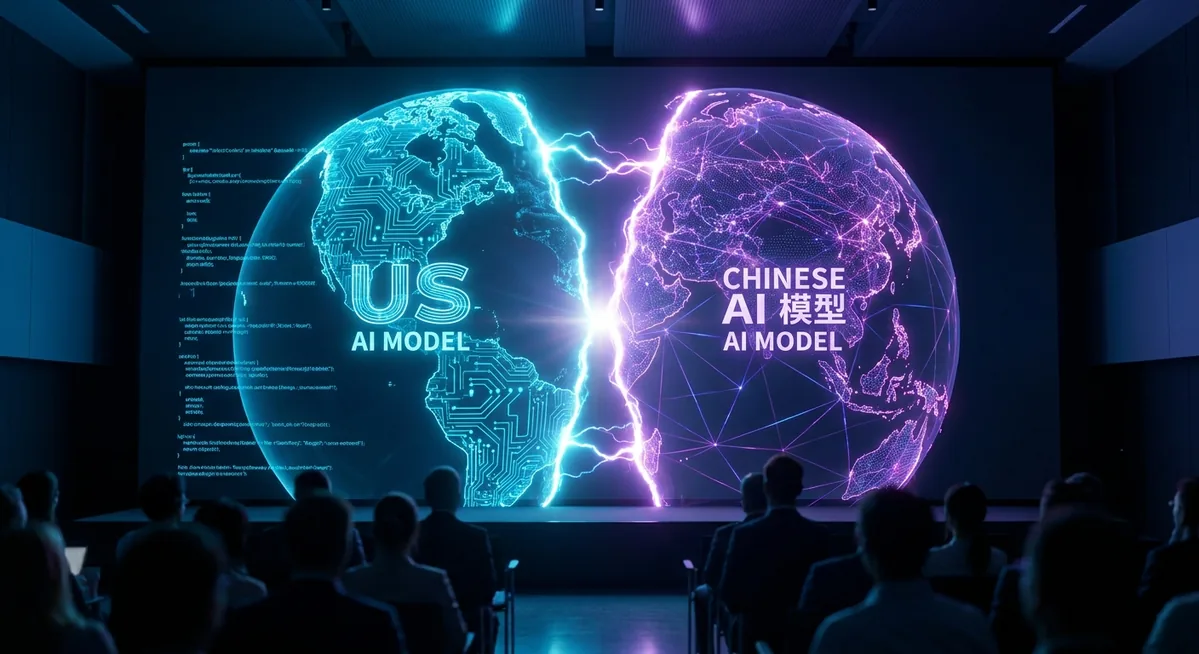
Fable 5 Export Controls Lifted, GPT-5.6 Sol Hits Cerebras, China's GLM-5.2 Shock, and the EU AI Act Buys More Time
The second half of 2026 opens with a flurry: Anthropic's most powerful models return to global users after a three-week export ban, OpenAI's GPT-5.6 Sol begins a government-approved limited launch on Cerebras hardware capable of 750 tokens per second, China's Zhipu AI drops GLM-5.2 into the open-source market with capability that shocks frontier-model incumbents, the EU Council formally delays its high-risk AI obligations to late 2027, and the global AI infrastructure spending race crosses the $700 billion mark. Wednesday, July 1, 2026.
1. Anthropic's Fable 5 and Mythos 5 Return to Global Users — Trump Lifts Export Controls
After nearly three weeks of restricted access, Anthropic announced Tuesday that the U.S. Department of Commerce has lifted the export controls that had locked out foreign nationals from its Claude Fable 5 and Mythos 5 models. The ban, issued in mid-June under national security authorities, had required Anthropic to suspend access for any foreign national — including its own international employees — an extraordinary measure that sparked diplomatic friction and enterprise customer alarm worldwide.
Fable 5 is now available to global users on Claude.AI, the Claude platform, and Claude Code as of Wednesday. As a goodwill gesture, Anthropic is offering Fable 5 at up to 50% of weekly usage limits through July 7 for Pro, Max, Team, and selected Enterprise plans. Mythos 5 — Anthropic's cybersecurity-focused model — has been restored for some U.S. organizations following government approval granted June 26, with broader domestic and international expansion to follow through the Glasswing program.
"We're grateful to our users for their patience, and to everyone who worked with us on redeploying the models." — Anthropic, via X, June 30, 2026
The ordeal exposed a critical fragility in enterprise AI procurement: a single federal directive can instantly sever access to the models an entire organization depends on. Separately, California Governor Gavin Newsom struck a high-profile deal in late June, giving all state agencies access to Claude at 50% off market rate — a visible rebuke of the federal government's adversarial stance toward Anthropic. The state-vs-federal tension over AI policy is now playing out in real procurement contracts.
Sources familiar with the matter describe the June ban as stemming from interagency disagreement over Mythos 5's dual-use cybersecurity capabilities rather than a specific jailbreak or misuse incident. The Trump administration has since said it no longer views Anthropic as a national security threat, though the Glasswing program framework — which requires vetting for Mythos 5 access — remains in place as a permanent fixture.
The Fable 5 saga is a case study in geopolitical AI risk that most enterprise legal and procurement teams weren't prepared for. The speed at which a federal directive grounded a globally deployed AI product — with no warning and no immediate appeals path — should force every organization relying on frontier models to develop contingency access plans. The California deal signals something equally important: sub-national governments are emerging as serious AI procurement actors, and vendor relationships may increasingly bifurcate along political lines.
2. OpenAI Launches GPT-5.6 Sol on Cerebras — 750 Tokens Per Second, Government-Gated Rollout
OpenAI has begun a limited preview of its GPT-5.6 series — Sol, Terra, and Luna — with Sol designated as the flagship. The launch is happening in direct coordination with the Trump administration, which requested a phased rollout to "trusted partners" whose participation has been shared with the government, before broader release in the coming weeks.
The most striking technical announcement is GPT-5.6 Sol's deployment on Cerebras wafer-scale hardware, targeting up to 750 tokens per second — a figure that represents a step-change in inference speed at frontier capability levels. For context, typical flagship model inference today runs between 40 and 120 tokens per second. Cerebras access will initially be limited to select customers as capacity scales.
Sol also introduces a new "max reasoning effort" setting and an "ultra mode" designed to give the model extended time for deep reasoning on complex multi-step tasks — essentially a dial for trading latency for accuracy on the hardest problems. Terra, described as "balanced," delivers competitive performance to GPT-5.5 at 2× lower cost. Luna, the fastest option, brings strong capability at the lowest price point in the GPT-5.6 family.
"GPT-5.6 Sol launches with our most robust safety stack to date. We strengthened protections for higher-risk activity, sensitive cyber requests, and repeated misuse, and spent multiple weeks finding weaknesses, pressure-testing our system, and hardening it against real-world attacks." — OpenAI, GPT-5.6 preview announcement
OpenAI acknowledged the friction in the arrangement, noting that government-gated AI access is not a model it wants to see become the long-term default. "It keeps the best tools from users, developers, enterprises, cyber defenders, and global partners who need them," the company said, framing the current approach as a short-term concession to enable broader access in the coming weeks while a cyber Executive Order framework is finalized.
750 tokens per second at GPT-5.6 Sol capability is a genuine inflection point for real-time agentic applications — think live coding co-pilots, interactive document analysis, and sub-second enterprise workflow automation. The government-gated rollout, however, continues a troubling pattern: the most capable AI tools are being allocated through political relationships rather than market access. Enterprises should pressure their AI vendors to provide contractual uptime and access guarantees that account for government intervention risk — because it has now happened twice in thirty days.
3. China's Zhipu GLM-5.2 Reaches Frontier — The DeepSeek Moment of Summer 2026
China's Zhipu AI — the company behind the Z.ai brand — has released GLM-5.2 as an open-source model, and the response from the AI research community has been immediate and striking. The New York Times described it as "the cutting edge of a wave of powerful but inexpensive AI from China that is challenging the lock that OpenAI, Anthropic, and Google have had on the industry," with six Chinese models now appearing in the top tiers of major AI leaderboards.
Benchmark data places GLM-5.2 at or near the performance of Claude Opus 4.8 and GPT-5.5 on standard coding and reasoning evals. Jeremy Howard, one of the pioneers of modern deep learning, called it "at least as good as Opus 4.8 and GPT-5.5." The CEO of Vercel said he was "genuinely impressed, almost shocked, at how good GLM-5.2 is at coding." As of July 1, BenchLM.ai ranks Qwen3.7 Max as the top Chinese model overall, with GLM-5.2 close behind as the highest-ranked open-source release.
The timing is politically charged. GLM-5.2's release comes precisely as the U.S. government has been restricting Anthropic's most powerful models from foreign nationals, and as OpenAI's GPT-5.6 series begins a gated rollout. The competitive landscape is shifting: U.S. frontier models are being rationed by federal directive while a Chinese open-source alternative matching their capability becomes freely downloadable worldwide.
Zhipu's model is part of a broader pattern that mirrors the DeepSeek R1 moment of early 2025. Then, a Chinese model's unexpected open-source release rattled AI markets; now, the scale and frequency of these releases is accelerating. Qwen3.7 Max from Alibaba also scores well above 90 on BenchLM as of this writing. The competitive pressure is being felt across the industry.
For enterprise buyers, GLM-5.2 represents a real procurement option — not a curiosity. If your organization currently pays for GPT-5.5 API access at U.S. market rates, a self-hosted open-source alternative at comparable capability warrants serious evaluation, particularly for internal tooling, document processing, and code generation workflows. The geopolitical dimension matters too: U.S. export restrictions may make Chinese open-source models the *most* globally available frontier AI in some markets, which has profound implications for AI supply chain strategy.
4. Google Pushes Gemini 3.5 Pro to July — And Loses More Talent to Rivals
Google has confirmed that Gemini 3.5 Pro will not ship until July, following an earlier June target. The delay, reported by Business Insider, is attributed to quality refinements following early enterprise testing — the company wants additional time to tune performance before general availability. The news arrives at an awkward moment: multiple senior AI researchers from the Gemini team have departed for OpenAI and Anthropic in recent weeks, deepening concerns about Google's ability to maintain pace with its rivals.
The talent situation at Google DeepMind has become a defining story of 2026. In June alone, the company lost four senior AI researchers including several from the AlphaFold Nobel laureate cohort to Anthropic, a departure that briefly wiped $270 billion from Alphabet's market cap. Noam Shazeer — the transformer architecture co-inventor and original Gemini co-lead who had rejoined Google — has since moved to OpenAI. Each departure represents not just headcount but decades of institutional knowledge about how large-scale AI systems are trained and deployed.
On the positive side, Google continues to expand Gemini's reach through platform integrations. The company is offering a free upgrade of Gemini for students over 18 in Indonesia, Japan, the UK, and Brazil through July 2026. Google's AI Mode search product continues to expand globally despite publisher and antitrust concerns. And the Pixel Drop from late June shipped Gemini Omni to Android devices, extending multimodal AI capabilities to the consumer base.
The Gemini 3.5 Pro delay is a reminder that shipping frontier models on schedule is genuinely hard — and that talent concentration matters enormously in this industry. Google has unmatched compute infrastructure, distribution reach, and research depth, but repeated delays and talent departures suggest internal execution challenges that infrastructure alone can't solve. For enterprises evaluating Google Cloud AI products, this underscores the importance of hedging across providers rather than going all-in on any single platform, however dominant it appears today.
5. EU Council Formally Delays High-Risk AI Act Obligations to Late 2027
The EU Council has given final approval to amendments under the Omnibus VII package that significantly delay the application of high-risk AI obligations under the EU AI Act. The original deadline for high-risk AI system compliance was August 2, 2026 — effectively this week. Under the newly approved amendments, that deadline has been pushed back to December 2, 2027 for stand-alone high-risk AI systems, and August 2, 2028 for high-risk AI systems embedded in physical products.
The amendments also simplify certain regulatory overlaps, particularly for organizations already subject to other EU compliance frameworks. The EU Parliament approved its side of the legislation in mid-June; the Council's final vote earlier this week completes the legislative process. The AI Act's general-purpose AI and transparency obligations — which include disclosure requirements for AI-generated content and deepfakes — remain on track for their August 2, 2026 effective date.
The EU's action comes against the backdrop of sharply divergent global approaches. The U.S. under the Trump administration has pursued deregulation through a series of executive orders — culminating in the March 2026 National AI Legislative Framework — while also selectively intervening in AI model access through national security directives. China has moved simultaneously on multiple regulatory fronts: the CAC, NDRC, and MIIT jointly issued Implementation Opinions on Intelligent Agents effective July 15, 2026, establishing a new framework specifically for AI agents distinct from generative AI. Connecticut's amended data privacy law, which takes effect today (July 1), represents one of the more aggressive U.S. state-level moves, requiring disclosure of algorithmic pricing and broader consumer profiling rights.
"A single AI system can fall under the EU AI Act because it touches the EU market, under US state laws because of where its users live, and under evolving US federal policy at the same time. Compliance is no longer a checklist against one rulebook; it's the ability to satisfy several rulebooks simultaneously." — Collibra, AI Regulatory Compliance 2026 analysis
The EU delay is welcome breathing room for enterprises with complex AI deployments, but it's not a clean bill of health — transparency and general-purpose AI obligations still take effect August 2. Legal teams should treat the delay as an invitation to get high-risk compliance architecture right rather than a reason to deprioritize it. More importantly, the fragmented global regulatory picture — EU, U.S. federal, U.S. state, and China each moving on different timelines and frameworks — is creating a genuine compliance burden that favors larger organizations with dedicated AI governance resources. Smaller firms risk being caught out.
6. AI Infrastructure Spending Hits $700 Billion — Helix Enters the Data Center Race
As the second half of 2026 begins, the scale of global AI infrastructure investment has become almost difficult to comprehend. The five largest hyperscalers — Amazon, Microsoft, Alphabet, Meta, and Oracle — are projected to spend between $660 billion and $725 billion on capital expenditures in 2026, with approximately 75% ($450–500 billion) directly tied to AI infrastructure including GPUs, data centers, and specialized networking. Amazon Web Services alone is approaching $200 billion in planned AI infrastructure spend for the year, its fastest growth in 15 quarters. Nvidia delivered record-breaking revenue of $215.94 billion in fiscal year 2026, a 65% year-over-year increase.
Into this environment, Helix Infrastructure Partners has launched as a new AI-focused infrastructure firm backed by private equity, targeting data center capacity specifically for hyperscalers while AI demand remains elevated. The company is part of a wave of new entrants betting that the gap between AI compute demand and available data center supply will persist long enough to generate strong returns. Reuters has reported the U.S. stock market faces scrutiny in H2 2026 over the sustainability of this AI spending pace heading into the Federal Reserve's rate decisions.
The energy dimension of this investment surge is increasingly visible. FERC's June order requiring 90-day grid connections for AI data centers — enacted in response to utility delays blocking new builds — reflects the physical reality that AI scaling is running into power grid limits. New data center campuses are being co-located with natural gas peakers, nuclear plants, and offshore wind agreements in ways that would have seemed implausible two years ago.
The infrastructure numbers are staggering, but the more interesting signal is the entry of specialized private equity vehicles like Helix — firms that are not AI companies but are betting on AI as a durable infrastructure demand driver. This mirrors the early cloud era, when purpose-built data center REITs and colocation providers generated outsized returns by capitalizing on hyperscaler growth before the hyperscalers built everything themselves. For enterprise decision-makers, the practical implication is that AI compute capacity and pricing will remain volatile through at least 2027 as supply catches up — which reinforces the case for multi-cloud and hybrid inference strategies rather than single-vendor lock-in.
7. Anthropic Publishes Policy Proposals as Institutions Scramble to Keep Pace With AI Progress
Anthropic's newsroom posted a new set of policy proposals on Tuesday framed around an acknowledgment that "AI is advancing at exponential speed, and the policymaking process was built for a slower world." The publication — timed to coincide with Fable 5's redeployment and the beginning of H2 2026 — touches on institutional preparedness, model oversight frameworks, and the case for proactive governance rather than reactive restriction.
Separately, Anthropic has introduced Claude Tag, a new collaboration tool for teams working with Claude in shared environments, signaling continued product investment on the enterprise side alongside the policy advocacy work. The dual-track approach — engaging regulators while shipping products — reflects Anthropic's broader positioning as a company that believes safety and commercialization are complements rather than trade-offs.
The broader UN and global governance landscape is also moving, albeit slowly. The Guardian reported that an international panel is circulating a shared framework for responsible AI development, acknowledging that adoption is growing unevenly across countries with vastly different regulatory environments and infrastructure. The gap between AI capability and institutional readiness to govern it remains one of the defining tensions of this period.
Anthropic's policy proposals deserve careful reading — not because they're binding, but because they telegraph how the company intends to engage with government partners during what will likely be an intense regulatory period between now and the anticipated IPO. For enterprise buyers, the launch of Claude Tag also signals that Anthropic is taking enterprise collaboration infrastructure seriously, not just model capability. As Fable 5 and Mythos 5 return to production, now is a good moment to reassess enterprise Claude deployments and ensure your contracts include appropriate continuity and access guarantees.
Why This Week Matters
July 1, 2026 marks the inflection point of a year that has moved faster than almost anyone predicted. Three stories converge this week with lasting implications: the normalization of government intervention in AI model access (Fable 5, GPT-5.6); the acceleration of Chinese open-source frontier models (GLM-5.2) that are now genuinely competitive with U.S. incumbents; and a global regulatory divergence — EU delays on one side, U.S. deregulation plus selective gatekeeping on the other, China building its own framework — that is making AI compliance a multi-jurisdictional discipline. Organizations that treat these as separate news items rather than parts of an interconnected system are underestimating the strategic complexity ahead.
Need help navigating AI for your business?
Our team turns these developments into actionable strategy — from model selection and procurement to compliance and deployment architecture.
Contact SEN-X →