OpenAI Floats 5% Government Stake, Claude Sonnet 5 Ships, Gemini Spark Lands on Mac, and the UN Sounds the Governance Alarm
The first full week of July opens with seismic moves across every dimension of the AI industry: a landmark power-sharing proposal between OpenAI and Washington, Anthropic's next-generation agentic model going live, Google's AI agent arriving on the Mac desktop, enterprise AI ROI fatigue reshaping how companies spend, and the United Nations issuing its starkest warning yet that global governance is dangerously behind the pace of AI development. Here is everything you need to know.
1. OpenAI Proposes Giving the U.S. Government a $42.6B Stake
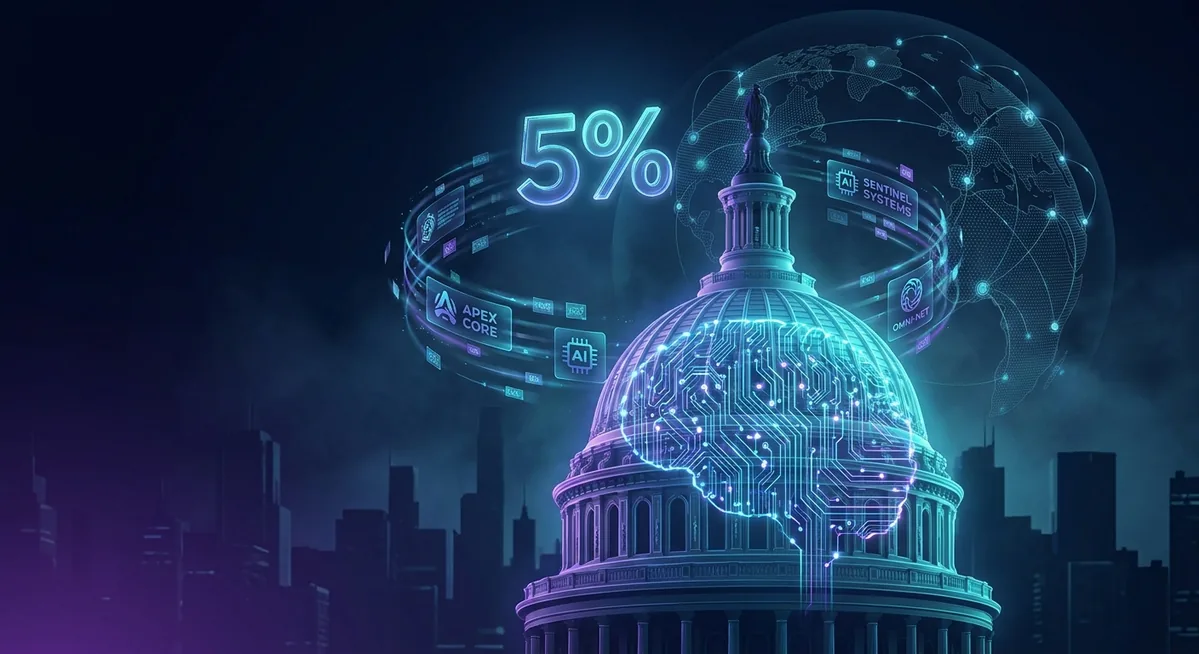
In what may be the most consequential corporate-government AI deal ever proposed, OpenAI CEO Sam Altman has opened preliminary discussions with the Trump administration about handing Washington a 5% equity stake in the company — a holding that would be worth approximately $42.6 billion at OpenAI's March 2026 post-money valuation of $852 billion. The story was first reported by the Financial Times on Thursday and quickly confirmed by Bloomberg and CNBC.
The proposed arrangement goes well beyond OpenAI itself. Altman's pitch envisions a broader framework under which Washington would hold 5% of each of the leading U.S. AI developers — including Anthropic, Google, and Meta — through a sovereign wealth fund vehicle. No other company has yet publicly agreed to the terms. The White House, Anthropic, Google, and Meta all declined to comment when contacted by CNBC.
"OpenAI CEO Sam Altman argued that giving the public a financial interest in the company is the best way to share the upside of AI." — Financial Times / CNBC, July 2, 2026
The move follows more than a year of escalating political pressure on major AI companies. That pressure reached its apex in June when the Trump administration imposed export controls on Anthropic's most capable models — a directive that forced Anthropic to suspend global access to Claude Fable 5 and Mythos 5 for nearly three weeks. The episode underscored how vulnerable frontier AI labs are to government intervention, even absent congressional legislation.
Washington's concerns have two primary vectors: cybersecurity vulnerabilities associated with frontier models, and rising Chinese open-source models that are increasingly competitive with American systems at a fraction of the cost. A government equity stake could be read as either a capitulation to political pressure or a savvy move to align incentives between the AI industry and the state.
This proposal reframes the entire AI governance debate. A government equity stake doesn't just protect Washington's interests — it gives the U.S. Treasury a structural reason to want American AI companies to succeed. That's a very different dynamic than adversarial regulation. For enterprise buyers, the implication is clearer federal buy-in on AI legitimacy, which should accelerate procurement decisions. For competitors, a government-backed moat around U.S. AI labs is a significant new barrier to entry. Watch whether this becomes a template for the next decade of strategic technology policy.
Sources: CNBC, Bloomberg, The Guardian
2. Anthropic Ships Claude Sonnet 5 and Fully Restores Fable 5 Access
Anthropic had a landmark 48 hours. The company launched Claude Sonnet 5, its most capable agentic mid-tier model to date, while simultaneously completing the redeployment of Claude Fable 5 to global users after the Trump administration formally lifted export controls on June 30.
Sonnet 5 ships with a native 1-million-token context window as both the default and maximum configuration — a dramatic step up from prior Sonnet generations. The model supports 128,000 maximum output tokens and adaptive thinking, and is already the default model in Claude Code. Anthropic positions it as the go-to model for agentic coding, knowledge work, and automated pipelines where cost-efficiency matters alongside capability. Pricing is $3 per million input tokens and $15 per million output tokens — meaningfully cheaper than Fable 5's $10/$50 rate, enabling longer agentic runs at manageable cost.
"Claude Sonnet 5 demonstrates a lower rate of 'undesirable behaviors' like cooperation with misuse and deception than its predecessor, making it safer to use in agentic contexts. It's better at refusing malicious requests and sidestepping hijack attempts in prompt-injection attacks." — TechCrunch, June 30, 2026
Meanwhile, Claude Fable 5 — which had been suspended since June 12 following a U.S. government export control directive triggered by an Amazon researcher report of a safeguard bypass — is now fully available on the Claude platform, Claude.ai, and Claude Code globally. Commerce Secretary Howard Lutnick confirmed via social media that his department had "worked closely with Anthropic to analyze and approve" the redeployment. A new cybersecurity classifier that blocks the previously-reported jailbreak technique ships alongside the restored access. Claude Mythos 5 access was restored for select U.S. organizations.
The episode revealed a new fault line in AI development: frontier models powerful enough to produce exploitable code can be grounded by the government in hours, not years. Anthropic's rapid deployment of a targeted safety fix — rather than broader capability restrictions — sets a template for how AI companies might respond to future directives without losing competitive ground for extended periods.
Two things happened this week that together define the new normal for AI enterprise buyers. First, Sonnet 5's 1M context window at Sonnet pricing is a massive unlock for agentic workflows — you can now run month-long agent sessions, process entire codebases in a single pass, or analyze years of enterprise documents without chunking. Second, the Fable 5 redeployment with a surgical safety patch rather than a wholesale capability downgrade is exactly what the enterprise wanted to see: that Anthropic can satisfy government security requirements without regressing capability across the board. This is the template for how the government-industry AI relationship matures.
Sources: MarkTechPost, CNBC, TechCrunch, Anthropic Platform Docs
3. OpenAI's GPT-5.6 Sol Targets 750 Tokens Per Second on Cerebras
OpenAI's model velocity continues to accelerate with the GPT-5.6 family entering a limited preview. The headline number is 750 tokens per second — the speed at which GPT-5.6 Sol is set to run on Cerebras inference hardware for select enterprise customers this month. That figure is not a benchmark artifact; it represents real-time generation fast enough to feel instantaneous for nearly any use case, including agentic pipelines with multiple model calls per second.
The GPT-5.6 family includes three model variants: Sol (the fastest), Terra, and Luna. Sol is launching on Cerebras infrastructure in a capacity-limited preview; ChatGPT users continue on GPT-5.5 for now, with general availability of the full 5.6 family expected later in July. Access to Sol has been restricted to a small group of trusted enterprise partners during the preview period — a pattern now familiar from both OpenAI and Anthropic's approach to their most capable systems.
"We're launching GPT-5.6 Sol on Cerebras at up to 750 tokens per second in July, bringing frontier intelligence to customers at unprecedented speed." — OpenAI, via Releasebot
The Cerebras partnership reflects a broader trend: as frontier models become more capable, the inference hardware race is becoming as competitively significant as the training race. Cerebras's wafer-scale chips offer dramatically lower latency than GPU clusters for sequential token generation, making them particularly attractive for agentic pipelines where the model is the bottleneck in a real-time loop.
At 750 tokens per second, the speed argument for keeping humans in agentic loops largely evaporates. If a model can process, reason, and respond faster than a human can read the output, the design question shifts from "how do we fit AI into human workflows?" to "how do we design entirely new workflows around continuous AI execution?" For enterprise architects, this is the moment to stop optimizing existing processes and start designing for AI-native operational flows. The companies that do this now will have a multi-year structural advantage.
Sources: Releasebot / OpenAI Release Notes, OpenAI Help Center
4. Google Brings Gemini Spark to Mac — and Adds Tasks, Keep, and Dozens of Third-Party Integrations
Google's agentic AI platform Gemini Spark — launched last month as a 24/7 cloud assistant for U.S. subscribers — arrived on macOS on July 1, bringing it into direct competition with Claude Desktop, Microsoft Copilot, and other desktop AI agents. The launch comes bundled with a significant expansion of integrations and capabilities that address some of the most-cited gaps in the initial release.
Spark can now access files on the Mac filesystem, turn local documents into Google Workspace content (invoices into spreadsheets, for example), and — in an eagerly anticipated update — connect to Google Tasks and Google Keep. Third-party integrations at launch include Canva, Dropbox, Instacart, OpenTable, and Zillow Rentals, enabling Spark to perform tasks like designing flyers, ordering groceries, reserving tables, and booking apartment tours autonomously.
"The macOS launch allows Gemini Spark to better compete with desktop AI agents like Claude Desktop, Microsoft's Copilot, and others, as it will be able to work with files on the computer, and later, handle remote tasks." — TechCrunch, July 1, 2026
The macOS beta is currently limited to Google AI Ultra subscribers in the United States. Spark also added real-time topic tracking — the agent can now monitor designated subjects and react to new developments automatically. Google says the ability to trigger multi-step tasks across phone and desktop (for example, asking a mobile agent to pull from a file on your Mac) is "coming soon."
The desktop AI agent category is rapidly becoming one of the most contested spaces in consumer AI. Apple's own Foundation Models and a personalized Siri running on a custom Gemini-based architecture remain on schedule for later this year, which will put Google's model infrastructure directly into hundreds of millions of Apple devices — a distribution play of historic scale.
The race for desktop AI agent primacy is the next consumer computing battleground, and Google is playing aggressively. The Spark integration strategy — Tasks, Keep, Canva, Dropbox, Instacart — is essentially a bet that the assistant who can execute across the full stack of daily life wins. For businesses, the more interesting signal is the Apple-Google Siri deal: when Gemini runs inside iOS natively, the addressable audience for AI agent features isn't measured in millions of subscribers, it's measured in the entire installed iPhone base. That's a distribution moat that no competitor can replicate.
Source: TechCrunch, July 1, 2026
5. UN Scientific Panel Issues Stark Warning: AI Governance Is Falling Behind — and the Window to Act Is Closing
The United Nations Independent International Scientific Panel on Artificial Intelligence released a major preliminary report this week, warning with unusual urgency that the global governance architecture for AI is failing to keep pace with the technology's capabilities — and that the window to establish effective oversight may not remain open much longer.
The panel's core concern is what it calls the "evidence dilemma": policymakers need reliable scientific data before introducing regulations, but by the time sufficient evidence accumulates, the technology may have already moved on. AI agents that can plan, use tools, write software, and complete complex assignments with minimal human oversight represent a qualitative shift from prior generations of AI systems — and they are arriving faster than any governance framework was designed to handle.
"AI could become one of humanity's most transformative technologies. Used responsibly, it could accelerate progress towards the Sustainable Development Goals by improving healthcare, education, scientific research, agriculture and accessibility for people with disabilities. But without safeguards, the same technology could deepen inequality, spread misinformation, threaten human rights, disrupt labour markets and place powerful AI systems in the hands of very few governments and companies." — UN Independent International Scientific Panel on AI, July 2026
The report lands against a backdrop of accelerating fragmentation in AI regulation: the Trump administration has taken an explicitly deregulatory, pro-innovation stance through its National AI Legislative Framework (March 2026), while states from Illinois to Colorado are passing their own AI laws. The EU AI Act's high-risk provisions have been delayed to 2027. And on July 1, the FTC issued a proposed policy statement raising concerns that AI companies may be manipulating the behavior of their systems contrary to consumer expectations — a rare consumer-protection intervention in the AI space.
The UN report articulates something that enterprise AI buyers should take seriously: the governance gap is not just a political problem — it is a risk management problem. When the rules are fragmented, uncertain, or lagging, the companies that build the best internal AI governance frameworks gain a decisive competitive advantage. They can move faster because they've already done the compliance work. They can attract enterprise customers who can't afford regulatory exposure. And they're better positioned when the rules eventually solidify. If you're building with AI at scale today, "governance-as-competitive-moat" is the frame that matters.
Sources: UN News, July 2, 2026, White & Case AI Regulatory Tracker
6. Enterprise AI Moves from "Tokenmaxxing" to ROI Discipline — and the IPO Race Accelerates
A quiet but consequential shift is underway in enterprise AI spending. CNBC reported last week that business leaders are increasingly unwilling to throw money at OpenAI or Anthropic without a clear return on investment — a dynamic that equity analysts are already calling out as a structural inflection point for both companies as they race toward what could be the largest tech IPOs in years.
The phenomenon has been dubbed "tokenmaxxing" — the practice of maximizing AI token consumption under the assumption that more compute equals more business value. As enterprise AI deployments mature, CFOs are beginning to push back. Gil Luria, a tech equity analyst at D.A. Davidson, put it plainly: "Current growth rates for Anthropic and OpenAI are the fastest they will ever be, which is mostly a matter of basic math. That is a good reason to go public now, as is the concern that some of their largest enterprise customers may start limiting their out-of-control token spend."
"Now, as they gear up for potentially historic IPOs — both filed confidentially in early June — the mood around AI is shifting, and business leaders are no longer willing to throw money at Anthropic or OpenAI without a clear picture of a return on their investment." — CNBC, June 26, 2026
The timing matters enormously. Both companies filed confidentially for IPO in early June. Deloitte and NVIDIA's 2026 enterprise AI reports confirm rapid adoption of agentic AI platforms and rising ROI — but also widening gaps in oversight and skills. Gartner's 2026 Magic Quadrant for Enterprise AI Coding Agents is generating intense discussion about which vendors can deliver measurable value at scale versus which are riding the hype wave.
The shift from "deploy and see" to "deploy and measure" is the maturation signal the enterprise AI market has been waiting for. This is not a pullback — it is the industry growing up. Companies that can demonstrate concrete ROI metrics (hours saved, error rates reduced, revenue per agent, time-to-close) will continue to scale their AI investments. Those running AI as a prestige project without accountability will face budget cuts. For AI consultants and implementation partners, this is actually an acceleration signal: enterprises need help building the measurement frameworks, governance structures, and operational workflows that turn AI capability into documented business value. That's the work to be doing right now.
Sources: CNBC, MarketScale / Deloitte + NVIDIA Reports
7. Illinois AI Laws Take Effect July 1 as the State Regulation Wave Accelerates
July 1 marked another enforcement milestone: a wave of new Illinois AI regulations took effect, including provisions targeting AI-facilitated bullying and new rules governing AI use in early childhood education. Illinois has been among the most active states on AI legislation — passing a landmark AI safety audit requirement earlier this year — and the July 1 effective dates represent the latest tranche of that effort going live.
The broader state regulation landscape is fragmenting rapidly. The Trump administration's National AI Legislative Framework explicitly seeks to preempt state AI laws that conflict with federal policy — but states are pushing back. Colorado's AI law hit its final compliance deadline in late June. And lawyers are warning that "AI regulation is here" for businesses that may have assumed federal deregulation created a compliance-free environment.
"Artificial intelligence is rapidly transforming how companies operate, but with that transformation comes increasing legal scrutiny, regulatory complexity, and operational risk." — Jason T. Seay, AIGP, CIPP-US, GableGotwals, July 1, 2026
The patchwork of state AI laws is creating genuine compliance complexity for mid-market companies operating across multiple states. Requirements vary significantly: Illinois focuses on safety audits and educational AI use. Colorado's law addresses automated decision-making in high-stakes contexts. California has its own evolving framework. Companies operating nationally are effectively navigating a 50-state AI compliance landscape with no federal floor.
For businesses in the middle market, the state regulation wave is the AI story that deserves the most immediate operational attention — more than any model release or corporate deal. If your company uses AI in hiring, lending, insurance, healthcare, or education, you almost certainly have new compliance obligations that took effect this week. The gap between "we use AI" and "we have documented AI governance" is where legal exposure lives. The companies investing in AI governance infrastructure now — policies, audit trails, human review processes — will have a structural advantage when federal preemption fights eventually resolve and a single compliance standard emerges.
Sources: CBS Chicago, GableGotwals
Why This Week Matters for Your Business
The seven stories above share a single through-line: the AI industry is being institutionalized. OpenAI offering the government an equity stake. Export controls being lifted only after safety classifiers are deployed. Enterprise buyers demanding measurable ROI. States enforcing AI compliance laws. The UN calling for global governance before the window closes. This is not the wild-west AI of 2023. This is an industry being woven into the fabric of government, capital markets, and law.
For executives, the implication is direct: the companies that treat AI as infrastructure — governed, measured, integrated, and accountable — will outperform those treating it as a feature or an experiment. The tools are now extraordinary (1M-token context, 750 tokens/second inference, desktop agents that can take real-world actions). The governance frameworks are still being written. The gap between those two facts is where strategic advantage lives in the second half of 2026.
At SEN-X, we help companies close that gap. If any of this week's stories prompted a question about your AI strategy, our team is ready to help you turn the noise into a plan.
Need help navigating AI for your business?
Our team turns these developments into actionable strategy — from governance frameworks to agentic workflow design.
Contact SEN-X →