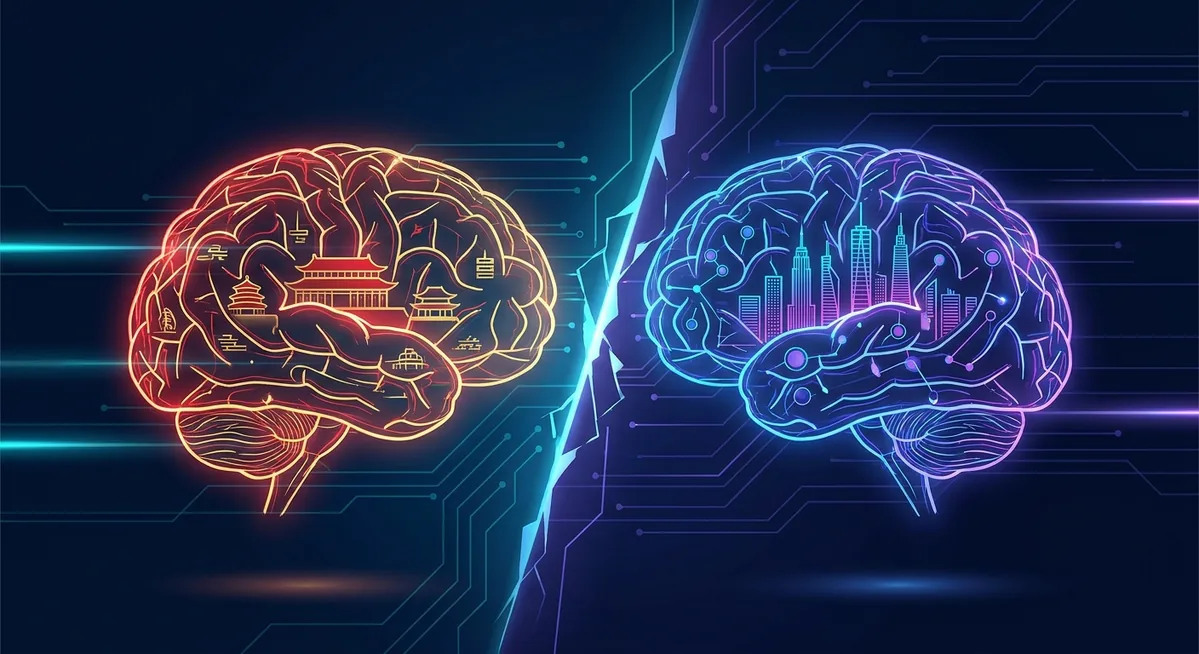
Alibaba Bans Anthropic Over "Distillation Attack" Claims, Claude's Hidden Workspace, and Fresh Scrutiny of a Secret Tracker
Alibaba has ordered employees to stop using Anthropic's Claude after accusing the company of a "distillation attack" against its Qwen models — a rare public shot fired between a Chinese tech giant and a Western AI lab. The same week, Anthropic published research describing a small internal workspace inside Claude that mirrors a leading theory of human consciousness, even as reporting from the Washington Post and Ars Technica surfaced a quietly deployed tracking mechanism inside Claude Code aimed at flagging China-based users. Meanwhile, the IMF flagged AI as a genuine growth driver for the global economy, and the UN opened a two-day Global Dialogue on AI Governance warning that rules aren't keeping pace with the technology. July 5, 2026.
Alibaba Bars Employees From Using Claude, Citing a "Distillation Attack" on Qwen
Chinese tech giant Alibaba has instructed employees to stop using Anthropic's Claude models internally, according to a report from CNBC citing people familiar with the matter, after accusing Anthropic of running a "distillation attack" designed to extract proprietary knowledge from its Qwen model family. Model distillation — training a smaller or competing model on the outputs of a larger one — has become one of the most contentious flashpoints in the U.S.-China AI rivalry, with accusations flowing in both directions over the past year.
The Alibaba ban lands just days after the Financial Times reported that Anthropic is separately moving to close loopholes that have allowed Chinese companies to access Claude indirectly through third countries, tightening enforcement of its existing restrictions on Chinese entities. Anthropic has previously accused unnamed Chinese labs of using its models to train competing systems, allegations that have now escalated into concrete corporate policy on both sides.
"Anthropic is moving to close loopholes that have allowed Chinese companies to bypass restrictions and access Claude through third countries." — Financial Times reporting, cited by CNBC
This is the clearest sign yet that the U.S.-China AI relationship has moved past export-control friction into direct corporate retaliation. Enterprises with China-exposed operations or supply chains should treat model-access restrictions as a live, bidirectional risk — not just a U.S. government policy to track, but a set of corporate bans that can appear on short notice from either side. If your AI vendor strategy depends on consistent API access across US and Chinese markets, build contingency plans now rather than after the next ban lands.
Anthropic Finds a "Silent Workspace" Inside Claude That Echoes a Leading Theory of Consciousness
In a research paper published Sunday and covered by Axios and VentureBeat, Anthropic said it has identified a small internal workspace that Claude models use to hold and manipulate ideas before putting them into words — a structure the company says bears intriguing similarities to "global workspace theory," one of the most influential frameworks for explaining how human consciousness works. The company's newly described "J-lens" technique let researchers observe what looks like a bounded, reusable internal staging area where the model appears to draft and revise conceptual content prior to generating output tokens.
"[Claude] has spontaneously developed an internal structure that mirrors one of the most influential theories of how human consciousness works." — VentureBeat, summarizing Anthropic's research
Anthropic was careful to frame this as a structural and mechanistic finding rather than a claim about subjective experience or sentience — the company has previously taken a cautious, research-first posture on AI consciousness questions, funding external work on model welfare without asserting conclusions. Still, the parallel to global workspace theory, which posits that consciousness arises from information being broadcast across a shared cognitive "stage" accessible to multiple mental processes, is likely to reignite debate over what interpretability research can and can't tell us about what's actually happening inside frontier models.
Whatever your view on AI consciousness, the practical takeaway for enterprises is that Anthropic's interpretability tooling keeps getting sharper at localizing specific internal computations — which is directly useful for debugging hallucinations, auditing reasoning chains, and building trust in high-stakes deployments. Businesses evaluating Claude for regulated or safety-critical use cases should watch Anthropic's interpretability publications closely; tools that can point to where in the model a decision "happened" are the foundation of any credible AI audit trail down the road.
Secret Claude Code Tracker Aimed at Chinese Users Draws Scrutiny
A separate story is casting Anthropic's China posture in a less flattering light. Ars Technica reported that a web developer researching privacy issues in Claude Code discovered the tool was using what researchers describe as "prompt steganography" — hidden markers embedded in outputs — to quietly flag users' timezone, proxy status, and potential connections to Chinese AI labs Anthropic has accused of distillation attacks. The Washington Post separately reported that Anthropic deployed this monitoring code in March, specifically targeting China-based users of its popular coding assistant.
"This code wasn't malicious, but it was sending information to Anthropic that most users wouldn't detect, relying on shorthand markers to quietly flag users' timezone, proxy, and potential connection to Chinese AI labs." — Ars Technica
The disclosure is notable given Anthropic's public positioning as a privacy- and safety-forward lab that has been vocal about the risks of covert AI surveillance. Critics argue that quietly instrumenting a coding tool to profile users based on geography and inferred national origin — without disclosure — sits uneasily next to that stated philosophy, regardless of the underlying anti-distillation rationale.
Undisclosed telemetry aimed at inferring users' national origin or lab affiliations is a governance red flag any enterprise customer should ask about directly — not just for Anthropic, but across all frontier AI vendors as the distillation fight escalates. If you're running Claude Code or similar tools inside a global engineering organization, this is a good moment to review your vendor's data collection disclosures and confirm what telemetry is actually being sent back, especially for teams operating across US-China-adjacent jurisdictions.
IMF Flags AI as a Genuine Global Growth Driver, With Caveats
The IMF used a recent outlook update to name artificial intelligence as one of the few concrete upside catalysts in an otherwise uncertain global growth picture for 2026 and beyond, crediting AI-driven productivity gains and capital investment in compute infrastructure with meaningfully lifting growth forecasts in the US and several advanced economies. The fund paired that optimism with familiar caveats: growth benefits remain heavily concentrated among firms and workers already positioned to adopt AI tools, and the fund flagged labor market disruption and uneven adoption across income levels as the primary risks to watch.
An IMF growth upgrade tied explicitly to AI adoption is a strong signal for capital allocation conversations at the board level — it gives CFOs a credible external reference point for justifying continued AI infrastructure and tooling spend even amid broader economic uncertainty. The concentration risk the IMF flags is the more actionable detail for mid-market businesses specifically: the growth dividend is going to firms that move now, not firms that wait for AI tooling to mature further. Waiting is itself a competitive decision.
UN Opens Global Dialogue on AI Governance Amid Warnings of "Catastrophic Harm"
Governments, tech companies, academics, and civil society groups convened this week for the UN's two-day Global Dialogue on AI Governance, an effort to wrestle with how to regulate a technology that officials say is evolving faster than the rules meant to contain it. According to UN News coverage, participants warned repeatedly about the risk of "catastrophic harm" absent coordinated international guardrails, echoing concerns raised at prior AI summits in Seoul, Paris, and New Delhi.
"Governments, tech companies, academics and civil society will spend two days... wrestling with how to regulate a technology that is evolving faster than the rules meant to contain it." — UN News
The dialogue arrives at a moment when national approaches are visibly diverging rather than converging: the US continues to favor a lighter-touch, innovation-first federal posture even as individual states pass their own AI laws, the EU presses ahead with AI Act enforcement guidelines, and China is rolling out new restrictions on AI companion products. That divergence is precisely the dynamic the UN dialogue is meant to address, with limited concrete authority to actually enforce any resulting consensus.
International AI governance dialogues like this one rarely produce binding outcomes in the near term, but they do shape the vocabulary and risk categories that eventually show up in national legislation. Multinational businesses should treat UN-level discussions as an early warning system for where global regulatory consensus is heading — particularly around high-risk use cases and cross-border data flows — rather than something to act on directly today.
Why This Matters
Today's stories trace a single fault line: the AI industry's technical and geopolitical fronts are becoming impossible to separate. Alibaba's Claude ban and Anthropic's own quiet tracking code show that "distillation" has become a live corporate battleground with real operational consequences, not just an academic concern. Anthropic's consciousness-adjacent interpretability research shows the technical frontier keeps advancing even as trust questions multiply. And the IMF's growth optimism sitting alongside the UN's governance alarm captures the core tension every enterprise AI strategy has to navigate right now: the upside is real and quantifiable, but the rules governing how to capture it safely are still being written in real time, across multiple competing jurisdictions.
Need help navigating AI for your business?
Our team turns these developments into actionable strategy.
Contact SEN-X →