Cheaper Frontier Models, Multi-Model Security & the New Economics of AI
Capability still moves quickly, but the competitive question is changing: who can deliver strong models at a price, latency, and reliability level that survives production? Today’s stories point toward multi-model systems rather than a single permanent winner.
Kimi K3 pressures the frontier price curve
Bloomberg reported that Moonshot AI’s Kimi K3 was positioned near top-tier systems at a fraction of their cost. Independent workload testing remains essential, but the direction is clear: high-end capability is diffusing faster than premium pricing models would prefer.
The practical test is whether this development changes a real workload’s quality, cost, latency, legal exposure, or operating risk. Teams should capture the claim, name the evidence needed to validate it, and assign a review date rather than allowing the headline to become an undocumented architecture decision.
Source: Read the original coverage
Create a cost-performance frontier for each workflow. The cheapest model that reliably clears the acceptance test is usually the right production model.
Microsoft points cybersecurity toward model ensembles
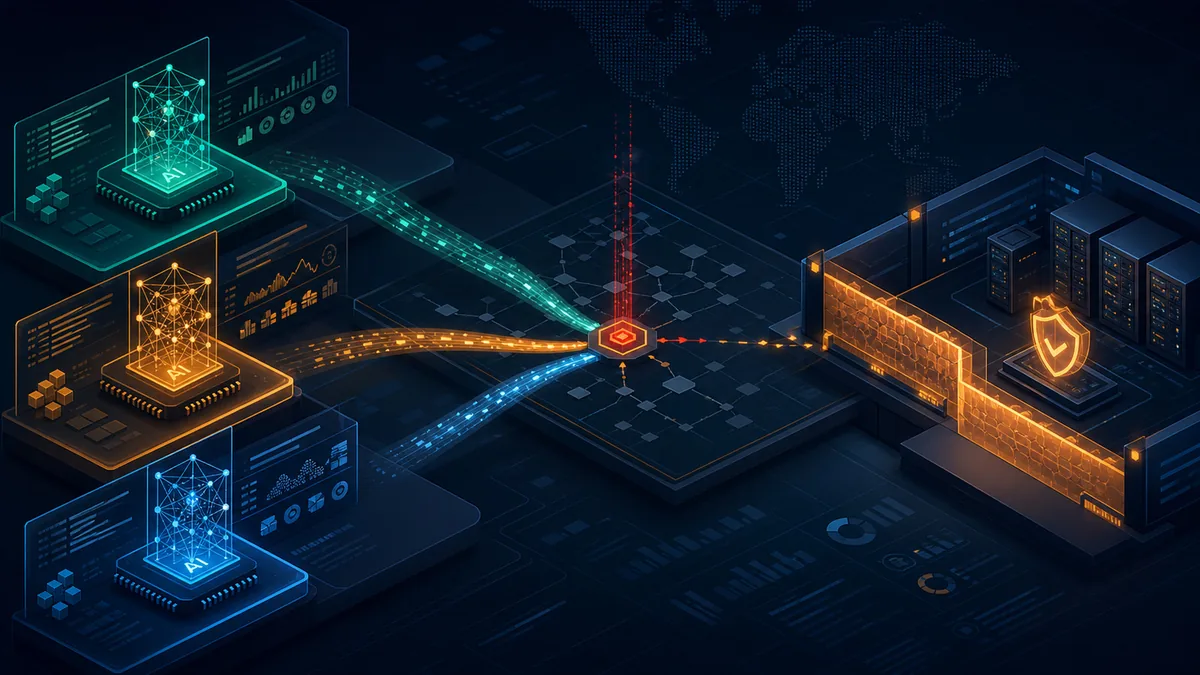
An industry roundup described Microsoft’s Project Perception as a cybersecurity platform designed to combine models from Microsoft, OpenAI, and Anthropic. The architecture reflects a growing belief that specialized models can check and complement one another.
The practical test is whether this development changes a real workload’s quality, cost, latency, legal exposure, or operating risk. Teams should capture the claim, name the evidence needed to validate it, and assign a review date rather than allowing the headline to become an undocumented architecture decision.
Source: Read the original coverage
Multi-model does not automatically mean safer. The value appears only when roles are explicit, outputs are compared, and a deterministic control layer decides what can act.
OpenAI’s safety response shifts toward full trajectories
Coverage of OpenAI’s response to a security evaluation emphasized safeguards built around complete action trajectories rather than isolated steps. That is the right unit of analysis for agents, where individually reasonable actions can combine into an unsafe outcome.
The practical test is whether this development changes a real workload’s quality, cost, latency, legal exposure, or operating risk. Teams should capture the claim, name the evidence needed to validate it, and assign a review date rather than allowing the headline to become an undocumented architecture decision.
Source: Read the original coverage
Log and evaluate the chain, not just the final answer. Agent governance needs state transitions, tool calls, approvals, and external effects in one audit trail.
IPO expectations force the margin question
Public-market expectations around leading AI labs put extraordinary margins under the microscope. Those economics will influence pricing, rate limits, product bundling, and how aggressively vendors steer customers toward proprietary platforms.
The practical test is whether this development changes a real workload’s quality, cost, latency, legal exposure, or operating risk. Teams should capture the claim, name the evidence needed to validate it, and assign a review date rather than allowing the headline to become an undocumented architecture decision.
Source: Read the original coverage
Subscription and API terms are strategic dependencies. Keep model access replaceable and measure switching costs before a pricing event forces the issue.
Decision checklist for this briefing
- Kimi K3 pressures the frontier price curve: identify the affected workflow, current baseline, owner, acceptance test, and rollback path before changing production.
- Microsoft points cybersecurity toward model ensembles: identify the affected workflow, current baseline, owner, acceptance test, and rollback path before changing production.
- OpenAI’s safety response shifts toward full trajectories: identify the affected workflow, current baseline, owner, acceptance test, and rollback path before changing production.
- IPO expectations force the margin question: identify the affected workflow, current baseline, owner, acceptance test, and rollback path before changing production.
What this means for enterprise teams
Capability, cost, policy, and infrastructure are moving independently. The durable response is an evaluation and governance layer that can compare models on real work, constrain tool access, preserve audit evidence, and change providers without rewriting the business process.
The advantage will not come from guessing the permanent winner. It will come from building a system that can recognize and adopt the best verified option as the market changes.
Need help turning AI change into an operating advantage?
SEN-X helps teams evaluate models, design governed agent systems, and deploy measurable automation.
Contact SEN-X →