Nvidia’s Board Investigates Jensen Huang as Anthropic Buys $3.4 Billion in Gas Generators and Coding Agent Harnesses Split on Cost
Sunday’s AI news ran through boardrooms and power yards. Nvidia’s board opened an independent investigation after reports that Jensen Huang was the target of a foreign intelligence effort. The Financial Times reported that Anthropic bought 1.7 gigawatts of gas generators for about $3.4 billion, and Britain said it will keep building data centers. Plus: Garry Tan’s open harness evals, Artificial Analysis’s Decision Index v2, new Suno lawsuits and the end of Microsoft’s AI Frontiers.
Nvidia’s Board Opens an Independent Investigation Into Jensen Huang
Nvidia’s board said on Sunday that it is opening an independent investigation after reports that founder and CEO Jensen Huang was the target of a foreign intelligence effort. According to the statement from Nvidia’s board of directors, a committee of independent directors, assisted by outside independent counsel, will run the review, Huang has committed to cooperating, and the board says it has confidence in him and his leadership team. The company pointed to the release from the Nvidia Newsroom X post announcing the board statement. The board wrote:
“While the Board has no reason to believe that either national security or NVIDIA secrets were compromised, the Board's inquiry will examine all available information.”
The reporting centers on Alice Huang, who is not related to the CEO and is affiliated with Megaspeed, a Singapore-based cloud company and Nvidia customer. Per CNBC’s report on the investigation and Huang’s staff email, US intelligence agencies have expressed concern that she passed information to Beijing, according to The New York Times and the Financial Times. In an email to employees, Huang said he had been unfaithful to his wife and apologized, and a spokesperson said he will continue as CEO without interruption. CNBC adds that three House Republican committee chairs have asked Huang for a closed-door briefing on November 18, the day after Nvidia reports third-quarter earnings.
TechCrunch’s account of the board announcement notes that Nvidia had earlier called the pair’s interactions “not unusual” and said it does not share classified information with customers. None of the espionage claims have been proven in public, and Nvidia has not described the scope or timetable of the review.
For customers, the practical question is continuity, not gossip. Nvidia’s roadmap, allocation and export-licence work run through a small leadership group, and a board review during earnings season adds uncertainty. Teams with large GPU commitments should confirm delivery schedules in writing and keep a second supplier conversation warm, without assuming any disruption.
Anthropic Reportedly Buys 1.7 Gigawatts of Gas Generators for About $3.4 Billion
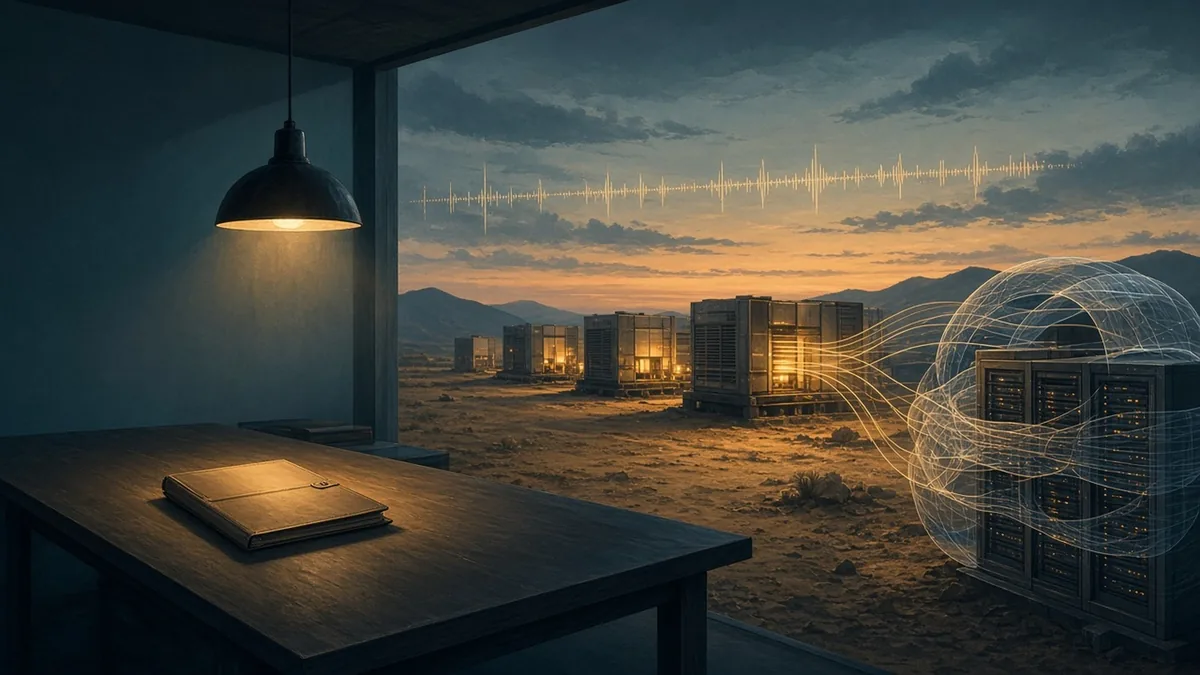
Anthropic agreed in late September to pay about $3.4 billion for commitments covering 1.7 gigawatts of heavy-duty gas-fired generators, the Financial Times reported on Sunday. As summarized in CNBC’s write-up of the FT report on Anthropic’s generator deal, the seller was OnePWR Solutions, an equipment supplier in San Antonio, Texas. Anthropic did not buy the company and none of its employees moved over, but the deal included the engineering and construction capabilities needed to install the machines. Neither company commented, and Reuters could not verify the report.
The Next Web’s summary of the OnePWR generator purchase adds that OnePWR had ordered the generators from Caterpillar about two years ago but needed financing to finish the purchase. Anthropic first planned to buy power from OnePWR and instead took over the orders. The FT called it the biggest known single purchase of power equipment by an AI company. Where the generators will run has not been disclosed.
Owning generation hardware is becoming part of the frontier-lab playbook, because turbine and engine queues now stretch for years. For enterprises, the lesson is that capacity is a supply chain problem. Ask cloud and colocation providers how their sites are powered, what backup generation they control and how exposed they are to grid-connection delays.
Britain Says It Will Keep Building Data Centers as “Essential Infrastructure”
While opposition to data centers grows in the United States, Britain’s growth minister says the UK will not slow down. According to Engadget’s report on the UK minister’s data center comments, Dan Tomlinson told the Financial Times that construction will continue as “essential infrastructure” because AI use is spreading through the economy. He said projects will have to invest in local communities and create jobs to get government support, and that the government had learned from the “free-for-all in parts of the US.” The UK Compute Roadmap calls for at least 6 GW of AI-capable data center capacity by 2030.
Expect governments to compete openly for the compute that American towns are turning away, and to attach community benefit conditions to it. Companies choosing regions for AI workloads should weigh planning certainty and power availability alongside price, and should be ready to show local hiring and investment commitments to win approvals.
Garry Tan’s Open Harness Evals Find Coding Agents Tie on Accuracy but Not on Cost
Y Combinator CEO Garry Tan published early results from an open-source project that holds the model and tasks fixed and swaps only the agent harness, meaning the system prompt, tools and memory. In Garry Tan’s X post sharing his first harness eval results, he described the work as something he was doing “out of curiosity.” The g-harness-evals repository on GitHub, released under the MIT license, tested Claude Code, Hermes Agent, OpenClaw and Y Combinator’s QM on Opus 5.5, and Codex, Hermes Agent and OpenClaw on GPT-6.1 Sol, across 20 public tasks set in a simulated company. The README says:
“Pass rates couldn't be told apart in any tested pair on these 20 public multi-user tasks”
Pass rates landed between 71.3% and 78.8%. Cost per solved task varied more: on Opus, QM came in at $0.19, Claude Code at $0.22 and Hermes Agent at $0.24, while OpenClaw cost $0.44 and was slowest at 99.4 seconds per trial. The repository attributes about 81% of OpenClaw’s extra cost over Claude Code to cache writes from a larger system prompt and bigger tool results. On Sol, Codex was cheapest and fastest at $0.17 and 30.1 seconds. Tan labels these development results on public tasks rather than held-out confirmation, notes that both OpenClaw cells were incomplete, and discloses that Y Combinator backs QM and Hermes and that OpenClaw’s creator works for OpenAI.
This is a useful template even with small samples: fix the model, fix the tasks, meter every token through one proxy and publish the receipts. Teams standardizing on an agent harness should run the same experiment on their own workflows, because a doubling in cost per solved task matters more at scale than a few points of pass rate.
Artificial Analysis Rebuilds Its Decision Index Around Private Data and Calibration
Artificial Analysis released version 2 of its Decision Index, which ranks models used for classification, extraction and routing decisions. Artificial Analysis’s announcement of Decision Index v2, dated November 8, says 45% of the index now comes from private datasets, up from 25%, to guard against benchmark gaming. A new headline Decision Score rewards both correct answers and calibrated confidence, equal to 50 times one plus accuracy minus the Brier score.
The main addition is AA-Paperclip, a private set of 1,500 resumes, receipts, invoices and research papers, where a document counts only if all 15 decisions and extracted facts are right. Claude Haiku 5.5 (Max) passes 92% and GPT-6 Luna (Max) 86%, against 63% for Drex Max v1.1, the top specialist decision model. Drex Max gets 97% of individual answers right yet fails over a third of documents. Specialists are far cheaper and faster: Drex Max costs $102 per million tasks against $1,530 for GPT-6 Luna (Max), and takes 275 milliseconds per task against 11.34 seconds.
The all-or-nothing document score is the right lens for back-office automation, where one wrong field can break a workflow. Buyers should test models on whole documents rather than per-field accuracy, and use calibrated confidence to decide which cases go to a cheap specialist model, a frontier model or a person.
Elvis Presley’s Rights Holders and Eminem’s Publisher Sue Suno
A group of Elvis Presley rights holders, including Authentic Brands Group, and Eight Mile Style, which controls many Eminem recordings, filed separate federal lawsuits against AI music generator Suno in the Northern District of California. According to Variety’s report on the Presley and Eight Mile Style complaints, the 51-page Presley filing alleges copyright infringement and violations of Tennessee’s 2024 ELVIS Act, which bars cloning a singer’s voice without permission. Eight Mile Style alleges Suno lets users generate songs and lyrics that mirror Eminem’s tracks; Eminem himself is not a plaintiff. Authentic Brands Group and other Presley publishers sued Anthropic in October over 274 songs.
The Verge’s coverage of the two new Suno lawsuits notes that Suno already faces suits from Sony, Universal Music Group, Jason Isbell and others. A Suno spokesperson said:
“Suno exists to help people create new, original music, not to trade on anyone’s name or likeness, and we prohibit any unauthorized use of an artist’s work.”
The ELVIS Act claim is the one to watch, because it targets voice and identity rather than training data alone. Any company generating audio, including marketing and sync work, should keep prompt logs, block artist-name and sound-alike requests, and get written licenses before releasing anything that could be heard as a specific performer.
John Langford Says Microsoft’s AI Frontiers Research Group Is Over
John Langford, a longtime Microsoft Research scientist, wrote that AI Frontiers, the roughly 50-person group he helped organize in 2023, has ended and that he has left the company. In John Langford’s blog post on the end of AI Frontiers, posted November 6 and updated November 7, he says the group built the AutoGen orchestration framework and the Fara computer-use agent before it was reorganized into Microsoft AI in early September. He described the leadership from Inflection that runs Microsoft AI this way:
“The core philosophy there is scaling, and aggressively not research.”
Langford argues that returns to research remain large, citing ByteDance experiments suggesting a variant of his group’s Full Bandwidth Transformer may match a model twice its size. He says every other founding AI Frontiers leader appears to have reached a similar conclusion, and that the group will not take interns next year. Microsoft has not commented on the post.
Scaling-only strategies are easier to budget, but they move research talent to wherever ideas can still reach production. For enterprises, it is a reminder that vendor roadmaps reflect internal bets: when a provider shuts down architecture research, expect its gains to come from data and compute rather than efficiency breakthroughs that lower serving costs.
What We Left Out
Vercel added DeepSeek V4.1 Flash 1017 Ultrafast to its AI Gateway on November 7, served through Fireworks at upwards of 1,000 tokens per second, per Vercel’s changelog entry for DeepSeek V4.1 Flash Ultrafast; we will look at it with fuller testing. Mistral showed Voxtral 3 Transcribe captioning AI Engineer Paris in real time, a demo of an existing model rather than a launch. Charts tied to OpenAI’s earlier Navier–Stokes work, a David Sacks warning about a federal “Department of AI” and new Apple Siri roadmap reports either repeat older news or could not be confirmed against a primary source.
Need help navigating AI for your business?
Our team turns these developments into actionable strategy.
Contact SEN-X →