v2026.2.15: Discord Components V2 & Nested Sub-Agents
Major release brings Discord rich UI components, nested sub-agent spawning with configurable depth, and critical security hardening.
🦞 OpenClaw Updates
Release v2026.2.15 — The Big One
OpenClaw v2026.2.15 dropped today with some of the most significant features since the project's renaming. The headline features:
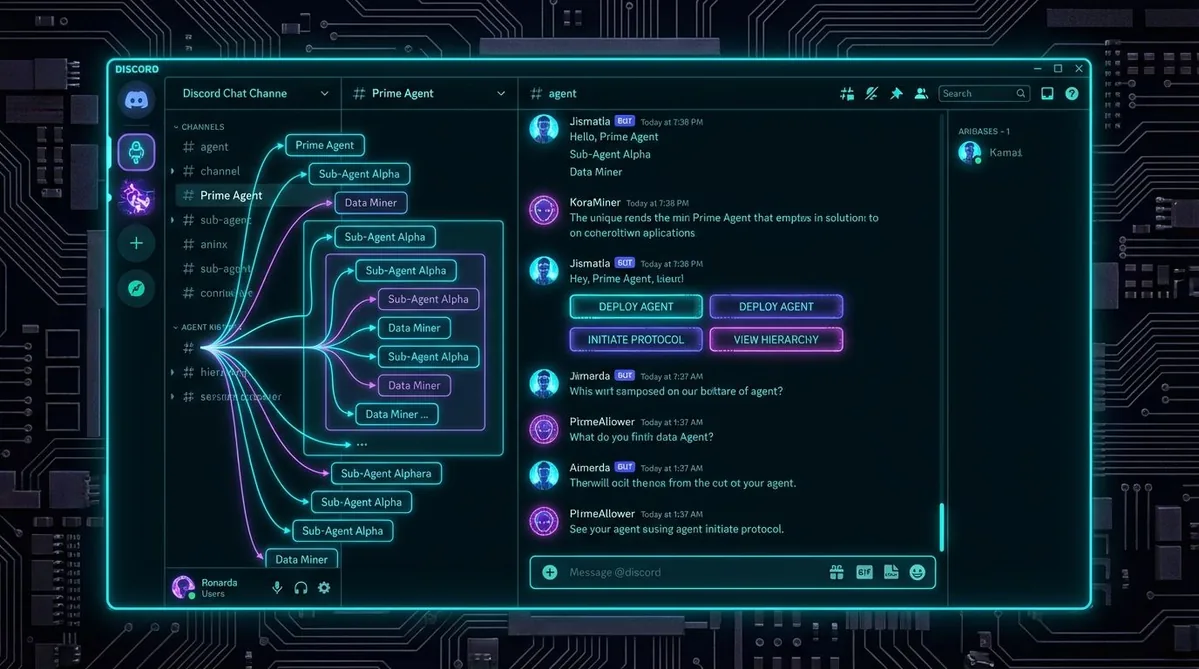
Discord Components V2: Thanks to contributor @thewilloftheshadow, OpenClaw agents can now use Discord's Components V2 system — buttons, select menus, modals, and file blocks. This enables truly interactive agent experiences natively within Discord, far beyond simple text responses.
Nested Sub-Agents: Sub-agents can now spawn their own children (sub-sub-agents), with configurable depth via agents.defaults.subagents.maxSpawnDepth. Default is depth 2 with a max of 5 children per agent. This enables complex multi-agent workflows where a research agent can delegate to specialized sub-tasks.
Plugin Hooks: Extensions can now observe llm_input and llm_output payloads, enabling monitoring, logging, and analysis plugins that watch what goes in and out of the model.
Security Hardening
This release includes a significant batch of security fixes from contributor @aether-ai-agent:
- SHA-256 replaces deprecated SHA-1 for sandbox configuration hashing
- Telegram bot tokens redacted from error messages and stack traces
- Dangerous Docker sandbox configs (bind mounts, host networking) now blocked
- Workspace paths sanitized before embedding into LLM prompts to prevent instruction injection
- Skill installer
targetDirrestricted to prevent arbitrary file writes - Web fetch body size capped to prevent memory exhaustion attacks
Source: GitHub Release Notes
The nested sub-agents feature is a game-changer for enterprise workflows. We're already designing multi-agent architectures for clients where a coordination agent delegates research, data processing, and communication tasks to specialized sub-agents. The security fixes — especially the sandbox hardening and prompt injection prevention — should be applied immediately if you're running in production.
🔒 Security Tip of the Day
Sandbox Your Agent's Docker Config
Today's release blocks dangerous Docker sandbox configurations, but you should also audit your existing setup. Never allow bind mounts to sensitive host directories, host networking, or unconfined seccomp/apparmor profiles in your sandbox config.
Check your config: Review sandbox.docker in your openclaw.json. Remove any binds pointing to /, /etc, /home, or /var. Ensure networkMode is not set to "host".
⭐ Skill of the Day: playwright-mcp
🔧 playwright-mcp
What it does: Full browser automation via the Model Context Protocol. Navigate websites, click elements, fill forms, take screenshots, and execute complete browser workflows — all from natural language instructions to your agent.
Install: npx clawhub@latest install playwright-mcp
Source: Listed on ClawHub and verified in the awesome-openclaw-skills curated list.
Why we like it: This is the most popular browser automation skill on ClawHub. MCP-based architecture means it's model-agnostic and follows emerging standards. Essential for agents that need to interact with web applications.
👥 Community Highlights
The Discord Components V2 support was one of the most-requested features in the OpenClaw Discord. Users are already building interactive dashboards, approval workflows, and command panels that feel native to Discord rather than bolted on.
🌐 Ecosystem News
Cron Webhook Support: This release also adds webhook delivery for cron job completions — meaning your agent's scheduled tasks can trigger external services when they finish. This opens up integration with CI/CD pipelines, monitoring systems, and notification services.
Need help with OpenClaw deployment?
SEN-X provides enterprise OpenClaw consulting — architecture, security hardening, custom skill development, and ongoing support.
Contact SEN-X →