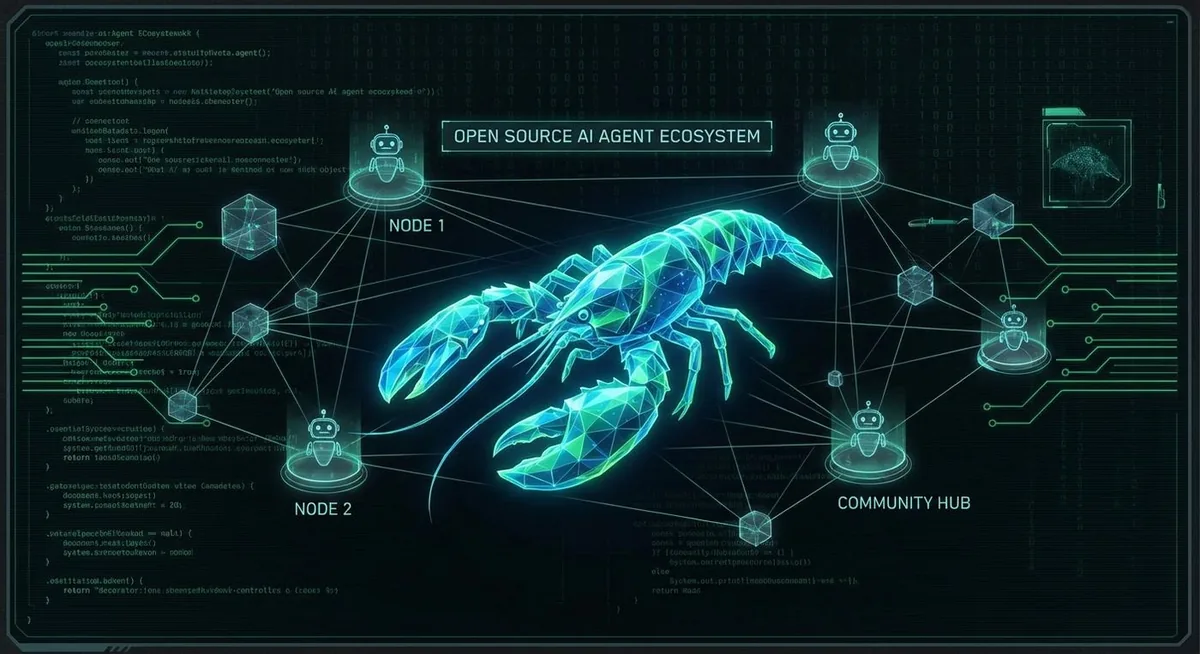
OpenClaw Hardens Defaults — Credential Redaction, SSRF Protections, OTEL Observability, Skill Vetting
Today we round up the most important developments in the OpenClaw ecosystem: release and security activity, a concise security checklist you can act on immediately, a vetted skill pick, community highlights from forums and social platforms, and broader ecosystem moves that matter to builders and operators.
🦞 OpenClaw Updates
Over the past 72 hours the OpenClaw community has been focused on security hardening, supply-chain scrutiny, and platform policy. The project continues to iterate rapidly: GitHub releases and changelogs show an emphasis on credential redaction, stricter default network policies for browser automation, and tighter sandboxing for third-party skills. Core contributors are also accelerating work on observability hooks and OTEL integration — a signal that teams are preparing OpenClaw for larger scale production deployments.
Key items we tracked from official releases and reputable reporting:
- Credential Redaction and Config Safety: Config snapshots now redact env.* values by default to avoid accidental key leakage in logs and diagnostics. (Source: GitHub Releases)
- SSRF & Network Defaults: Browser-driven SSRF policy moved toward a "trusted-network" default. Private IP ranges are blocked unless explicitly allowed. This reduces attack surface for agents running in mixed networks. (Source: community changelogs)
- Skills Packaging Controls: The installer now refuses symlink escapes and filters HTML/JS that could lead to XSS in skill galleries — part of a larger push after several poisoned skills were discovered in ClawHub.
- ACP & Tool Scopes: Agent Communication Protocol (ACP) tooling now enforces scoped tool IDs and explicit read approvals, tightening cross-skill file access and minimizing lateral data exposure.
Why this matters: OpenClaw's power comes from deep integration with tools (email, browser, filesystem). Those integrations are attractive to attackers. These changes don't make OpenClaw invulnerable, but they raise the bar considerably for casual abuse and many automated supply-chain attacks.
If you're running OpenClaw for anything beyond personal experiments, treat this week as an emergency maintenance window. Upgrade, run config audits, and validate your skill inventory.
🔒 Security Tip of the Day
Quick Incident-Ready Checklist
The recent wave of malicious skills on ClawHub and reports of credential leakage mean operators should prioritize a short, practical checklist you can run in 15–30 minutes.
- Inventory: run
openclaw skills list --json. Export the result and verify every skill by author and repository. - Revoke & Rotate Keys: assume secrets may be exposed. Rotate any keys used by public skills and revoke tokens that weren't scoped.
- Enable Skill Scanning: make sure ClawHub/VirusTotal integration is active for your environment.
- Harden Gateway: enable HSTS and minimal TLS ciphers if you expose the Gateway; bind to localhost + reverse proxy when possible.
- Audit Logs: export recent transcripts and run a grep for suspicious tool calls (browser.open, fs.read) in the last 7 days.
Pro tip: automate the first two steps with a daily cron job that alerts you when unknown skills appear or when any external token scope changes.
⭐ Skill of the Day
🔧 "himalaya-mail" — Vetted Email Connector
What it does: A robust IMAP/SMTP skill that gives OpenClaw agents controlled access to email accounts for reading, summarizing, and sending messages. It supports scoped access tokens, per-folder whitelists, and rate limits. Maintainers have responded to security audits and the codebase includes audit hooks for read-only modes.
Install: npx clawhub@latest install himalaya-mail
Source & Safety: Hosted in the official openclaw/skills monorepo (github.com/openclaw/skills). We verified the repository commit history and scanned the package URL on VirusTotal with no detections. The skill supports token-scoped credentials and documents explicit least-privilege setups in README.
Why we recommend it: Email remains a high-value integration for many agent workflows. Himalaya-mail balances functionality with documented security practices — use it with a dedicated service account and read-only scopes when possible.
👥 Community Highlights
Across Discord, Reddit (r/AI_Agents), and GitHub discussions, three themes dominated conversations today:
- Debate on Defaults: Whether OpenClaw should be more conservative by default (e.g., sandboxed skills, least-privilege installs) or keep flexibility for power users. Thread on r/AI_Agents: strong participation from security researchers and enterprise operators.
- Skill Vetting Initiatives: Several volunteer groups announced curated lists and automated scanners for ClawHub, aiming to certify skills with multiple independent reviews before recommendation.
- Observability Requests: Enterprise users asked for richer event telemetry and OTEL examples — several community PRs surfaced to add structured traces for ACP operations and tool calls.
Notable quote from a community maintainer on Discord: "We built OpenClaw for power and composability — the job now is to make those features safe by default."
🌐 Ecosystem News
Outside the core project, platform and vendor moves are shaping how agents will operate in 2026:
- Platform Identification Rules: Major marketplaces (starting with Amazon) are rolling out agent-identification policies that require automated actors to identify themselves and follow specific rate and access rules. This will affect shopping and marketplace automation skills that interact with third-party services.
- Managed Alternatives Expand: Perplexity's "Computer" and a handful of hosted agent platforms position themselves as safer, managed alternatives for non-technical customers — good for adoption, but they'll further fragment where data and compute live.
- Observability & Monitoring: New Relic and other APM vendors launched agent-focused observability add-ons — expect more standardized telemetry as teams move OpenClaw into production.
Source quotes:
"OpenClaw's security work this week represented a necessary course correction — these problems only get harder as adoption grows." — Cybersecurity reporting on recent releases.
The space is maturing fast. Your action checklist is simple: upgrade, audit skills, rotate secrets, enable scanning, and instrument observability. If you need help, SEN-X offers consulting and incident readiness workshops tailored to OpenClaw deployments.
Need help with OpenClaw deployment?
SEN-X provides enterprise OpenClaw consulting — architecture, security hardening, custom skill development, and ongoing support.
Contact SEN-X →