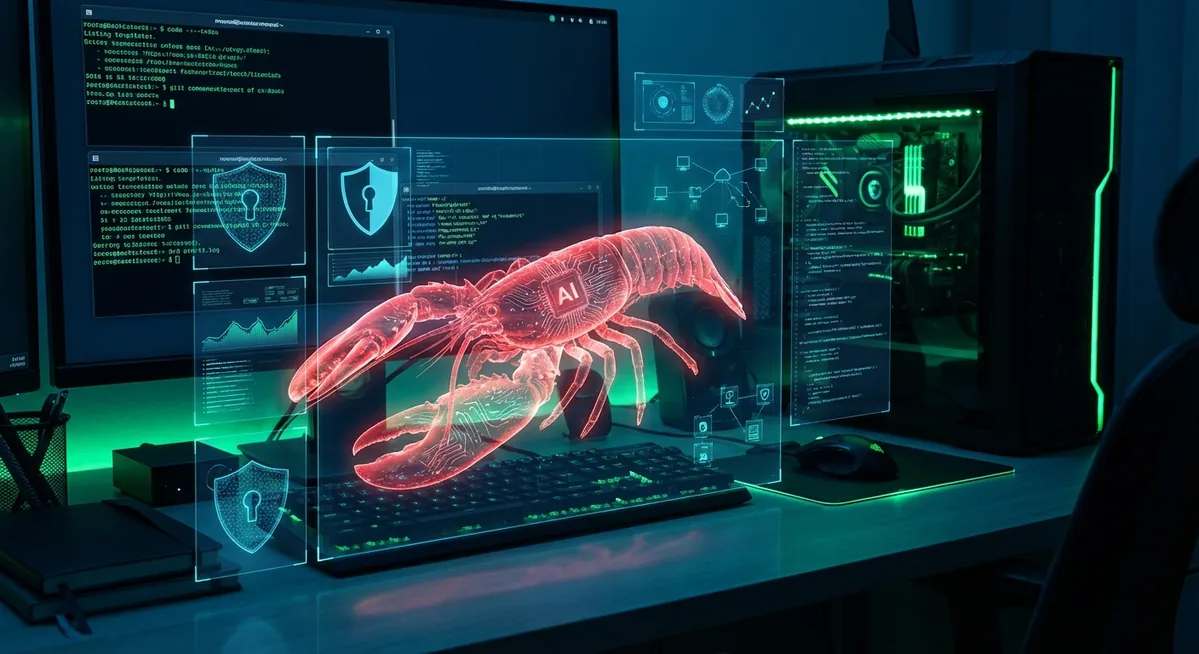
OpenClaw Daily — March 17, 2026: NemoClaw, Release Friction, Secret Hygiene, and the Skills Reality Check
Today’s OpenClaw story is bigger than a changelog. Nvidia just wrapped the framework in enterprise-flavored infrastructure, operators are surfacing real release friction in 2026.3.12, the community is pushing for better secret-handling ergonomics, and the ClawHub skills wave still needs a grown-up security posture. If you build with OpenClaw, this is the day’s practical readout.
OpenClaw Updates
There are really two OpenClaw stories today. The first is strategic: Nvidia has decided OpenClaw is important enough to wrap in a first-party stack, market on the GTC keynote stage, and pitch to enterprises as foundational infrastructure. The second is operational: users on the ground are still discovering where upgrade ergonomics and configuration safety need work, especially around 2026.3.12, model metadata, and memory plugin validation.
On the strategic side, Jensen Huang used GTC to say the quiet part out loud: OpenClaw has moved from “interesting open-source experiment” to “something big vendors now want a strategy for.” Nvidia’s GTC coverage described OpenClaw as making it possible “to create personal agents,” and said Nvidia is adding support across its platform to make it easier to “safely build, deploy and accelerate AI agents on NVIDIA-powered infrastructure.” That matters because it reframes OpenClaw from a hobbyist-friendly agent runtime into a serious control plane candidate for local and hybrid AI operations.
“With a single command, developers can pull down OpenClaw, stand up an AI agent and begin extending it with tools and context.” — Nvidia GTC 2026 live updates
The NemoClaw layer is Nvidia’s answer to the obvious objection: OpenClaw is powerful, but raw power alone does not get you enterprise adoption. ZDNET’s summary cuts directly to the value proposition: “Nvidia’s NemoClaw aims to make OpenClaw agents more secure.” The stack reportedly combines OpenShell, policy enforcement, privacy routing, and network guardrails. In plain English, Nvidia is trying to give operators a way to keep the flexibility that made OpenClaw interesting while reducing the “what happens if this thing gets weird at 2 a.m.?” factor that keeps security teams awake.
That’s the macro story. The micro story is more familiar and, honestly, more useful for actual operators. GitHub issue traffic over the last week shows the project is still very much in the mature-fast, break-some-things, fix-some-things-openly phase. A 2026.3.12 regression report notes that updating from 2026.3.11 could fail during gateway CLI verification and auto-roll back because “plugins.slots.memory: plugin not found: memory-core.” Another issue from the same release cycle flags a transient initialization error around Anthropic model aliases. Yet another asks for built-in Anthropic model definitions to reflect the newer 1M token context windows for Claude Opus 4.5 and Sonnet 4.5, because stale metadata causes premature compaction.
“Updating OpenClaw from 2026.3.11 to 2026.3.12 fails during the gateway CLI health verification step and automatically rolls back.” — GitHub issue #45287
That combination is revealing. It does not suggest a project in trouble; it suggests a project that is becoming infrastructure faster than its ergonomics are catching up. The hard parts are no longer just “can the agent do cool things?” They are: Can upgrades be trusted? Are model capabilities represented accurately enough to prevent subtle failure modes? Does config validation degrade safely? Can local, cloud, and plugin-backed behaviors coexist without surprising users?
There is also a quieter but important configuration trend taking shape in the issue tracker. Operators are asking for first-class environment-backed secret UX instead of being nudged to keep sensitive values in openclaw.json. The feature request is sensible and overdue: if a secret is sourced from environment variables, the UI should not make it look blank or missing. It should clearly show “from env,” keep the value masked, and avoid training users into bad habits for the sake of convenience.
“Using .env / environment variables is materially better for security, migration between machines, backup hygiene, [and] separating runtime secrets from shareable config.” — GitHub issue #46109
Our read: today’s OpenClaw update isn’t one release note. It’s a maturity snapshot. OpenClaw is attracting heavyweight ecosystem validation while still working through the very normal, very fixable operational wrinkles of a fast-moving system becoming production infrastructure. That’s not a contradiction. That’s what adoption looks like.
If you’re running OpenClaw in a business setting, don’t read Nvidia’s announcement as a reason to relax. Read it as confirmation that the stack is strategically important enough to deserve boring discipline: staged upgrades, pinned configs, env-backed secrets, and kill-switch testing. Excitement is not a control surface.
Security Tip of the Day
Move secrets out of config files before you scale your agent
If you only do one security thing this week, make it this: stop storing live API keys, gateway tokens, and channel credentials directly in your main OpenClaw config if you can avoid it. The current community push for environment-backed secret UX exists for a reason. Once people start syncing configs across machines, backing them up, screenshotting control pages, or committing adjacent project files by accident, config-embedded secrets become a liability fast.
The good pattern is straightforward:
- Put provider API keys, channel tokens, and gateway secrets in environment variables or a local secret file that is never committed.
- Keep
openclaw.jsonportable and relatively shareable, so migration and backup do not automatically become secret-exposure events. - Document the source of each secret internally: config, env, or unset. Ambiguity is how teams end up “temporarily” pasting secrets back into config.
- After upgrades, verify that secret resolution still works before assuming a blank UI field means a value is missing.
The subtle part here is cultural. Teams often treat local agent setups as developer toys until they become mission-critical. That is exactly when sloppy secret handling comes back to bite. If your OpenClaw can reach email, calendar, cloud storage, GitHub, Slack, or browser sessions, your secret hygiene needs to look like production hygiene now, not later.
Skill of the Day
healthcheck
The most practical skill recommendation today is healthcheck. Not because it’s flashy, but because the current phase of the OpenClaw ecosystem rewards operators who can tell the difference between “works on my machine” and “this host is actually in decent shape.” The xCloud OpenClaw skills guide explicitly calls out healthcheck as a top beginner and security-conscious install, describing it as a skill that audits a Linux VPS for vulnerabilities, open ports, and outdated packages.
“Best for beginners: Start with ClaWHub and the healthcheck skill. Both give you immediate value with zero complexity.” — xCloud OpenClaw skills guide
Why it earns the slot: OpenClaw is increasingly being deployed on always-on boxes, mini PCs, workstations, and VPSs that slowly accrete risk. A healthcheck-style skill keeps the focus on host basics: update posture, service exposure, firewall assumptions, and drift over time. That’s the right kind of boring.
Safety note: We are only comfortable recommending a skill when the operational value is clear and the usage model is defensive rather than expansive. Even then, follow the rule: verify the skill source, inspect the instructions, and run a VirusTotal check before installation. The ecosystem is moving too fast for blind trust to be a strategy.
Practice areas: Security hardening, Infrastructure hygiene, Operational resilience.
Community Highlights
The community signal today is less about one viral screenshot and more about the shape of discourse around OpenClaw. The Every deep-dive on setting up a first personal agent is still one of the better mainstream snapshots of why users are sticking with the framework after the hype cycle. It gets the fundamentals right: start on the hardware you already have, give the agent separate accounts, keep scope tight, and remember that the model choice changes your risk profile as much as your capability profile.
“Give the agent its own accounts. Both Eliason and Vo recommended treating your agent like a new employee.” — Every
That “new employee” framing is one of the most useful community heuristics because it forces a sanity check. You would not hand a new hire unrestricted access to every inbox, token, calendar, repo, and browser session on day one. Yet users still routinely do the equivalent with agents because the setup feels local and therefore emotionally safe. Local does not mean low-risk. Local just means the blast radius starts closer to home.
The xCloud ecosystem is also doing something useful for the broader community: translating OpenClaw usage from social media theater into operational tutorials. Its skills guide spends more time on how skills are loaded, when you need a new session, and why updating them matters than on magical claims. That kind of documentation is healthy. It teaches users that a skill is not pixie dust; it is a loaded instruction file inside a persistent agent environment.
There is also a subtler community pattern emerging in GitHub issues and operator notes: people want better defaults, but they do not want the project to lose its flexibility. That is the right instinct. OpenClaw’s edge comes from being composable and hackable. The challenge for maintainers is to make the safe path more legible without flattening the weirdness that made the ecosystem valuable in the first place.
One more highlight worth noting: the request to update built-in Anthropic context windows to 1M tokens is not just a metadata nit. It reflects a community that is pushing the system hard enough to notice when the framework’s assumptions lag behind provider reality. That’s the kind of user base you want if you care about product hardening. It can be noisy, but it surfaces real edge cases before enterprise buyers discover them the expensive way.
Ecosystem News
Nvidia dominated the ecosystem narrative today, and not just because of keynote theatrics. The important move is that it did not launch a direct anti-OpenClaw product. It launched a stack around OpenClaw. That distinction matters. It says the industry is starting to treat agent runtimes the way prior eras treated Linux, Kubernetes, or Docker: open core at the center, surrounded by infrastructure, control, security, and management layers.
CNET’s framing was blunt: NemoClaw is designed to make “claws,” or autonomous AI agents, more accessible. ZDNET sharpened the enterprise angle further by positioning NemoClaw as the security wrapper for a highly capable but risky agent runtime. Nvidia itself emphasized policy enforcement, privacy routing, and compatibility with broader security tooling. You can hear the market segmentation already. OpenClaw remains the thing builders want to touch. NemoClaw and OpenShell are the things risk committees want to hear about.
“This provides the missing infrastructure layer beneath claws to give them the access they need to be productive, while enforcing policy-based security, network, and privacy guardrails.” — Nvidia, via ZDNET
This broader ecosystem split is going to accelerate. On one side: raw, self-hosted, highly customizable agent frameworks with rapid community iteration. On the other: managed or semi-managed control layers that promise policy, observability, and safer defaults. The winners will likely be the teams that can straddle both worlds. Too much freedom and enterprise buyers flinch. Too much control and builders go somewhere else.
There’s also a skills-marketplace angle here. The more OpenClaw becomes infrastructure, the less acceptable it is for skills to be treated as whimsical add-ons. Skills are effectively third-party behavior packages. That means the ecosystem now has a supply-chain problem whether it likes that language or not. The xCloud guide is directionally right to tell users to start small and verify what they install. We’d go a step further: install fewer skills, prefer defensive ones first, and assume each new skill increases both capability and uncertainty.
The other interesting ecosystem consequence of Nvidia’s move is hardware normalization. For months, the “agent box” conversation orbited around Mac minis, spare workstations, and hobbyist rigs. NemoClaw reframes the conversation toward supported enterprise-capable hardware footprints, always-on deployment patterns, and hybrid local/cloud execution. That makes the next phase less about novelty and more about operational economics: where should the agent run, what should stay local, what can route to cloud models, and who owns the policy layer?
OpenClaw is not just becoming a product category. It is becoming a stack category. That is a bigger deal than a single release.
We think the market is converging on a simple pattern: OpenClaw or something like it as the agent runtime, plus a policy and security layer on top, plus a narrow set of approved tools and skills. In other words, the future is not “unlimited autonomous agent everywhere.” It’s “useful agent, inside a cage you designed on purpose.” That’s probably the correct outcome.
Practice Areas: OpenClaw, Agentic AI, Security, Systems Architecture
Sources: CNET · ZDNET · Nvidia GTC live updates · Every · xCloud · GitHub issue #45287 · GitHub issue #46109 · GitHub issue #47440
Need help with OpenClaw deployment?
SEN-X helps teams deploy OpenClaw with sane architecture, stronger security controls, and workflows that survive contact with the real world.
Talk to SEN-X →