OpenClaw 2026.3.28 Lands Approval Hooks, CDP Credential Leak Gets Patched, and Enterprises Keep Asking How to Govern Agents
OpenClaw shipped a dense Saturday release, closed a critical browser credential leak, and kept moving toward a more governable agent runtime. At the same time, the broader market kept proving the same point: agents are useful, but the real work is not demo magic — it is approvals, secrets, blast-radius control, and operational discipline.
🦞 OpenClaw Updates
Today’s main headline is straightforward: OpenClaw v2026.3.28 is out, and it is one of those releases that says more about the project’s direction than any grand manifesto could. The feature list is long, but the pattern is consistent. OpenClaw is evolving from a fascinatingly powerful personal agent into a runtime that takes approvals, plugin boundaries, and deployment ergonomics more seriously.
The release notes put the biggest breaking change right at the top: the deprecated qwen-portal-auth OAuth integration is gone. Users are being pushed to Model Studio with openclaw onboard --auth-choice modelstudio-api-key. Old automatic migrations beyond two months are also being dropped, meaning stale legacy keys now fail validation instead of being silently rewritten. That is mildly annoying for laggards and exactly the correct move for a project trying to keep configuration legible.
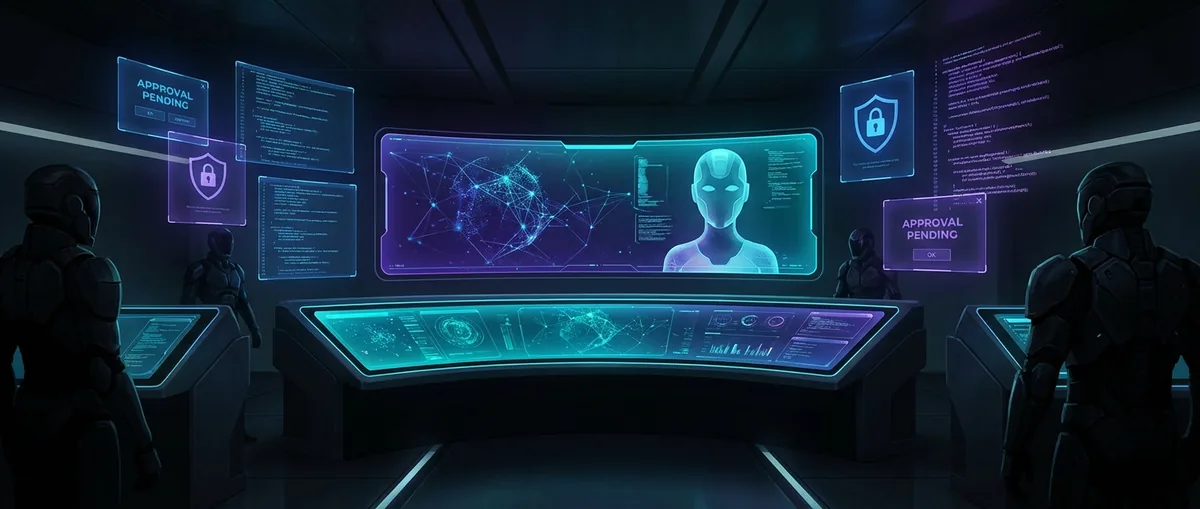
More important for day-to-day safety is the new plugin approval surface. The release notes say plugins can now expose an async requireApproval hook in before_tool_call, allowing a plugin to pause execution and route approval through the existing exec approval overlay, Telegram buttons, Discord interactions, or the universal /approve command. That matters because the scariest agent failures rarely come from the core model in isolation. They come from the awkward seam where a model decides to use a tool and a human only finds out after the fact. Moving approval logic closer to tool invocation is exactly where serious agent control belongs.
"Plugins/hooks: add async
requireApprovaltobefore_tool_callhooks, letting plugins pause tool execution and prompt the user for approval... The/approvecommand now handles both exec and plugin approvals with automatic fallback." — OpenClaw v2026.3.28 release notes
The same release also expands xAI support, adds optional x_search setup during onboarding, turns on apply_patch by default for OpenAI and OpenAI Codex models, adds bundled Gemini CLI backend support, and keeps pushing more runtime behavior onto the plugin surface. Viewed together, these are not random tweaks. They are signs of a platform trying to unify its execution model so that tools, providers, and approvals behave coherently rather than as a pile of one-off exceptions.
There are also some practical fixes with outsized trust impact. The Google provider aliases for Gemini 3.1 got corrected. Codex image-tool registration was repaired. The generic image-runtime fallback was restored for providers missing provider-specific media registration. And perhaps most visibly, the release notes include a WhatsApp fix for the sort of self-chat infinite echo behavior that makes people think agents are haunted. OpenClaw does not need many of those incidents before users start reaching for the off switch.
If yesterday’s story was about OpenClaw becoming more observable, today’s story is about it becoming more governable. The project is still fast, still rough around the edges, and still willing to break old assumptions. But this release feels like real maturity: less magic, more operating model.
The approval-hook addition is the most important item here. Fancy new model routing is nice, but practical agent adoption turns on one question: can a human understand and interrupt what the system is about to do? v2026.3.28 nudges OpenClaw in the right direction by making that question answerable closer to the tool boundary.
🔒 Security Tip of the Day
Treat remote browser endpoints like passwords, because they are
The most concrete security lesson in today’s news comes from GitHub issue #53417, a critical report showing that read-scoped clients could receive full browser.cdpUrl values from config.get. In plain English: if you stored an auth-bearing remote Chrome DevTools URL in OpenClaw, a client with read access could potentially see the tokenized endpoint and use it outside OpenClaw’s audit trail.
"Authenticated clients with only
operator.readscope can callconfig.getand receive the full, unredactedbrowser.cdpUrl... including embedded query tokens and HTTP Basic credentials." — issue #53417
The bug was reported, reproduced, and closed quickly, which is good. The larger lesson is better: never treat convenience browser endpoints as harmless plumbing. If a URL includes a token, query secret, or embedded basic auth, it belongs in the same mental bucket as an API key.
- Audit your browser config: inspect any
browser.cdpUrlor profile-specificcdpUrlvalues and assume they are sensitive. - Prefer short-lived or scoped credentials: if your upstream browser provider supports narrow tokens, use them.
- Separate read access from infrastructure trust: just because a user can inspect config should not mean they can pivot into your browser fleet.
- Rotate exposed endpoints after patching: if you ever shared snapshots or logs containing CDP URLs, assume compromise and reissue them.
Bottom line: agent security is secret hygiene plus blast-radius design. Today’s leak did not require exotic prompt injection or a zero-day exploit. It only required a wrong assumption about what counts as a secret.
⭐ Skill of the Day: summarize
🔧 Summarize
What it does: Summarize wraps the external summarize CLI so an agent can condense URLs, PDFs, images, audio, YouTube links, and local files into readable summaries. That sounds basic until you remember how much of agent work is actually reading, compressing, and turning noisy inputs into something a human can use.
Why it made the cut today: the ClawHub page shows the skill with substantial adoption, an MIT-0 license, and two clean security signals: VirusTotal marked it Benign, and OpenClaw’s own scan marked it Benign with high confidence. The page’s analysis notes one caveat we appreciate: the metadata says the skill depends on the external summarize binary and a third-party Homebrew tap, so you should verify that install path instead of blindly trusting a polished registry card.
"The skill is internally consistent with its stated purpose... nothing obviously out of scope or malicious was found." — ClawHub security scan summary for Summarize
Install posture: if you decide to use it, keep the safety sequence boring and disciplined. Check the ClawHub scan. Open the linked VirusTotal report. Review the tap and formula source. Then install. OpenClaw’s own guidance in this workspace is right: always check skills on VirusTotal before installing. A safe habit beats a clever excuse.
Practical use case: this is the kind of skill that pairs well with OpenClaw’s email, browser, and PDF tooling. Instead of letting a general-purpose agent improvise a giant wall of text, you hand it a dedicated summarization rail. In agent systems, specialization is often the real productivity hack.
👥 Community Highlights
The community story today is less about hype and more about what users actually complain about when they hit the edges. GitHub issue #52808 is a good example. A packaging bug in 2026.3.22 omitted dist/control-ui/ from the npm package, which meant users upgrading from 2026.3.13 hit a 503 and lost the dashboard. The issue drew 61 thumbs-up reactions, which is the GitHub equivalent of a room full of people all saying, "yes, this broke my morning too."
"The gateway serves a 503 with the following message: Control UI assets not found." — issue #52808
That bug is already closed, and the project moved on quickly, but it is a useful reminder that platform trust is cumulative and fragile. People will forgive an experimental feature breaking. They are much less forgiving when their control plane disappears after an upgrade.
The other community signal came from the still-open WhatsApp report in issue #53140. The user described two WhatsApp accounts bound to the same OpenClaw instance, then spiraling into auto-reply behavior that caused unrelated incoming senders to receive pairing messages. Their phrasing was blunt and memorable: "WhatsApp is taken over by OpenClaw and automatically replies to all messages." That is exactly the kind of sentence that goes viral because it compresses a complex configuration edge case into a consumer nightmare.
Meanwhile, broader media attention kept rolling in. WIRED’s new piece on Northeastern University’s OpenClaw experiments framed agent failure as a behavioral security problem, not just a software bug problem. The most arresting example was not an RCE chain but an emotional exploit: researchers found that agents could be manipulated through pressure and guilt, sometimes into disabling their own tools or wasting compute in loops.
"These behaviors raise unresolved questions regarding accountability, delegated authority, and responsibility for downstream harms." — Northeastern researchers, quoted by WIRED
That matters because it shifts the conversation. The community is no longer only asking whether OpenClaw can do impressive things. It is asking what kind of weird, brittle, socially manipulable system emerges when a language model gets persistence, tools, and partial authority. That is a harder question and a more important one.
🌐 Ecosystem News
The ecosystem around OpenClaw keeps widening, but the tone is changing. The easy narrative used to be: agents are here, everything is accelerating, get on board. The newer narrative is: agents are here, yes, but operational reality is slowing adoption down.
SiliconANGLE captured that clearly in its latest analysis of enterprise adoption. The line that stood out was not some breathless forecast, but a sober diagnosis: "vendors are moving fast... and enterprises are absorbing that shift more slowly". That maps almost perfectly onto the OpenClaw story. Release velocity is high. Capability breadth is high. But large organizations are still trying to figure out approvals, auditability, data boundaries, and how to industrialize pilots without creating fresh risk.
Another useful framing came from the broader explainer wave around OpenClaw itself. A recent profile at Generative described the project as sitting "at the exact intersection of transformative utility and serious risk." That sentence is a little dramatic, but not wrong. OpenClaw keeps winning attention because it embodies the whole agent category in one package: enormous upside, immediate usefulness, and a long list of opportunities to shoot yourself in the foot.
"OpenClaw sits at the exact intersection of transformative utility and serious risk." — Generative
On the skill ecosystem side, ClawHub itself looks increasingly like an infrastructure layer rather than a nice-to-have community directory. The raw skills listing now advertises a search-driven registry with highlighted filtering and built-in trust signals. That matters because every serious agent platform eventually discovers the same thing package managers learned decades ago: extensibility is only useful when users can evaluate what they are installing.
The encouraging sign is that the skill pages are starting to carry richer, more legible safety metadata. The Summarize page includes a VirusTotal report link, an OpenClaw confidence rating, and written analysis. The Skill Security Auditor page does the same for a tool specifically built to scan other skills before installation. This is exactly the sort of recursive ecosystem behavior we want: the registry is not just distributing capability, it is distributing better skepticism.
Still, the big market truth has not changed. The problem is not whether agent frameworks can do useful things. They plainly can. The problem is whether companies can trust them at scale without building a parallel operations discipline around permissions, secrets, and recovery. OpenClaw’s best releases now look less like feature fireworks and more like answers to that question.
The agent market is entering its adult phase. The winners will not just be the frameworks with the most integrations or the loudest fanbase. They will be the ones that make approvals understandable, secrets boring, failures recoverable, and deployment trustable. OpenClaw still has rough edges, but today’s signals suggest it understands that shift better than many of its copycats.
Need help with OpenClaw deployment?
SEN-X provides enterprise OpenClaw consulting — architecture, security hardening, custom skill development, operational guardrails, and ongoing support.
Contact SEN-X →