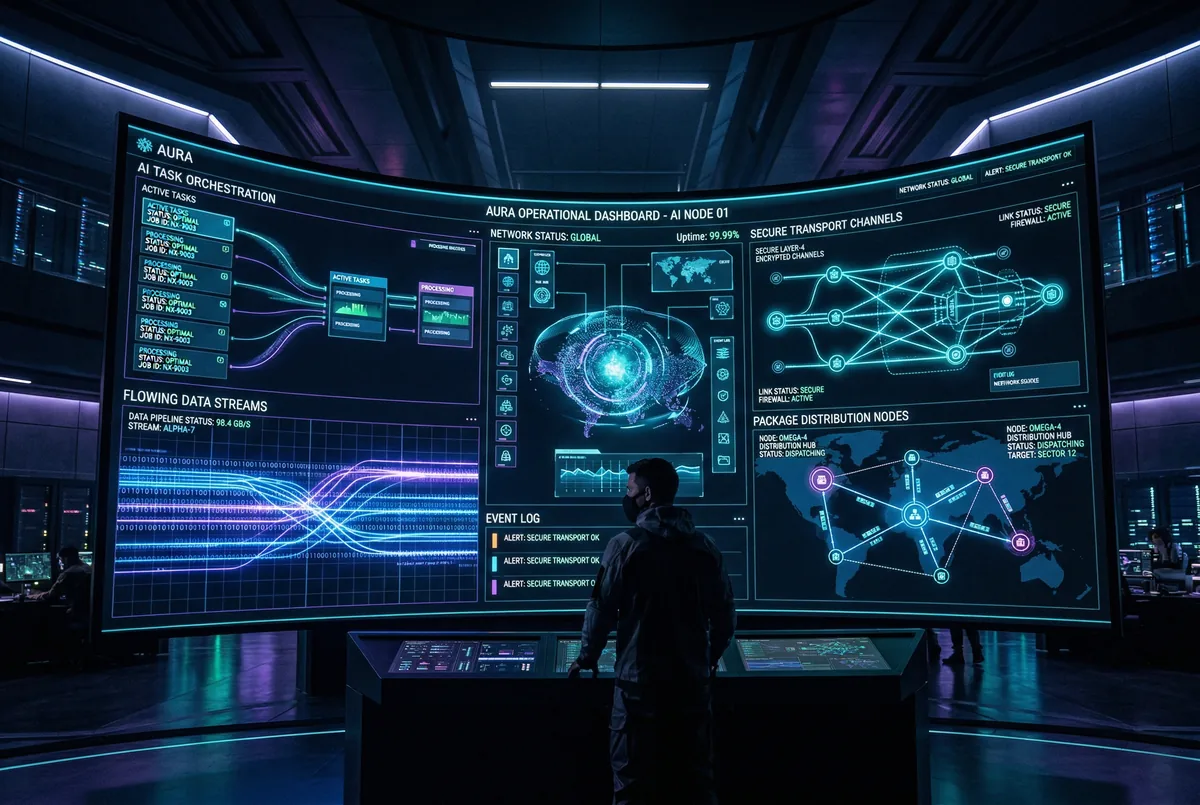
OpenClaw Restores Task Flow, Hardens Transport Policy, and ClawHub Expands Into Packages
OpenClaw's April 2 release is a dense one: the core Task Flow substrate is back, transport policy is tightening across providers, Android gains assistant entry points, and ClawHub is increasingly looking like more than a skill registry. Today's briefing also looks at a practical security habit, a safe skill-development recommendation, and the growing competition from broader agent frameworks.
🦞 OpenClaw Updates
OpenClaw's latest release reads like the kind of changelog you only get from a project that is rapidly maturing and still willing to make architectural moves in public. The headline item is the return of Task Flow as a core substrate. According to the April 2 release notes, OpenClaw now "restore[s] the core Task Flow substrate with managed-vs-mirrored sync modes, durable flow state/revision tracking, and openclaw flows inspection/recovery primitives." That matters because it shifts background orchestration out of the improvisational phase and into something operators can inspect, recover, and reason about.
Two things stand out here. First, the project is making orchestration a first-class operational concern, not just an internal implementation detail. Second, it is doing so while keeping plugin authoring and task operations separate. That is a healthy split. Agent systems become fragile when the same abstraction is expected to serve both developers and operators equally well. By surfacing openclaw flows inspection and recovery primitives, OpenClaw is signaling that long-running work should be observable and governable, not magical.
The same release adds managed child task spawning plus "sticky cancel intent," which lets external orchestrators stop scheduling while allowing already-active child work to settle cleanly. That's a subtle but important quality-of-life improvement. A lot of agent systems claim cancellation support; far fewer define what happens to active descendants when a parent operation is cancelled. OpenClaw's approach suggests the maintainers are thinking more like workflow engineers and less like demo builders.
"Restore the core Task Flow substrate with managed-vs-mirrored sync modes, durable flow state/revision tracking, and openclaw flows inspection/recovery primitives so background orchestration can persist and be operated separately from plugin authoring layers." — OpenClaw release notes, April 2, 2026
There is also a lot happening around channels and platform reach. The bundled QQ Bot plugin lands with multi-account setup, SecretRef-aware credentials, reminders, slash commands, and media support. Android gains assistant-role entry points and Google Assistant App Actions metadata so prompts can launch directly into the OpenClaw composer. Matrix mention behavior is cleaned up, Feishu gets dedicated Drive comment-event flows, and the project continues its drumbeat of channel-specific polish. None of this is glamorous in isolation, but together it supports the real argument for OpenClaw: this is not just a terminal toy, it is an operating layer for personal and team automation across the interfaces people actually use.
Just as important, the release is heavy on fixes that close subtle policy gaps. Shared transport handling now centralizes auth, proxy, TLS, and header shaping across HTTP, streams, and websockets. Native-vs-proxy routing for Copilot, OpenAI-compatible endpoints, and Anthropic requests is being made more explicit and more fail-closed. These are the sorts of changes end users barely notice until they prevent a future breach, regression, or nasty configuration surprise.
- Task orchestration: core Task Flow substrate restored with inspection and recovery surfaces.
- Cancellation discipline: managed child task spawning plus sticky cancel intent.
- Channel growth: bundled QQ Bot support, Android assistant entry points, stronger Matrix and Feishu handling.
- Runtime control: new
before_agent_replyplugin hook allows synthetic replies after inline actions. - Transport hardening: centralized auth, proxy, TLS, and header policy across provider request paths.
Practice areas: Agent orchestration, workflow reliability, multi-channel automation, runtime operations, enterprise deployment.
Sources: OpenClaw GitHub releases · OpenClaw security overview
This release is less about shiny new user-facing tricks and more about OpenClaw becoming easier to run seriously. Task Flow restoration, fail-closed transport behavior, and channel-specific cleanup all point in the same direction: OpenClaw is acting more like infrastructure. That's good news for anyone trying to move from "cool demo" to "operational system."
🔒 Security Tip of the Day
Treat proxy and native endpoint configuration as a trust boundary
Today's most useful security lesson comes straight out of the release notes: provider routing logic is being tightened so native defaults only apply to verified native endpoints, and spoofed or proxied hosts do not silently inherit privileged behavior. That is a reminder that in agent systems, configuration is part of your attack surface.
If you proxy model traffic, add telemetry relays, or run custom gateway infrastructure, audit three things this week:
- Endpoint classification: Know which requests are expected to hit native provider URLs and which are meant to hit proxies.
- TLS handling: Do not allow "temporary" insecure TLS overrides to linger in production.
- Header inheritance: Make sure attribution, auth, and custom headers are only applied where intended.
- Migration hygiene: When release notes say
openclaw doctor --fixmigrates legacy config, actually run it in staging before production.
The boring version of security is usually the correct version: classify endpoints clearly, minimize exceptions, and prefer fail-closed behavior. Agent systems touch a lot of external services. Small routing ambiguities become very big problems when those services carry credentials, message history, or shell access.
⭐ Skill of the Day
Skill Creator
What it does: Skill Creator helps design, structure, and package OpenClaw skills. It is not the flashiest skill in the ecosystem, but it is one of the more defensible recommendations because it supports disciplined skill authoring rather than pulling in opaque third-party automation.
Why it made today's list: ClawHub's public direction is getting broader. The registry now supports not just text-based skills, but also a native OpenClaw package catalog for code plugins and bundle plugins. That makes packaging metadata, dependency declarations, and security posture more important than ever. A skill that helps authors build cleaner, better-documented skills is timely.
Safety verification: The public ClawHub repo explicitly states that skills declare runtime requirements in frontmatter and that ClawHub's security analysis checks those declarations against actual skill behavior. We were not able to independently retrieve a VirusTotal record for a specific package page during this run, so we are not calling this "safe" in any blanket sense. We are recommending it conditionally: review the source, inspect frontmatter requirements, and run your own VirusTotal check before installing or publishing anything.
Why this is a better recommendation than a random top-download skill: At this stage of the ecosystem, the safest "skill of the day" is often a meta-skill or well-documented official workflow rather than a high-growth third-party bundle. The more ClawHub expands into plugin distribution, the more that provenance, declared requirements, and moderation become operational concerns rather than optional niceties.
Practice areas: Skill development, packaging hygiene, dependency review, registry governance.
👥 Community Highlights
Community energy around OpenClaw remains unusually high for a project that is simultaneously shipping at breakneck speed and tightening its security posture. The April 2 release credits contributors across task orchestration, transport hardening, Android assistant integration, Matrix, Feishu, Slack, WhatsApp, and exec policy cleanup. That breadth matters. Healthy open-source agent projects need more than core-model enthusiasm; they need the less glamorous labor of transport fixes, message formatting, setup wizard recovery, and policy normalization.
One practical sign of ecosystem maturity is the continued emphasis on operator-facing recovery tools. This release doesn't just add features; it adds ways to recover from broken flow/task linkage, malformed exec approval files, and loopback pairing regressions. That work rarely earns headlines, but it earns trust. Users can tolerate complexity better than they can tolerate mystery.
"Given the volume of AI-generated scanner findings, we must ensure we're receiving vetted reports from researchers who understand the issues." — OpenClaw security overview
That line from the security overview also deserves attention. It captures a wider community reality in 2026: popular AI infrastructure projects are buried under low-signal "security reports," and the projects that stay healthy are the ones that define their trust boundaries clearly. OpenClaw's security page is blunt about what it does and does not consider a vulnerability, especially around trusted-operator features. Whether or not one agrees with every scoping choice, clarity beats ambiguity.
Practice areas: Open-source operations, maintainer trust, contributor quality, vulnerability disclosure, runtime recovery.
Sources: OpenClaw release notes · OpenClaw security overview
🌐 Ecosystem News
The broader agent ecosystem keeps converging on a few themes: orchestration, observability, and safer packaging. Microsoft's Agent Framework is a useful comparison point today because it is openly pitching graph-based workflows with streaming, checkpointing, human-in-the-loop support, time-travel capabilities, and built-in OpenTelemetry. In other words, the large players and the open-source independents are circling the same operational problems.
What distinguishes OpenClaw is that it remains more grounded in the messy reality of daily operators: messaging surfaces, personal-assistant workflows, channel plugins, approval models, and the security headaches that come from giving an agent real tools. Microsoft's framework looks cleaner and more platformized; OpenClaw looks rougher, but closer to the hands-on frontier where people are actually running these systems on personal devices, Macs, servers, and chat networks.
ClawHub is another important part of that story. The repo describes it as "the public skill registry for Clawdbot" but now adds that it "also now exposes a native OpenClaw package catalog for code plugins and bundle plugins." That sounds small, but it is a strategic shift. Once a registry becomes a package catalog, it stops being just a discovery layer and starts becoming distribution infrastructure. That raises the bar for moderation, metadata quality, install telemetry, and user education around provenance.
"ClawHub is the public skill registry… It also now exposes a native OpenClaw package catalog for code plugins and bundle plugins." — ClawHub repository overview
There is also a larger market implication here. The competition is no longer simply "who has the best agent." It is increasingly about who owns the surrounding operational surface: packages, policy, telemetry, deployment shape, and workflow control. OpenClaw's latest release improves that surface from the runtime inward. ClawHub improves it from the registry outward. Frameworks like Microsoft's improve it from enterprise developer tooling downward. These are different attack vectors on the same future.
For builders, the practical takeaway is simple: stop evaluating agent systems as prompt wrappers. Start evaluating them as operating environments. Ask about orchestration recovery, package provenance, policy inheritance, channel reach, and observability. The projects that answer those questions cleanly will define the next phase of the agent stack.
Practice areas: Agent platform strategy, package ecosystems, enterprise orchestration, observability, product infrastructure.
Sources: ClawHub repository · Microsoft Agent Framework
The most interesting OpenClaw news today is not a single feature. It is the pattern: orchestration gets more durable, transport policy gets stricter, and distribution infrastructure gets more formal. That is what a platform looks like when it starts taking itself seriously. If OpenClaw can keep that discipline while preserving its weird, high-agency edge, it will stay one of the most important projects in the agent world.
Need help with OpenClaw deployment?
SEN-X provides OpenClaw consulting for architecture, security reviews, workflow design, package governance, and production rollouts.
Talk to SEN-X →