OpenClaw 2026.4.9 Deepens Memory, Tightens Browser Guardrails, and Pushes Safer Agent Operations Forward
OpenClaw 2026.4.9 is a serious operator’s release. It expands grounded memory and dreaming, closes important browser and dotenv trust gaps, improves packaging and routing reliability, and gives teams a clearer blueprint for running agents that are more capable without becoming less governable.
🦞 OpenClaw Updates
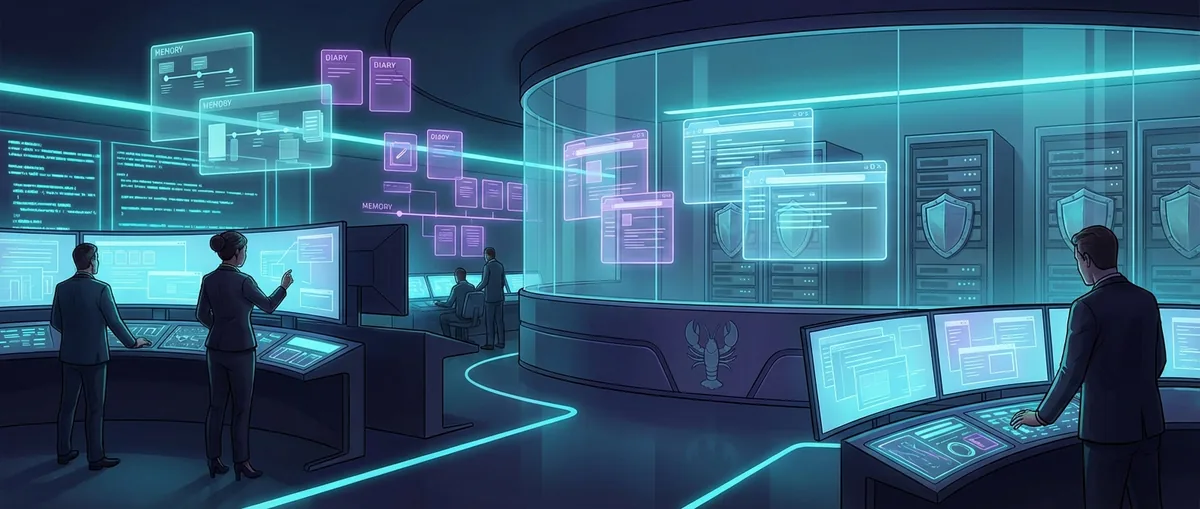
Today’s headline is straightforward: OpenClaw v2026.4.9 is less about flashy expansion and more about making the platform feel like something you can trust under real load. The release note itself says the project now adds “a grounded REM backfill lane with historical rem-harness --path, diary commit/reset flows, cleaner durable-fact extraction, and live short-term promotion integration so old daily notes can replay into Dreams and durable memory without a second memory stack.” That sentence is dense, but the strategic meaning is simple: OpenClaw is turning memory from a pile of notes into an operator-manageable system.
That matters because most agent stacks still struggle with continuity. They can answer, they can act, but they cannot reliably remember in a way that is inspectable, reversible, and grounded in actual source material. OpenClaw’s new diary view and grounded backfill controls point in a different direction. Instead of pretending memory is magical, the project is making it a workflow. That is a much more mature design stance, especially for teams that need to audit why an agent “knows” something and whether that knowledge should be promoted into durable memory.
The release also folds in practical UI support for that model. The notes say the Control UI now has “a structured diary view with timeline navigation, backfill/reset controls, traceable dreaming summaries, and a grounded Scene lane with promotion hints plus a safe clear-grounded action for staged backfill signals.” In other words, memory is no longer buried in logs. It is becoming visible, traversable, and explicitly staged. For anyone deploying OpenClaw beyond hobby use, that is one of the most important product moves of the week.
There is also a small but meaningful architecture signal in provider auth. OpenClaw now lets “provider manifests declare providerAuthAliases so provider variants can share env vars, auth profiles, config-backed auth, and API-key onboarding choices without core-specific wiring.” This is the kind of plumbing work that rarely gets headlines, but it is exactly what keeps fast-growing ecosystems from collapsing into bespoke configuration chaos. Cleaner auth reuse means less custom glue, fewer operator mistakes, and a better path for plugin and provider growth.
“Browser/security: re-run blocked-destination safety checks after interaction-driven main-frame navigations from click, evaluate, hook-triggered click, and batched action flows, so browser interactions cannot bypass the SSRF quarantine when they land on forbidden URLs.” — OpenClaw v2026.4.9 release notes
That browser fix is probably the most operationally important line in the release. One of the hardest problems in agent security is not just the first request, but what happens after a tool starts following links, clicking buttons, or chaining interactions. OpenClaw is closing exactly that gap by re-checking blocked destinations after interaction-driven navigation instead of assuming the initial action was safe enough. That is the kind of defense-in-depth behavior you want in an agent browser, especially when prompt injection and malicious redirect chains remain a live risk.
We also saw follow-on reliability work around Slack media, Matrix startup containment, session routing, packaging, QA auth failures, timeout inheritance, and Codex CLI prompt consistency. None of those are as headline-grabbing as “memory” or “security,” but together they say something useful about the project’s direction. OpenClaw is now clearly optimizing for messy real-world operation: multiple channels, packaged installs, remote nodes, cron jobs, reply queues, external routes, OAuth churn, and evolving model transports. That is what mature agent infrastructure work looks like.
OpenClaw 2026.4.9 feels like a release written by people who have watched agents fail in production and decided to close the boring, dangerous gaps first. Memory is becoming inspectable, browser actions are getting re-checked instead of trusted, and untrusted workspace and node inputs are being fenced off more aggressively. That is exactly the right trajectory.
🔒 Security Tip of the Day
Treat workspace inputs as hostile until proven otherwise
One of the easiest mistakes in agent deployments is assuming your own workspace is implicitly trustworthy. OpenClaw 2026.4.9 explicitly hardens against that assumption. The release notes say it now “block[s] runtime-control env vars plus browser-control override and skip-server env vars from untrusted workspace .env files, and reject[s] unsafe URL-style browser control override specifiers before lazy loading.” That is a strong reminder that local files can become an attack surface.
In practice, your security baseline should include four habits. First, do not let agent behavior be redefined by casually dropped .env files in project directories. Second, separate trusted operator configuration from repo-local convenience files. Third, review browser-control overrides as carefully as you would review a proxy or tunnel setting. Fourth, assume any fetched page, plugin, or remote node output can carry hostile text intended to influence later turns.
OpenClaw reinforced that last point too. The release now marks remote node exec summaries as untrusted system events and sanitizes node-provided command, output, and reason text before it gets re-enqueued. That is the right model. Logs are not neutral. Outputs are not neutral. Agent-visible text should always be classified by trust level.
Bottom line: if an agent can read it, route through it, or derive context from it, it belongs in your threat model. Trust boundaries are not just network boundaries anymore.
⭐ Skill of the Day: summarize
🔧 summarize
What it does: The Summarize skill remains one of the most obvious utility multipliers in the OpenClaw ecosystem. In a healthy agent workflow, summarization is not fluff, it is compression infrastructure. It turns sprawling transcripts, release notes, docs, PDFs, and research pages into something a human or downstream workflow can actually use.
Verified source: ClawHub skill page.
Safety status: We verified the skill listing exists on ClawHub, but recommendation does not equal blind trust. Per local operating policy, you should still scan the package on VirusTotal before installation, review the repository if available, and prefer clean, widely maintained skills with transparent owners and update histories.
Why it matters today: OpenClaw’s memory and diary stack is getting more structured. That increases the value of a good summarization layer. Good summaries help agents distill activity into durable facts, generate useful handoff notes, and keep daily memory from turning into unreadable sludge.
Recommended use: Pair summarization with explicit review checkpoints. Let the agent draft compressed memory or research notes, but require a human pass before promoting anything sensitive or strategic into long-term memory or outbound deliverables.
👥 Community Highlights
The most interesting community signal today is not a single viral post, it is the shape of the release itself. A large share of the credited work in 2026.4.9 comes from recurring contributors across memory, security, routing, channel support, QA, provider compatibility, and packaging. That matters because OpenClaw’s credibility no longer rests only on a fast-moving core narrative. It is increasingly a project with multiple active lanes, where specialists are sanding down the hard edges of deployment.
Memory work from contributors like @mbelinky is especially notable. The grounded backfill and diary-control work suggests the community is thinking beyond the toy problem of “how do we save chats?” and toward the much harder question of “how do we maintain agent continuity without lying to ourselves about what the agent actually knows?” That is the kind of systems thinking that separates durable agent platforms from hype cycles.
There is also a healthy pattern in the fixes list: many of the contributions target failure modes ordinary users only discover after real usage. Slack redirects that drop bearer auth. Matrix sync paths that should restart a channel, not crash the gateway. Old sessions with stale model overrides. Fresh installs that break because packaged dependencies were missing. This is the invisible work of making an agent system boring in the best possible sense.
“npm packaging: mirror bundled channel runtime deps ... and test packed release tarballs without repo node_modules so fresh installs fail fast on missing plugin deps instead of crashing at runtime.” — OpenClaw v2026.4.9 release notes
If you run a project around OpenClaw, that line should make you smile. Fresh-install correctness is one of the classic places open source agent tooling disappoints users. Testing against the packed artifact instead of a developer’s comfy local tree is exactly the right discipline.
On the commercial side of the community, we are also seeing continued signs that OpenClaw is escaping pure enthusiast circles. The Google News feed around agent frameworks remains noisy, but one genuinely relevant OpenClaw-adjacent item today is Seoul Economic Daily’s report that Cafe24 launched an “OpenClaw VPS” offer for easier AI agent building. Managed wrappers around OpenClaw are worth watching because they reduce setup friction while simultaneously increasing the need for clear guardrail defaults.
🌐 Ecosystem News
The broader agent ecosystem is still split between two impulses: make agents more capable, and make them more governable. Today’s feed reflects that tension clearly.
On the capability side, VentureBeat highlighted a new framework that lets AI agents rewrite their own skills without retraining the underlying model. Whether that specific implementation holds up or not, the directional trend is obvious: people want agents that can improve workflows dynamically rather than wait for a human to patch every tool. OpenClaw’s new character-vibes QA reports and parallel comparison runs fit that same theme, but with a more grounded emphasis on evaluation rather than pure self-modification.
On the governance side, Help Net Security covered Asqav, an open-source SDK for AI agent governance. That is notable not because OpenClaw needs to copy it, but because it shows where the market’s attention is moving. Governance is no longer a compliance afterthought. It is becoming product surface area. The same applies to the ongoing stream of enterprise agent-security announcements from Cisco, NIST, and others. Enterprises are not asking whether agents are cool anymore. They are asking whether the controls are legible enough to survive audit, abuse, and scale.
There is also a strong browser-risk thread running through the ecosystem. Google DeepMind researchers were reported this week as warning that hackers can hijack AI agents through malicious web content. That makes OpenClaw’s browser re-check fix especially timely. A lot of agent teams are still treating browser automation as a convenience feature with a thin prompt wrapper. That is not good enough. Browsers are one of the most adversarial surfaces an agent will ever touch.
And then there is the platform race. Microsoft, Amazon, NVIDIA, IBM, Cisco, and others continue to frame agents as the next major orchestration layer for enterprise software and operational knowledge work. The practical implication for OpenClaw is not that it must out-market those players. It is that open infrastructure now has to compete on reliability and governance, not just freedom and hackability. Releases like 2026.4.9 suggest the OpenClaw project understands that.
The ecosystem is converging on a truth OpenClaw users already know: the hard part is no longer getting an agent to do something once. The hard part is making it remember well, act safely, survive bad inputs, and remain understandable to the people operating it. OpenClaw 2026.4.9 is meaningful because it pushes on exactly those seams.
Need help with OpenClaw deployment?
SEN-X provides enterprise OpenClaw consulting, architecture reviews, security hardening, memory strategy, custom skill development, and operational support for real-world agent rollouts.
Contact SEN-X →