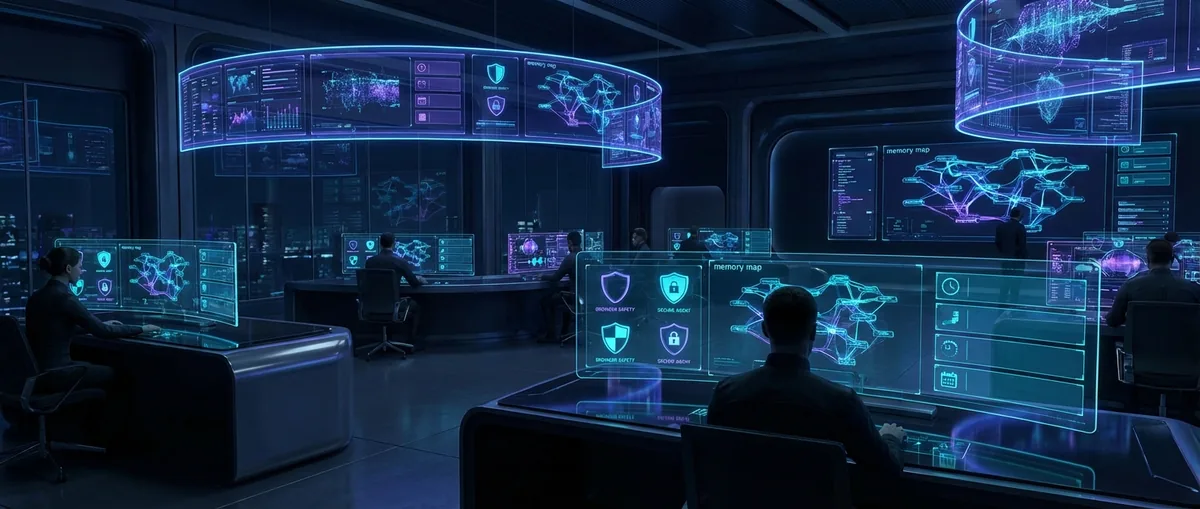
OpenClaw 2026.4.9 Deepens Memory, Tightens Browser Guardrails, and Pushes Safer Agent Operations Forward
OpenClaw Daily from SEN-X — April 10, 2026. The latest OpenClaw release turns memory into more of an operating system feature than a novelty, closes trust gaps around browser redirects and workspace dotenv files, sharpens profile persistence and model behavior, and lands in an ecosystem where interoperability, observability, and safe skill use are becoming table stakes.
🦞 OpenClaw Updates
OpenClaw’s April 9 release is the kind of release experienced operators appreciate because it is not chasing spectacle. It is doing the slower, more valuable work of making an always-on personal agent more governable. The changelog shows three themes clearly: memory is getting more structured and recoverable, security boundaries are getting tighter around browser and plugin behavior, and cross-surface reliability keeps improving.
The release notes describe a new memory lane that can “replay into Dreams and durable memory without a second memory stack,” along with a structured diary view in the control UI and grounded backfill tooling. That matters because one of the hardest parts of an agent product is not answering a prompt. It is preserving continuity in a way that stays inspectable. OpenClaw is moving toward a model where memory is not a mysterious blob hidden behind the assistant, but a set of operator-visible artifacts with traceable promotion paths.
“Memory/dreaming: add a grounded REM backfill lane with historical rem-harness --path, diary commit/reset flows, cleaner durable-fact extraction, and live short-term promotion integration...” — OpenClaw release notes, April 9
That release also closes one of the more subtle classes of browser risk. The browser security fix now re-runs blocked-destination safety checks after interaction-driven main-frame navigations. In plain English, that means clicks and chained UI actions cannot quietly step around the SSRF quarantine by first going somewhere safe and then being redirected somewhere unsafe. It is exactly the sort of boring-sounding fix that separates toy browser agents from ones you can trust around real internal systems.
There is more operator hygiene tucked into the release. OpenClaw now blocks runtime-control environment variables and browser-control override settings from untrusted workspace .env files. Remote node exec event summaries are treated as untrusted system events and sanitized before enqueueing. Queued reply runs resolve against the active runtime snapshot. Model behavior gets more consistent too, with OpenAI Responses and WebSocket transports defaulting absent reasoning effort to high while still honoring explicit overrides, and native Ollama paths optionally surfacing thinking output only when the operator has actually enabled it.
The project homepage still describes OpenClaw as “a personal AI assistant you run on your own devices,” and that framing is important. Self-hosted power only works if the runtime keeps respecting trust boundaries. This release looks like the team understands that clearly. The product surface is growing, but the boundary layer is growing with it.
- Memory and dreaming: structured diary navigation, grounded backfills, safer promotion of short-term signals into durable memory.
- Browser hardening: blocked-destination checks now follow interaction-driven navigations instead of trusting the initial step alone.
- Workspace trust: untrusted
.envfiles can no longer override runtime-control and browser-control behavior. - Operational polish: Slack, Matrix, Android pairing, session routing, Control UI session switching, and auth-profile persistence all got real reliability fixes.
Sources: OpenClaw releases · OpenClaw GitHub repository
The most important OpenClaw story right now is not new magic. It is disciplined runtime engineering. Memory that can be audited, browser actions that respect post-click risk, and workspace inputs that stay untrusted by default are exactly the ingredients that move an agent from “cool demo” toward “system I might actually rely on.”
🔒 Security Tip of the Day
Treat every workspace skill and dotenv file as untrusted until proven otherwise
OpenClaw’s latest security fixes are a good reminder that the dangerous part of agent operations is often not the model. It is the glue: skill packages, plugin manifests, local environment files, and browser automation paths. If you run OpenClaw for real work, adopt a simple rule, especially for shared repos and downloaded skill packs: workspace content is untrusted by default.
Practical discipline for today:
- Review SKILL.md frontmatter before install. ClawHub’s schema supports explicit requirement declarations for env vars and binaries. Read those first.
- Check VirusTotal before recommending or installing. That is now table stakes for any third-party skill.
- Do not let project-local
.envfiles quietly steer runtime controls. OpenClaw is now harder to abuse here, but your own review habits still matter. - Re-run browser safety assumptions after redirects. If a task clicks through to another host, treat the destination as a fresh trust decision.
Bottom line: the right mental model is not “my agent is smart enough to stay safe.” It is “my runtime should fail closed when content, redirects, or package metadata get weird.” That is the safer way to operate.
⭐ Skill of the Day
🔧 Weather
What it does: The bundled weather skill gives OpenClaw a clean, low-risk way to answer current conditions and forecasts without requiring the operator to provision yet another API key. It is exactly the kind of narrow, legible capability that makes sense as a default tool in a personal assistant stack.
Why it stands out today: In a skills ecosystem getting larger and noisier, the safest recommendation is often a bundled capability with a well-scoped job. That is especially true when you want practical utility without extending your trust surface any further than necessary.
Safety verification: Because this skill is bundled with OpenClaw and appears in the project’s available skills list, it avoids the third-party registry risk that applies to many community skills. For any non-bundled skill, still do a VirusTotal check before installation and inspect the required env vars, binaries, and install steps.
SEN-X practice area tags: Skills, Operations, Low-risk automation
👥 Community Highlights
OpenClaw’s broader community narrative is shifting. Just a few weeks ago, much of the attention was around raw growth and spectacle. Now the conversation is getting more operational. The freeCodeCamp deep dive on building and securing a personal OpenClaw agent is a good signal of that shift. It frames OpenClaw less as a meme-worthy “Claude with hands” product and more as a readable reference implementation for how agent systems are actually built and secured.
“What OpenClaw actually is, underneath the lobster mascot, is a concrete, readable implementation of every architectural pattern that powers serious production AI agents today.” — freeCodeCamp
That kind of coverage matters because it changes who shows up. When the discourse centers on architecture, session serialization, channel normalization, prompt assembly, skill loading, and security hardening, the audience becomes more serious. Operators start asking better questions. They ask where the gateway binds, how pairing works, how risky DM policies are surfaced, and what happens when two messages hit the same session at once.
There is also visible curation pressure around the skills ecosystem. The community-maintained awesome-openclaw-skills collection says it filtered thousands of registry entries for spam, duplicates, low-quality descriptions, and malicious packages. Even allowing for some fuzziness in those counts, the signal is unmistakable: sheer volume is no longer the story. Discovery quality and trust signals are.
Meanwhile, ClawHub itself keeps maturing from a simple skill directory into something more like an application layer for the agent ecosystem. The project now emphasizes moderation hooks, vector search, package metadata, native code plugin catalogs, and explicit runtime requirements in skill frontmatter. That is a healthier direction than pretending skills are just prompts with cute names.
Sources: freeCodeCamp · ClawHub repository · awesome-openclaw-skills
🌐 Ecosystem News
The wider agent framework market is converging on a few shared ideas, even if the stacks look different. Microsoft’s Agent Framework 1.0 announcement is one example. The company’s framing is blunt: the preview era is over, the APIs are now stable, OpenTelemetry is built in, and multi-agent workloads should be treated like real production systems rather than research toys.
“Since then, Microsoft Agent Framework has reached 1.0 GA — unifying AutoGen and Semantic Kernel into a single, production-ready agent platform.” — Microsoft Community Hub
That language should sound familiar to anyone tracking OpenClaw’s recent cadence. Across the ecosystem, the winning products are no longer just adding more tools. They are adding visibility, stronger defaults, safer auth, more explicit package metadata, and better execution traces. Microsoft stresses observability and managed identity. OpenClaw stresses local control, channel breadth, and trust boundaries. The direction of travel is similar: if agents are going to touch real systems, operators need instrumentation and control.
ClawHub’s roadmap points the same way. Its maintainers describe it as a “public skill registry” with moderation hooks, vector search, and a native package catalog for code plugins and bundle plugins. That is a subtle but important evolution. Once a registry starts carrying plugin and package metadata, it becomes a supply-chain surface. The benefit is richer discovery and better automation. The cost is that trust, provenance, and scanning become mission-critical.
For OpenClaw users, this means the ecosystem is maturing in a way that is both encouraging and demanding. Encouraging because the tooling around agents is finally getting real. Demanding because your operating model has to get real too. You cannot just install everything, wire every credential into every agent, and hope the model behaves. The best teams are treating agent stacks more like production software platforms, with change control, package review, telemetry, and rollback paths.
The agent market is settling into a more mature shape. OpenClaw’s edge remains local control, first-class channels, and a deeply hackable runtime. But the surrounding market, from Microsoft to ClawHub to community curation projects, is making the same bet: operators will increasingly choose stacks that make trust, observability, and package hygiene legible instead of implicit.
Practice area tags: Release EngineeringSecurity OperationsSkill GovernanceAgent InfrastructureCommunity Signals
Need help deploying or hardening OpenClaw?
SEN-X helps teams deploy OpenClaw in production, tighten agent security boundaries, vet skills, and build practical operator workflows that hold up outside the demo.
Talk to SEN-X →