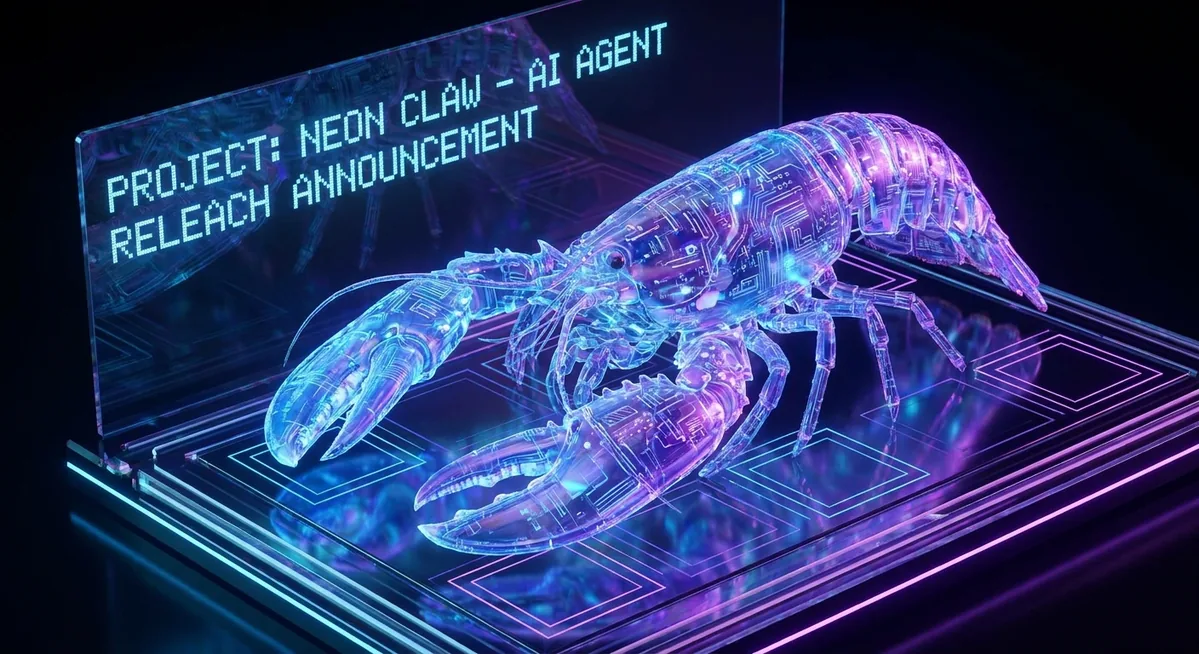
OpenClaw 2026.6.5 Goes Stable: GitHub-Backed Skills, New Versioning Train, and JPMorgan Bets on Long-Running Agents
OpenClaw's most ambitious June release graduates from beta to stable: GitHub-pinned ClawHub skill installs, a freshly minted YYYY.M.PATCH versioning scheme, bulletproof Anthropic extended-thinking recovery, and macOS session stability fixes that have been in the oven since Build 2026. Meanwhile JPMorgan Chase charts a roadmap to multi-day autonomous agents, Microsoft's Agent Control Specification lands, and the OWASP Agentic AI Security guide becomes required reading for anyone running lobster agents in production.
🦞 OpenClaw Updates
2026.6.5 Is Official — And the Version Number Just Changed Too
The OpenClaw 2026.6.5 release graduated to stable on June 9, 2026 — and it came with a housekeeping note that signals a more deliberate release posture going forward. The project has switched its release trains to a YYYY.M.PATCH monthly patch numbering scheme, with the June 2026 floor pinned at 2026.6.5 after the published beta. Pre-transition tags remain compatible, so nothing breaks for existing installs, but the new scheme makes it far easier to track which patch you are on and what month it belongs to.
That versioning discipline matters because the 2026.6.5 feature set is genuinely broad. This is not a one-fix patch — it is the culmination of a multi-week beta train that landed over 30 improvements. The highlights:
GitHub-Backed ClawHub Skill Installs
The single biggest quality-of-life improvement in 2026.6.5 is how ClawHub skills are now installed. When you install a ClawHub skill backed by a GitHub repository, OpenClaw now resolves the install through the GitHub-backed install API, downloads the pinned GitHub commit, and keeps install-policy checks and telemetry reporting intact throughout. This means every skill install is tied to an exact, reproducible commit hash — not a floating tag or latest pointer that could silently deliver different code tomorrow.
This is the supply-chain hygiene improvement that serious operators have been waiting for. When you install a skill today and audit it next week, you can verify you are running exactly what you reviewed. No drift. No surprise updates. This is how professional software dependency management is supposed to work, and it is finally here for the agent skills layer.
MCP Tool Result Coercion: Stopping the Anthropic 400 Errors
A recurring pain point for users running MCP (Model Context Protocol) tools through OpenClaw has been unexplained Anthropic 400 errors. The root cause: MCP tools can return resource_link, resource, audio, malformed image, and various other non-text/image block types that Anthropic's API does not accept directly. OpenClaw now coerces these richer MCP content types at the materialize boundary before they ever hit Anthropic's API — preventing both the 400 errors and the downstream effect of poisoned session history that followed them.
Thanks to contributors @RanSHammer and @849261680 for tracking this one down. It was the kind of subtle type-mismatch bug that is easy to miss and painful to diagnose, and the fix is clean: intercept at the boundary, normalize, and never let non-conforming content propagate into session state.
Anthropic Extended-Thinking Session Recovery
Extended-thinking sessions with Anthropic have had a fragility problem: after prompt-cache expiry or a Gateway restart, these sessions would fail to recover gracefully because stream start events were not waiting for message_start before proceeding. This meant pre-generation signature errors could not trigger the existing recovery retry path — they just failed.
The fix is elegant: stream start events now wait for message_start, which lets the existing retry machinery handle pre-generation signature errors correctly. Thanks to @openperf for both identifying the issue and shipping the fix. Extended-thinking users — especially those who have built reasoning-heavy agents on Anthropic's Claude — should notice meaningfully better session durability across Gateway restarts and cache expiry events.
macOS Node Session Stability
One of the more subtle regressions addressed in 2026.6.5 was macOS node mode silently self-reconnecting away from a healthy direct Gateway session. This caused unexpected companion app session churn — your macOS node would appear to be connected, but the session underneath had quietly migrated to a different route. Thanks to @vrurg for catching and fixing this. The node now respects healthy direct sessions instead of opportunistically replacing them.
Auth Profiles Move to SQLite for Real Durability
Auth profiles now live in SQLite, and official npm plugin install records keep their trusted pins. This completes a migration from ephemeral in-memory and flat-file auth state to a durable, queryable store. Combined with the prerelease fallback integrity check improvement (which prevents stale integrity hashes from being carried forward), this means the authentication layer of your OpenClaw install is now significantly more resilient across restarts, upgrades, and partial failures.
Parallel Search: Now Bundled
The Parallel search provider is now bundled with OpenClaw as a first-class web_search provider. Set PARALLEL_API_KEY in your environment and it auto-discovers during onboarding. The integration includes guarded endpoint handling, cache-safe session IDs, and onboarding picker support. Thanks to @NormallyGaussian for the contribution. This gives operators a third solid search option alongside Brave and Perplexity, and the bundled status means it is available immediately without any manual plugin installation step.
Matrix Voice and Thread Reliability
Matrix channel users get two meaningful improvements: voice messages can now be preflighted before mention gating (so the voice note pipeline no longer blocks on channel permission checks in the wrong order), and thread reads and replies now correctly navigate Matrix's paginated relations endpoint. For teams using Matrix as their primary channel — particularly in self-hosted, privacy-conscious deployments — these fixes close some of the last rough edges in the Matrix voice and threading experience.
Service and Upgrade Path Hardening
The upgrade experience gets meaningfully safer in 2026.6.5. Cron legacy JSON stores now migrate during doctor preflight, so stale job definitions do not silently fail after an upgrade. Service environment placeholders no longer mask state-dir secrets. WhatsApp startup waits are bounded, and disabled WhatsApp accounts now tear down cleanly on config reload instead of lingering in a half-initialized state. Thanks to @MonkeyLeeT, @sallyom, @mcaxtr, and @MukundaKatta for the combined effort here.
QQBot Reasoning Leak Fix
A final highlight worth calling out: QQBot now strips model reasoning and thinking scaffolding before native delivery to the QQ channel. Previously, raw <thinking> content from extended-thinking models could leak into channel replies, surfacing internal chain-of-thought to end users who were not meant to see it. The fix is straightforward but the implications are real — in any deployment where users are interacting through a channel, internal reasoning content should never surface as output. Thanks to @openperf for this fix as well.
The switch to YYYY.M.PATCH versioning paired with GitHub-pinned skill installs is the double signal we have been waiting for. OpenClaw is treating its release process as infrastructure now — not just code velocity. GitHub-pinned installs in particular close the supply-chain reproducibility gap that every serious operator has been quietly worried about. When you can audit exactly which commit you installed and verify it has not changed, you can actually build compliance workflows around the skills layer. That matters as enterprise adoption accelerates.
🔒 Security Tip of the Day
Read the OWASP Agentic AI Security Framework Before Your Next Deployment
OWASP has published its Agentic AI Security guide, and if you are running OpenClaw in any production-like capacity, it is required reading. The framework covers the threat model for autonomous agent systems — not just the classic prompt injection attacks you already know about, but the full attack surface: tool misuse, memory poisoning, session hijacking, capability escalation, and supply-chain compromise via skills and plugins.
The three areas most relevant to OpenClaw operators right now:
- Skill supply-chain integrity: 2026.6.5's GitHub-pinned installs are the first step, but you also need to review SKILL.md files, any bundled scripts, and outbound network calls before installing anything. A clean VirusTotal scan is a signal, not a guarantee.
- Reasoning leaks: The QQBot thinking-content fix in 2026.6.5 illustrates why you should audit every channel output for unintended internal content. Extended-thinking models generate a lot of chain-of-thought that users should never see — make sure your delivery pipeline strips it before delivery.
- Tool boundary discipline: The new MCP tool coercion and the agent/provider loop hardening in 2026.6.5 tighten what content can flow across tool boundaries. Even so, the principle holds: agents should only have access to the tools they actually need. Audit your tool policy list regularly and remove anything that was added for a one-off task but never cleaned up.
Bottom line: Upgrade to 2026.6.5 now, then spend 30 minutes with the OWASP Agentic AI Security guide. That combination — updated runtime plus current threat model — is the minimum responsible posture for any OpenClaw deployment handling real data or taking real actions.
⭐ Skill of the Day: weather
🌤️ weather (bundled OpenClaw skill)
What it does: The weather skill provides current conditions and forecasts via wttr.in, with clean formatting for locations, rain probability, temperature trends, and travel planning queries. It integrates with OpenClaw's cron system, so you can set up automatic morning weather briefings or pre-trip condition checks without any additional infrastructure.
Why we're featuring it today: This is a bundled, first-party skill that ships with OpenClaw — meaning it has been reviewed by the core team, lives in the official skills repository, and requires no external installation step. It uses the wttr.in public API with no API key requirement, making it one of the safest possible skill additions: no credentials to manage, no outbound auth to audit, and a publicly documented API with a well-understood data return shape.
Security note: Because this is a bundled first-party skill, standard VirusTotal scanning applies at the ClawHub level, but the real trust signal here is provenance — it ships with OpenClaw core. That is the safest possible supply-chain story for a skill.
Best use cases: Morning briefings, pre-meeting context ("will it rain during the 2pm outdoor event?"), travel planning, and pairing with cron jobs for daily proactive weather summaries.
Install / usage: Already available if you have OpenClaw installed. Use via natural language: "What's the weather in Seattle this weekend?" or "Set up a daily 7am weather briefing for San Francisco."
👥 Community Highlights
The New York Times Effect Is Real
The New York Times Magazine feature on small business operators running "armies of AI employees" via OpenClaw has had a visible effect on community composition over the past week. The Discord and GitHub issue tracker have seen a wave of new users who are decidedly not developers — they are small business owners, solopreneurs, and non-technical users who read the NYT piece and went straight to npmjs.com/package/openclaw. One user quoted in community posts: "Setup @openclaw yesterday. All I have to say is, wow. First I was using my Claude Max sub and I used all of my limit quickly, so today I had my claw bot setup a proxy to route my CoPilot subscription as a API endpoint so now it runs on that. It's the fact that claw can just keep building upon itself just by talking to it in discord is crazy."
That is both a testament to OpenClaw's power and a reminder that the user base is diversifying rapidly. Features that advanced operators take for granted — exec approval flows, tool policy lists, MCP boundary hardening — need to be discoverable and well-documented for users who come to the project without a DevOps background. The project's shift toward better operator UX, cleaner onboarding, and more visible safety controls is increasingly important as mainstream adoption accelerates.
ClawHub Crosses 52.7K Tools and 180K Users
ClawHub's dashboard now shows 52.7K tools, 180K users, and 12M downloads, with an average rating of 4.8 stars. The pace of growth is notable: this is not a slow academic registry — it is a fast-moving marketplace with real adoption behind it. The GitHub-backed install feature in 2026.6.5 is well-timed: as the registry grows, the importance of reproducible, auditable installs grows with it. A registry of 52K tools with no commit pinning is a supply-chain audit nightmare. A registry of 52K tools with pinned commit hashes is something you can actually govern.
Build 2026 Afterglow: Windows Is Now a First-Class OpenClaw Citizen
Microsoft's Build 2026 officially announced that OpenClaw now runs the node and gateway securely on Windows leveraging MXC (Microsoft's security container extension). This is not just a compatibility checkbox — it means Windows users get the same sandboxed, isolated execution environment that macOS and Linux users have had for months. For enterprise deployments where macOS is not an option, this removes the last major blocker. The community reaction has been enthusiastic: Windows users who had been running OpenClaw through WSL workarounds are now migrating to native installs.
🌐 Ecosystem News
JPMorgan Chase Sets the Enterprise Agent Roadmap: Multi-Hour, Then Multi-Day
In a CNBC interview yesterday, JPMorgan Chase's head of AI deployment laid out the roadmap for long-running autonomous agents in enterprise settings: "We will have those in 2026." He described a progression from short-lived task agents to agents that remain coherent for "multiple hours, then days" — with security concerns cited as the primary blocker that is now being actively solved rather than avoided.
"While long-running agents aren't yet ready for corporate use because of security concerns, their arrival isn't far off." — JPMorgan Chase, June 2026
This matters for OpenClaw operators in two ways. First, it validates the architectural direction OpenClaw has been pursuing: durable sessions, SQLite-backed state, cron-based scheduling, and persistent memory are not just developer conveniences — they are the prerequisites for the enterprise agent deployments that JPMorgan is describing. Second, it means the security posture of your OpenClaw deployment is about to be measured against enterprise standards, not just hacker-friendly norms. The OWASP framework, the GitHub-pinned installs, the tool boundary hardening — these all look different when the comparison set is "what would satisfy a JPMorgan risk team" rather than "what works for my home lab."
Microsoft's Agent Control Specification: Portable Runtime Governance
Microsoft's Build 2026 also shipped the Agent Control Specification (ACS) — a portable runtime governance standard for AI agents that can run on any compliant framework. The spec defines how agents should expose observability data, honor policy boundaries, and integrate with enterprise audit trails without being tightly coupled to a specific runtime. The tagline: "governance, not model power, is what gates enterprise AI agent deployment."
OpenClaw's trajectory aligns well with ACS principles — the project has been adding operator authority controls, cron status visibility, and structured session management for months. The open question is whether OpenClaw will explicitly pursue ACS compliance as a certification target. Given the direction of enterprise adoption, that seems increasingly likely as a near-term roadmap item.
agnt8x Opens the Multi-Agent Marketplace
EightX Labs launched agnt8x this week — a public platform for recruiting, onboarding, operating, and monetizing AI agents. The platform includes a builder marketplace, a unified Passport/audit trail per agent, and a multi-agent conductor. More importantly, they published the Extensible Agent Manifest (EAM) v0.1 — an open spec for describing agent capabilities, trust levels, and runtime requirements.
This is the beginning of an interoperability era for agent ecosystems. If EAM gains traction (and early signals suggest real developer interest), OpenClaw skills and agents could eventually be published with EAM manifests — enabling cross-platform discovery, trust attestation, and capability negotiation. ClawHub already has most of the infrastructure needed for this; the manifest format is the missing piece.
The JPMorgan roadmap, Microsoft ACS, and agnt8x launching in the same week are not coincidences — they reflect a market that has decided long-running autonomous agents are an engineering problem to be solved, not a theoretical concept to be debated. OpenClaw is the only personal-scale runtime that is simultaneously attracting NYT-profile small business operators and aligning with enterprise-grade governance requirements. That dual-market position is genuinely rare, and the 2026.6.5 release — with its versioning discipline, GitHub-pinned skills, and auth durability — is exactly the kind of infrastructure investment that makes it defensible.
Need help with OpenClaw deployment?
SEN-X provides enterprise OpenClaw consulting — architecture, security hardening, custom skill development, and ongoing support.
Contact SEN-X →