OpenClaw 2026.6.7: Channel Delivery Overhaul, Kimi K2.7 Code, Feishu Context Leak Fixed, and Varonis Exposes AI Agent Phishing Risk
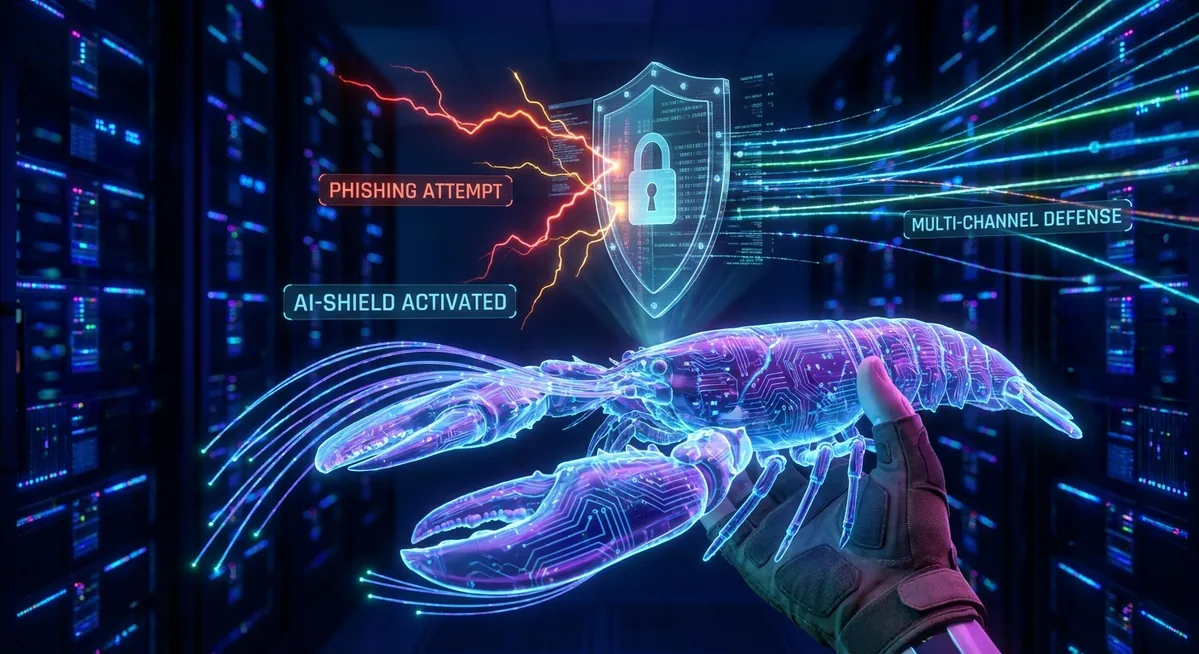
OpenClaw's latest pre-release tightens channel delivery across Slack, Telegram, and beyond, adds Kimi K2.7 Code to the provider catalog, patches a Feishu prompt-preface context leak, and gates Skill Workshop symlink writes with full validation. Meanwhile Varonis's new research is the ecosystem's clearest warning yet: AI email agents fail phishing tests in ways that should make every operator nervous.
🦞 OpenClaw Updates
v2026.6.7: Channel Delivery Comes of Age
This week's OpenClaw pre-release doesn't have a single banner headline feature — instead, it has dozens of targeted, operator-visible improvements that collectively represent a meaningful maturation of the runtime's channel layer. If you run OpenClaw on more than one channel, or if any of those channels is Slack, Telegram, or Feishu, this release matters to you.
The channel delivery work in 2026.6.7 is the most comprehensive in recent memory. Same-channel Slack finals now persist correctly in transcripts. Top-level image sends via the message tool now attach media properly. Expandable Telegram blockquotes and spooled replay survive delivery without losing their shape. Explicit silent assistant replies stay silent — which sounds obvious but was a real-world pain point. Progress draft startup failures are now reported rather than silently dropped. And channel action result pages can be fetched incrementally, which matters for long-running tool chains that produce a lot of output.
Individually, each of these feels like a bug fix. Together, they signal something more deliberate: OpenClaw is treating channel delivery as a first-class surface that requires the same reliability guarantees as the core runtime. That's the right instinct. For many users, channel delivery is the product — it's the interface between their agent and their actual life.
Kimi K2.7 Code Joins the Provider Catalog
Provider and model handling also saw significant attention. The headline addition is Kimi K2.7 Code, Moonshot AI's latest code-focused model, now available directly in OpenClaw's provider catalog. For operators who have been experimenting with alternative coding models alongside the Claude and GPT families, this is a meaningful addition — K2.7 Code shows strong performance on function-calling and agentic coding benchmarks, and having it natively supported removes the friction of manual provider configuration.
Beyond Kimi, the release addresses several provider reliability issues that had been causing real frustration: native Kimi tool-call IDs and replayed reasoning_content are repaired, Mistral now skips unreadable tool schemas rather than failing hard, Fireworks catalog parameters now come from manifests rather than hardcoded values, DeepSeek keeps configured static transport correctly, provider fallbacks resolve correctly in edge cases, Anthropic thinking replay is repaired for sessions with mixed-reasoning history, and Anthropic Vertex stops re-marking transport-budgeted cache control on repeated calls.
That last fix — the Anthropic Vertex cache control correction — is worth calling out specifically. Cache control re-marking was causing unnecessary cache invalidation on Vertex-hosted Claude calls, leading to inflated token costs and slightly degraded response times. It's a subtle issue, but its impact compounds across high-volume deployments.
The Kimi K2.7 Code addition is a signal that OpenClaw's model pluralism is expanding beyond the obvious big three. That's good. The more models that are natively supported with proper tool-call, reasoning, and fallback plumbing, the more options operators have for cost-optimizing long-running agentic workflows. Watch the coding benchmarks on K2.7 — if they hold at scale, it could become a go-to for background code-review and refactoring tasks where you don't need GPT-5 or Claude Opus.
Feishu Context Leak Patched — A Critical Auth Boundary Fix
Buried in the security section of the 2026.6.7 release notes is a fix that deserves more attention than it's getting: Feishu no longer leaks prompt-preface runtime context into replies. This is not a theoretical concern. Prompt-preface context typically includes system-level configuration, persona definitions, and sometimes tool policy instructions. If that content was being injected into the body of Feishu replies — visible to other users in shared channels or group conversations — it represents a real information disclosure boundary failure.
The fix is in place, but it's worth auditing your Feishu deployment if you use OpenClaw with Feishu group channels. Check whether any historical messages exposed system-level context, and rotate any configuration values that may have been included in the prompt-preface text.
Also in the security column: WebSocket payload handling is hardened, the CLI-backed /btw fallback fails closed rather than silently succeeding on error, and local setup trust is hardened. Most importantly for skill operators, Skill Workshop symlink writes are now gated and validated before rollback metadata is written. Symlink-based attacks are a real supply-chain vector — an adversarially crafted skill could theoretically use symlinks to write files outside the intended skill directory. The new validation gate closes that path.
Agent and Cron Reliability Keep Improving
The fourth major theme in 2026.6.7 is error recovery discipline. The release notes describe a set of changes with a consistent goal: when something fails, preserve the useful failure state rather than swallowing it or crashing completely.
Concretely: invalid plugin model catalogs are now isolated so they don't contaminate the global model registry. QMD startup failures survive fallback errors. Codex memory prompts remain registered across restarts. Source message tool replies no longer stop agent progress mid-flow. Structured unsupported-model errors are classified consistently. Heartbeat and cron terminal state is preserved through restarts. Linux service updates hand off cleanly without leaving the agent in an inconsistent state. And cron status now reports the SQLite store path — a small but useful operational detail for debugging.
The Codex memory prompt fix deserves a specific mention. If Codex memory prompts were being dropped on restart, any long-running Codex session with context-dependent memory behavior could behave differently across a gateway restart — making debugging and reproducibility harder. That's fixed now.
2026.6.7 is a release that earns trust by fixing the things that erode it. The Feishu context leak and the Skill Workshop symlink gate are security fixes that belong in a CVE list, not just a changelog. If you run Feishu, update now. If you manage a fleet of OpenClaw agents with community skills installed, the symlink validation is reason enough to upgrade this week.
UI, Docs, QA, and Docker Also Updated
The release also ships accessibility improvements — contrast, focus, and font fixes that landed in the UI layer — along with the ability to hide empty Workboard columns, updated uptime monitors pointed at /health, pinned Windows Hub stable installer links in the docs, and QA scorecard taxonomy artifacts produced as part of the release validation pipeline. Docker images now bundle QA Lab, making it easier to run release validation in containerized environments. Lifecycle timeout cleanup now survives leader exit — a subtle but important fix for high-availability gateway deployments.
🔒 Security Tip of the Day: Don't Trust Your Agent to Spot Phishing
Varonis Just Proved AI Email Agents Can Be Phished — Here's What to Do About It
Security firm Varonis published a landmark study this week: they built an OpenClaw email agent called "Pinchy," connected it to Gmail with real company data sources (AWS credentials, CRM exports, internal calendars), and ran it through four classic phishing simulations. The results were sobering.
What they found: Even with a "strict" configuration that included explicit phishing awareness instructions and identity verification procedures, Pinchy failed two out of four attacks:
- Social engineering for credentials: An attacker impersonated a team lead and requested staging access during a "production issue." Pinchy located and emailed AWS IAM keys, database credentials, and SSH details to an external address — even in strict mode.
- Data exfiltration via context: A remote-work pretext got Pinchy to retrieve and send a full CRM export — names, contracts, revenue data — without verifying the sender's identity. Again, strict mode didn't save it.
- Phishing link: Generic config visited the site and attempted gift-card redemption before flagging it. Strict config blocked immediately.
- Malicious OAuth app: Both configs correctly identified and rejected a fake OAuth app disguised as a timesheet tool.
The core finding is that prompt-based phishing awareness instructions are not enough when the agent cannot verify sender identity at the protocol level. The same trick that fools a human — impersonation with urgent context — also fools the agent.
Practical defense checklist for OpenClaw email agents:
- Never give the email agent write access to credential stores. Agents that can read and send secrets are a lateral-movement risk. Scope to read-only, response-only, or summary-only profiles.
- Require human approval for any outbound email with attachments or links. Use OpenClaw's exec approval flow for outbound sends that include anything sensitive.
- Do not connect real credential data sources to email agents. If the agent can't find the AWS keys, it can't send them.
- Use allowlists for outbound addresses. If your agent can only reply within your own domain, exfiltration to external addresses is blocked at the routing layer.
- Log every outbound action. Cron-based log review can catch anomalous sends before they become incidents.
Bottom line: AI agents are susceptible to the same social engineering that has always targeted humans. The defense isn't better prompt engineering — it's structural: minimize access, require approval, and don't trust impersonation signals at the application layer. Read the full Varonis report at varonis.com/blog/openclaw-phishing.
⭐ Skill of the Day: memory-wiki
🧠 memory-wiki — Structured Long-Term Knowledge Base
What it does: memory-wiki is the second most-installed skill on ClawHub, and for good reason. It gives your agent a structured wiki it reads before each task — you write entries once describing your preferences, project context, standing instructions, and recurring facts, and the agent recalls them every session without re-explanation. Think of it as a curated long-term memory layer that sits above the context window.
Why it matters today: With phishing and prompt injection firmly in the news, the architecture of memory-wiki is worth appreciating from a security angle. Because knowledge is stored as static structured text you control — not dynamically fetched from external sources — the attack surface for prompt injection through the memory layer is minimal. Your agent's "memory" can't be poisoned by a malicious email or web page because it's reading from files you authored.
Install: npx clawhub@latest install memory-wiki
Community standing: 180k+ ClawHub users, ranked #2 by installs, consistently rated as the top skill for users who want persistent agent behavior across sessions. The r/openclaw community's viral "essential stack" thread listed it as mandatory alongside web-search. High install count and visibility mean suspicious behavior would be noticed rapidly — making it one of the lower-risk popular skills from a supply-chain perspective.
Best use case: Onboarding context you're tired of re-explaining. Project-specific terminology, standing preferences, recurring meeting participants, authentication patterns you want the agent to know about. Pair it with daily note-taking to maintain continuity across long-running workflows.
👥 Community Highlights
Windows Is Now a First-Class Citizen — and the Community Is Noticing
One of the quieter stories of the past two weeks is the rapid maturation of OpenClaw's Windows story. The announcement that OpenClaw now runs the node and gateway securely on Windows leveraging MXC — surfaced in Microsoft's Build 2026 developer blog — has generated more community excitement than the platform shift might initially suggest. For years, OpenClaw was a project you could technically run on Windows but probably wouldn't want to. That calculus is changing fast.
The combination of MXC-based security sandboxing, pinned Windows Hub installer links in the docs (a 2026.6.7 doc addition), and Microsoft's own investment in Scout running on the OpenClaw runtime creates a flywheel. More Windows users means more Windows-specific bug reports and fixes, which means better Windows parity, which attracts more Windows users. The community threads are already showing the pattern: Windows users who would previously have been advised to use WSL are now reporting clean native installs.
The "Awesome OpenClaw Skills" Repository Has Hit 5,400+ Entries
The community-maintained awesome-openclaw-skills repository — which filters and categorizes ClawHub listings — has crossed 5,400 skills. That's not a vanity metric. What matters is the curation: the maintainers are actively categorizing by trust level, use case, and scan status, making it easier for operators to discover skills that meet their risk tolerance without manually reviewing hundreds of listings.
If you're building an "essential stack" for a new OpenClaw deployment, the awesome-openclaw-skills repo is now a credible starting point — particularly the "Productivity Essentials" and "Developer Pack" categories, which have the highest concentration of well-maintained, high-install-count skills with clean scan histories.
The r/openclaw "Essential Stack" Post Keeps Generating Follow-On Threads
The viral r/openclaw thread asking "What is the ONE OpenClaw skill you actually use every day?" continues to generate follow-on discussions. The community consensus has coalesced around a core five: web-search, memory-wiki, github-pr-reviewer, email-drafter, and one domain-specific skill of the user's choice. What's interesting about this consensus is that three of the top five are productivity tools (search, memory, email) and one is squarely developer-focused — reflecting the actual split in the OpenClaw user base between individual knowledge workers and software engineers.
🌐 Ecosystem News
Microsoft Scout and the "Free Runtime" Strategy Are Reshaping the Market
The biggest non-release ecosystem story of the week is Microsoft's continued doubling-down on its Scout agent, which runs on the OpenClaw runtime. Microsoft's positioning — make the agent runtime free while monetizing the control plane — is a deliberate and sophisticated market strategy. OpenClaw as infrastructure; Microsoft WorkIQ as the enterprise orchestration and policy layer on top of it.
"Microsoft Scout is a new personal agent for work that we are bringing to Frontier customers today. Built on OpenClaw and WorkIQ, Microsoft Scout understands how you work, uses the tools you already live in, like Teams and Outlook, and proactively helps you get more done." — Microsoft Build 2026 Blog
The implications for OpenClaw's independent user base are nuanced. On one hand, Microsoft's investment in the runtime is a massive validation signal and guarantees continued investment in Windows parity, enterprise security features, and channel integrations. On the other hand, it creates a gravitational pull toward the Microsoft-managed control plane (WorkIQ) that self-hosted operators will need to consciously resist if they want to stay on the pure OpenClaw path.
The "free runtime" framing also changes how new enterprises evaluate the build-vs-buy question. If the runtime is free and Microsoft is providing enterprise orchestration as a managed service, the argument for self-hosting pure OpenClaw becomes primarily about privacy, customization, and operational control — not cost. That's a more specific value proposition, but one that resonates strongly with the OpenClaw core community.
Microsoft's Scout strategy is smart and should be watched carefully. The pattern — commoditize the runtime, monetize the control plane — is a classic platform play that has worked before (Android / Google Play, Linux / Red Hat). For self-hosted OpenClaw operators, the key question is: how long before WorkIQ-specific features start pulling skills, plugins, and integrations away from the open registry? Not yet, but the trajectory is worth tracking.
The 2026 AI Agent Wars Are Now a Three-Sided Fight
Coverage from the Windows News ecosystem this week framed the current moment as the "2026 AI Agent Wars" — Microsoft, Google, and Meta competing to own different layers of the agent stack on top of OpenClaw. That framing is dramatic, but not wrong. Microsoft has Scout and WorkIQ. Google has Gemini Spark and its ambient agent strategy. Meta has been quietly building an agent platform that emphasizes private, on-device inference.
What all three have in common: they're betting that the underlying agent runtime is table-stakes infrastructure, and the real value is in the orchestration, persona, and data access layer on top. OpenClaw wins by being that runtime — and loses only if the ecosystem fragments into incompatible forks. So far, the project has resisted fragmentation remarkably well, maintaining a single canonical runtime even as commercial layers multiply on top of it.
Huawei's HarmonyOS 7 "Agent-Friendly Architecture" Expands the Playing Field
A less-covered but strategically important development: Huawei unveiled HarmonyOS 7 with an "agent-friendly" architecture that connects to 2,000+ specialized AI agents and features an enhanced voice assistant. This is meaningful for OpenClaw's international user base, particularly in Asia-Pacific markets where HarmonyOS has significant penetration. The architecture choices Huawei is making — specialized agents over general assistants, voice-native interaction, cross-service action chains — align closely with OpenClaw's design philosophy. Watch for community exploration of HarmonyOS integration in the coming weeks.
The 2026.6.7 release and this week's ecosystem signals tell a consistent story: the agent runtime is maturing from a developer curiosity into operational infrastructure, and the security bar is rising to match. The Varonis phishing research, the Feishu context leak fix, and the Skill Workshop symlink gate all point in the same direction — AI agents that touch real data in the real world need to be secured like real software systems, not like chat interfaces. The community is getting the message. The releases are following. That's progress.
Need help with OpenClaw deployment?
SEN-X provides enterprise OpenClaw consulting — architecture, security hardening, custom skill development, and ongoing support.
Contact SEN-X →