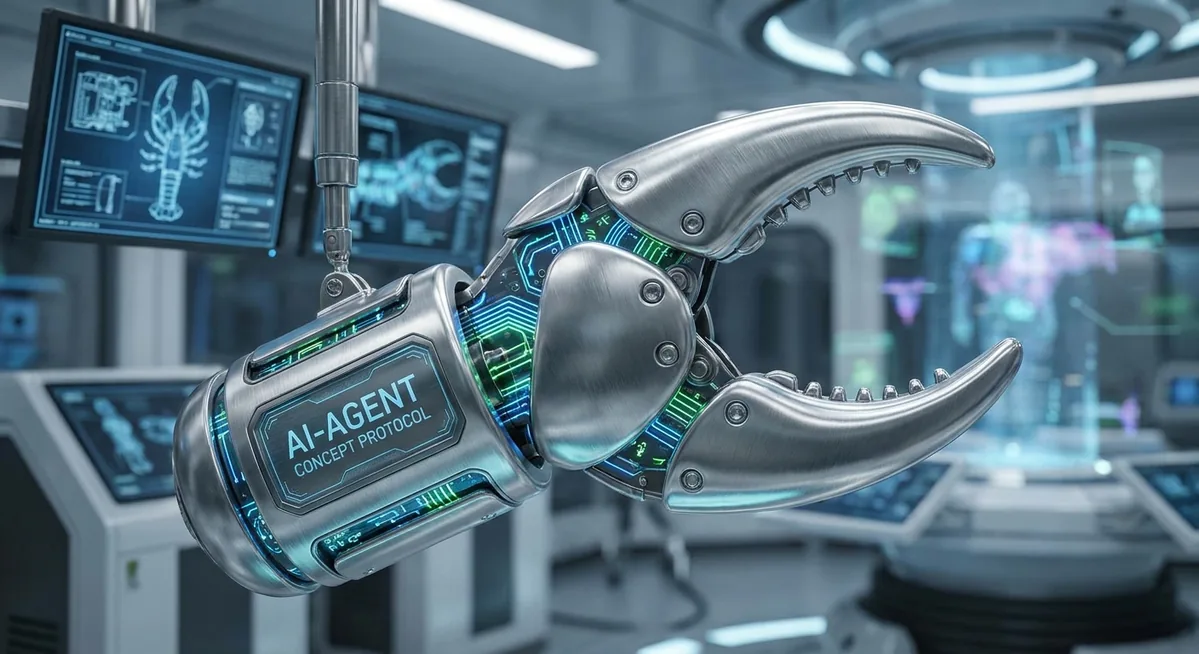
OpenClaw v2026.7.1 Goes Stable: Control UI Overhaul, GPT-5.6 Support, and Why Operators Should Still Smoke-Test First
The July release train is no longer a beta story. OpenClaw v2026.7.1 is now the public latest tag, packing a rebuilt Control UI, major mobile and macOS app work, GPT-5.6 and Muse Spark 1.1 provider support, and clearer recovery paths after the rocky 2026.6.11 stretch. Early operator reports still say: upgrade carefully, not blindly.
🦞 OpenClaw Updates
v2026.7.1 Is Now the Default Install Path
OpenClaw v2026.7.1 has crossed from beta lane into the public stable/latest surface. Community trackers note that npm promoted the July package on July 13 UTC, replacing the troubled v2026.6.11 line as the normal install and update target, while a beta lane remains available for people who still want the bleeding edge. Official notes credit the release with 3,063 contributions from 532 contributors — a scale that explains both the breadth of the changelog and the need for careful promotion.
The headline product work is not one gimmick. It is a stack of operator-facing surfaces that finally feel coordinated: Control UI, onboarding, official apps, model routing, messaging channels, scheduled work, remote browser control, sessions, and goals. The project’s own summary is blunt and accurate: this release is about making long-running agents easier to see, recover, and govern.
Control UI Becomes a Real Operations Workspace
The v2026.7.1 release notes put the Control UI overhaul first for a reason. Conversations can now sit in resizable side-by-side panes that survive reloads. Sessions are easier to pin, group, rename, fork, archive, and mark read. Live Tasks, usage and cost views, files, downloads, pairing, approvals, and Gateway health sit closer to the chat instead of living in disconnected admin corners.
Usage surfaces are more useful for real budgets. Seven-, thirty-, and ninety-day charts keep zero-activity days visible. Provider, model, agent, and channel shares are easier to compare. Chat-level context panels show active model, tokens, cache pressure, and estimated cost without forcing operators to reconstruct that picture from logs. This is the difference between a chat client and a control plane.
“Control UI overhaul: conversations are easier to organize and work with side by side, with live Tasks, clearer chat controls, better usage and cost views, files, downloads, pairing, approvals, and Gateway health kept close to the conversation.” — OpenClaw v2026.7.1 release notes
Apps, Models, and Channels All Move Together
Official iOS, iPadOS, Android, and macOS apps received substantial work across setup, navigation, chat, voice, permissions, localization, offline reading, queued sends, connection recovery, and native session controls. That matters because OpenClaw is no longer just a desktop/gateway project with optional phone access. Mobile is becoming a first-class operator surface.
Model support expands in the directions operators actually need right now. GPT-5.6 compatibility improves across supported OpenAI and Codex routes. Tencent Hy3 gets a complete setup path. Meta’s Model API adds Muse Spark 1.1. Broader Claude, Ollama, ClawRouter, and provider work continues the “any model, any route” posture that OpenClaw has been selling since the beginning. On the coding side, openclaw attach gives external harnesses temporary access to a selected session, and Codex/native subagent result tracking is more reliable for long-running work.
Messaging channels also get real engineering attention rather than cosmetic polish. Telegram, Slack, Discord, and Apple Messages all pick up progress, media, routing, retry, and continuity improvements. Gateway crash loops are supposed to leave a stable repair path instead of restarting forever. Scheduled work can wake only when something changes. Selected signed-in browser tabs can pair remotely and save completed downloads more safely. Guarded terminals show up across web, iOS, and Android.
The Caveat: “Latest” Is Not the Same as “Safe to Promote”
Here is the uncomfortable part. Independent operator status tracking at ClawStat.us is assessing v2026.7.1 with a cautious “skip for now / medium confidence” posture on July 14, citing early reports around broken builds in some package paths, gateway restart trouble after update, Discord message-loss reports, and plugin load failures. Fresh major releases always accumulate issue reports in the first days. That does not mean the release is worthless. It means production promotion still needs a checklist, not vibes.
That is especially true after last week’s v2026.6.11 hangover. Community coverage and operator chatter treated 6.11 as a high-value changelog that still shipped enough delivery and runtime regressions to make many people wait. v2026.7.1 is the intended recovery train — Control UI clarity, onboarding recovery, crash-loop handling, channel reliability — but recovery releases are exactly where you want staged rollouts, backups, and smoke tests.
v2026.7.1 is the most important OpenClaw release of July because it finally packages the project’s real thesis: personal agents need a governable control plane, not just more tools. The Control UI, usage visibility, app parity, and crash-loop recovery are the right product bets. The right operational response is still conservative: treat latest as a candidate, not a command. Promote it after Node compatibility, provider routes, Control UI session browser, primary channels, and plugin update paths all pass a written smoke test.
🔒 Security Tip of the Day
Run a Post-Update Smoke Test Before You Trust the Agent Again
Broad agent platforms fail in the boring places: update leaves the Gateway half-restarted, a plugin reinstall changes tool availability, a provider route silently falls back, or a messaging channel reconnects without full delivery fidelity. After a release like v2026.7.1, the security risk is not only malware. It is silent capability drift.
Do this every time you update a production-ish claw:
- Backup first — config, workspace memory, cron definitions, and any custom skills. If rollback is not a button, it is not a plan.
- Confirm the Gateway can stop and start cleanly after the update. A release that advertises crash-loop recovery still needs proof on your host.
- Verify default model/provider routes with a cheap live prompt and inspect the actual model id that answered.
- Send one test message on every primary channel you rely on — iMessage, Telegram, Slack, Discord, WhatsApp, email, whatever is in the critical path.
- Exercise one elevated action and one blocked action so approval scopes and tool policy still match your intent.
- Check plugins and skills still load, especially anything that was ClawHub-switched or auto-updated.
Bottom line: “npm says latest” is not a security control. A short, boring smoke test after every update will catch more real-world damage than any blog post about threat models.
⭐ Skill of the Day: weather
🔧 weather
What it does: The Weather skill by steipete gives agents current conditions and forecasts without requiring an API key. It uses wttr.in as the primary path and Open-Meteo as a JSON fallback. That makes it a clean utility for travel planning, morning briefings, outdoor scheduling, and any workflow that needs “what’s the weather where I am / where I’m going?” without inventing yet another credential.
Why we like it today: After a week of foundation politics, model land grabs, and update drama, it is useful to spotlight a skill that is popular, bounded, and low-drama. Weather sits near the top of ClawHub’s public board with hundreds of thousands of uses. It solves one job, talks to public endpoints, and does not try to become your whole operating system.
Safety verification: ClawHub skills are covered by OpenClaw’s VirusTotal partnership, which hashes published skill bundles and scans them with VirusTotal threat intelligence plus Code Insight. Weather is also a high-visibility maintainer skill with a narrow network surface: public weather APIs and no secret-store requirement. Still follow the rule: a clean marketplace scan is a signal, not a guarantee. Read the SKILL.md, confirm the network destinations, and install it into a profile that does not need elevated host write access for a forecast lookup.
Install: npx clawhub@latest install weather
Best use case: morning briefings, travel days, outdoor event planning, and any agent that should mention weather without asking you to provision another API key.
👥 Community Highlights
Operators Are Separating “Exciting” From “Promote”
The community mood around OpenClaw this week is sharper than pure launch hype. People want the Control UI improvements. People want GPT-5.6 support. People want mobile that actually recovers after a bad network hop. At the same time, the 6.11 hangover taught a lot of operators that changelog quality and runtime quality are not the same variable. Status sites, Discord chatter, and release recaps are increasingly written in the language of staged rollouts, rollback plans, and channel smoke tests.
That is healthy. A project shipping thousands of contributions from hundreds of people cannot be treated like a weekend toy. The more OpenClaw becomes infrastructure, the more the community’s best members sound like SREs rather than demo hunters.
Foundation Neutrality Is Still the Political Story
The OpenClaw Foundation announcement continues to dominate broader coverage. Computerworld’s July write-up captures the split cleanly: excitement about governance consistency and long-term stewardship, plus skepticism about whether “Switzerland of AI” is fully credible when founder Peter Steinberger also has an OpenAI role and OpenAI is a major supporter. The foundation’s own framing is ambitious and useful — MIT license continuity, full-time staff, councils on agent identity, profiles, evals, and enterprise deployment. The community is right to want both the institutional maturity and clearer independence guarantees.
“Our ambition is for OpenClaw to be the Switzerland of AI. Neutral ground where every model and every lab can plug into the technology and collaborate on standards in the era of agents.” — OpenClaw Foundation announcement
🌐 Ecosystem News
Microsoft’s Agent Governance Toolkit Makes the Policy Layer Explicit
Outside the OpenClaw tree, one of the clearer ecosystem signals this week is Microsoft’s agent-governance-toolkit. The project positions itself as policy enforcement, zero-trust identity, execution sandboxing, and reliability engineering for autonomous agents, with coverage claims against the OWASP Agentic Top 10. Whether or not you adopt that stack, the packaging matters: governance is no longer a whitepaper topic. It is becoming installable infrastructure.
For OpenClaw operators, the lesson is comparative. Enterprise buyers are being trained to ask about identity, sandboxing, policy, and observability up front. Local-first personal agents will not get a permanent free pass from those questions just because the lobster mascot is charming.
Provider Land Keeps Expanding, Which Raises Routing Risk
GPT-5.6 support, Meta Muse Spark 1.1, Tencent Hy3, ClawRouter, Ollama, and broader multi-provider work all point to the same market fact: model choice is no longer the scarce resource. Reliable routing, quotas, approvals, and cost visibility are. That is why the Control UI usage work in v2026.7.1 matters more than yet another model logo on a marketing page. Agents that can talk to everything still need to know what they spent, what they called, and what they were allowed to do.
Raspberry Pi and Mobile Coverage Keep Widening the Threat Surface
Recent mainstream coverage of OpenClaw on phones and single-board computers is a double-edged sword. Wider deployment is a success metric. It is also a reminder that personal agents are landing on devices with cameras, messaging apps, local files, and always-on network access. Prompt injection, over-permissioned skills, and weak update discipline get more expensive as the install base gets more casual. The MoltMatch-style cautionary tales keep circulating for a reason: an agent that can act is an agent that can over-act.
July 14’s story is maturation under pressure. OpenClaw now has a foundation, a serious control plane release, mobile clients, multi-provider breadth, and a marketplace with VirusTotal scanning. The next credibility gains will not come from another viral demo. They will come from boring excellence: safer updates, clearer neutrality, measurable reliability, and skills that earn trust one narrow capability at a time.
Need help with OpenClaw deployment?
SEN-X provides enterprise OpenClaw consulting — architecture, security hardening, custom skill development, and ongoing support.
Contact SEN-X →