OpenClaw’s Multi-Channel Control Plane Comes Into Focus
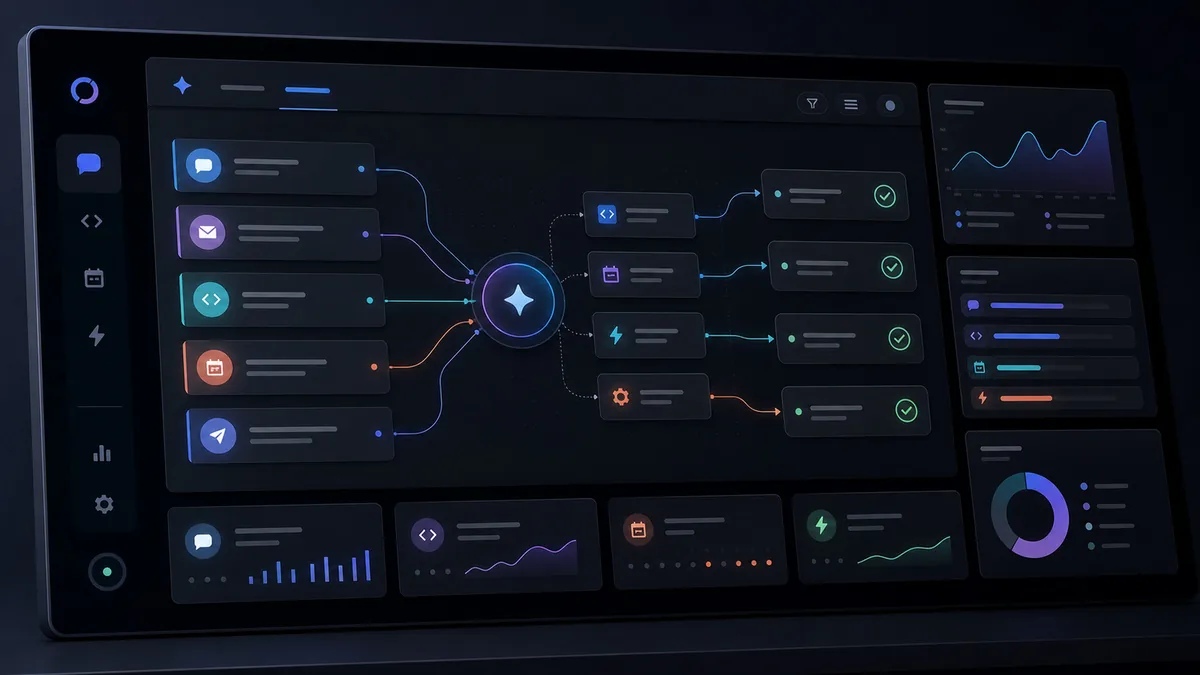
OpenClaw is easiest to understand as a control plane: channels bring work in, models reason, tools act, memory preserves state, and policies decide what crosses boundaries.
The official docs emphasize a broad channel layer
OpenClaw’s documentation describes a self-hosted Gateway connecting many chat platforms to AI agents. The channel layer is not cosmetic; identity, threading, delivery guarantees, and approvals all vary by surface.
For operators, the important question is not whether the feature or project sounds impressive. It is whether the capability has a clear owner, bounded permissions, observable state, a failure signal, and a reversible deployment path. Those controls turn an interesting agent demo into dependable infrastructure.
Source: Inspect the source
OpenClaw’s real leverage comes from combining persistent context with explicit tools and verifiable state. Add capability only when its permissions, failure modes, and rollback path are understood.
ClawX targets non-terminal users
A desktop interface can make sessions, tools, and configuration more legible. The key test is whether convenience preserves the auditability that power users get from explicit files and commands.
For operators, the important question is not whether the feature or project sounds impressive. It is whether the capability has a clear owner, bounded permissions, observable state, a failure signal, and a reversible deployment path. Those controls turn an interesting agent demo into dependable infrastructure.
Source: Inspect the source
OpenClaw’s real leverage comes from combining persistent context with explicit tools and verifiable state. Add capability only when its permissions, failure modes, and rollback path are understood.
Model choice becomes a routing problem
Community model comparisons reinforce that OpenClaw can route through supported providers or compatible endpoints. The practical question is which model fits each lane’s risk, latency, context, and cost.
For operators, the important question is not whether the feature or project sounds impressive. It is whether the capability has a clear owner, bounded permissions, observable state, a failure signal, and a reversible deployment path. Those controls turn an interesting agent demo into dependable infrastructure.
Source: Inspect the source
OpenClaw’s real leverage comes from combining persistent context with explicit tools and verifiable state. Add capability only when its permissions, failure modes, and rollback path are understood.
Planning with files hardens long-running work
File-based planning patterns preserve objectives and completion gates across compaction and session restarts. Durable state reduces the chance that a long task quietly changes meaning.
For operators, the important question is not whether the feature or project sounds impressive. It is whether the capability has a clear owner, bounded permissions, observable state, a failure signal, and a reversible deployment path. Those controls turn an interesting agent demo into dependable infrastructure.
Source: Inspect the source
OpenClaw’s real leverage comes from combining persistent context with explicit tools and verifiable state. Add capability only when its permissions, failure modes, and rollback path are understood.
Operator checklist
- The official docs emphasize a broad channel layer: verify version, provenance, required permissions, external network access, stored state, and rollback before adoption.
- ClawX targets non-terminal users: verify version, provenance, required permissions, external network access, stored state, and rollback before adoption.
- Model choice becomes a routing problem: verify version, provenance, required permissions, external network access, stored state, and rollback before adoption.
- Planning with files hardens long-running work: verify version, provenance, required permissions, external network access, stored state, and rollback before adoption.
Workflow / Skill Spotlight
Workflow spotlight: planning-with-files
File-backed plans are especially valuable for multi-hour work. Keep the objective, decisions, evidence, next action, and completion gate human-readable.
Security Practice
Bind approvals to channel identity and action consequence. A trusted direct message and a public group mention should not receive the same authority.
Need help turning AI change into an operating advantage?
SEN-X helps teams evaluate models, design governed agent systems, and deploy measurable automation.
Contact SEN-X →