OpenClaw Beta 6 Reframes Automations as MCP Goes Stateless
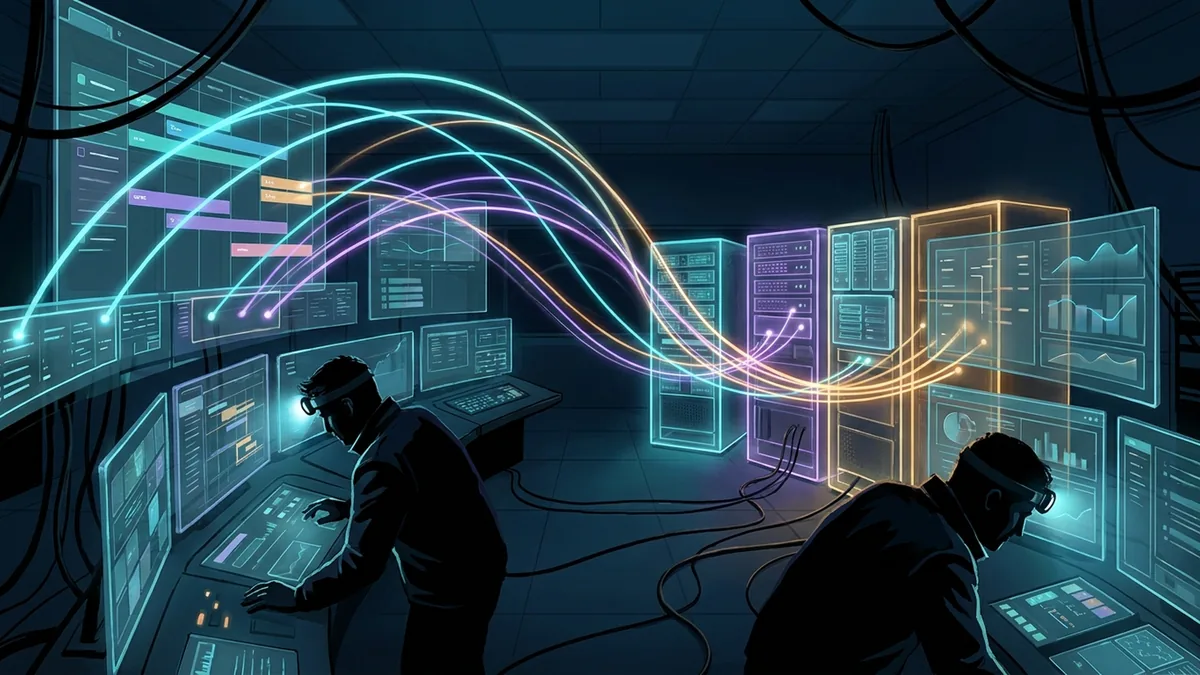
The newest OpenClaw pre-release makes scheduled work more legible, pushes tools toward explicit plugin boundaries, and arrives alongside an MCP revision designed for ordinary scalable web infrastructure.
OpenClaw Beta 6 Makes the Operations Layer Visible
Cron Becomes Automations Without Breaking the CLI
The official OpenClaw v2026.7.2-beta.6 release notes describe a scheduler-facing rename from “cron” to “Automations” across the agent tool, CLI, and user interface, while retaining the compatible command alias. The change is more than polish. “Cron” describes an implementation mechanism; “Automations” tells operators what the surface is for, including dynamic cadence, durable schedule-source streaming, heartbeat monitors, conversion of heartbeat tasks, current-conversation defaults, and the new /loop workflow bundled into the wider 2026.7.2 line.
Beta 6 also moves DuckDuckGo search out of core and into a plugin boundary, adds hosted Fish Audio S2.1 speech with streaming and telephony, and extends local speech through Fish S2 Pro reference-voice streaming on macOS. Control UI onboarding now continues verified model setup into Custodian, then explains that the web app is useful even before a messaging channel is connected. Buzz rooms gain reconnect-safe typing indicators scoped to rooms and threads.
Those additions share one architectural instinct: label operational concepts for humans, isolate provider ownership, and make system state observable. A scheduler should look like managed work rather than a Unix relic. A search provider should be installable and replaceable rather than fused to the runtime. A setup path should identify the next control point instead of abandoning users after authentication.
The Automations rename is unusually important because vocabulary shapes governance. Teams can assign an owner, review an automation, define its authority, and inspect its run history without translating every conversation into scheduler jargon. Keeping the cron alias preserves muscle memory, while the product language finally matches the risk: these are durable agents acting on a clock, not merely strings in a crontab.
MCP Apps Meet a Stateless Protocol Core
The same OpenClaw beta continues the 2026.7.2 work on ticketed MCP Apps: tools and resources can be bound to interactive views, context updates can be bounded, channel replies can open apps, and useful views can be pinned to durable dashboards. The release also says native plugins can declare MCP Apps directly and that the shared sandbox has been hardened. This turns MCP output from a hidden tool exchange into something an operator can inspect and use.
That direction now aligns with the official MCP 2026-07-28 specification announcement. MCP has retired the required initialize handshake and protocol-level session identifier in favor of self-describing requests. A client may call a new discovery method, but any request can otherwise reach any server instance behind a plain round-robin load balancer. Method and tool names move into HTTP headers, allowing gateways and policy layers to route, meter, or authorize calls without parsing each JSON body.
The revision does not prohibit application state. A tool can return an explicit handle and the model can pass it back later. What disappears is transport state that infrastructure must secretly preserve. Multi Round-Trip Requests handle mid-call questions or confirmations without a permanently open bidirectional stream, while list responses add cache lifetime and scope hints. Tasks, MCP Apps, and Enterprise Managed Authorization now sit in a formal extension framework rather than swelling the protocol core.
Authorization receives practical attention too. Clients must validate the authorization-server issuer before redeeming a code, credentials are bound to the issuer that minted them, and Dynamic Client Registration is formally deprecated in favor of client metadata documents. The specification gives deprecated features at least a twelve-month window, which matters because stateless transport and revised authorization will require real migration work.
OpenClaw’s dashboards and MCP’s stateless core solve different halves of the same production problem. The protocol makes requests easier to scale, route, cache, and police; the application layer makes results legible to people. Operators should resist treating stateless transport as stateless business logic. Explicit handles, task identifiers, approval history, and dashboard provenance still need lifecycle rules and retention boundaries.
Security Practice: One Gateway, One Trust Boundary
Do Not Turn a Personal Gateway into Accidental Multi-Tenancy
The OpenClaw Gateway security guide is explicit: the supported model is one trusted operator boundary per gateway. Mutually untrusted users should not share one tool-enabled agent and expect session names, channel identities, or prompt guardrails to provide tenant isolation. Separate gateways—and preferably separate operating-system users or hosts—are the correct boundary.
The guide recommends running openclaw security audit after configuration changes or before exposing network surfaces; --deep adds a live Gateway probe. Its priority order is useful: close open messaging access when tools are enabled, eliminate public exposure without strong authentication, keep browser-control surfaces private, tighten credential and state permissions, and load only explicitly trusted plugins.
Operational rule: start loopback-only, use pairing or narrow allowlists, and grant the smallest tool profile that completes the job. If two groups should not inherit one another’s delegated authority, give them separate gateways rather than a more complicated prompt.
Tool Spotlight: Inspect Before You Install from ClawHub
ClawHub’s Unified Skill and Plugin Workflow
The ClawHub quickstart and inspection guide now covers both text-based skills and native code plugins. OpenClaw records a skill’s source for later updates, while plugins can be resolved explicitly with the clawhub: prefix. Before installation, the documented workflow is to inspect metadata, source links, versions, changelogs, and scan status with clawhub inspect or clawhub package inspect.
The ClawHub registry repository also documents pinning local skill installs so updates cannot overwrite a frozen copy, plus package metadata for family, trust, capabilities, plugin API compatibility, and build version. Publishers are expected to declare required environment variables, binaries, and permissions. Moderation can hold or hide problematic releases from search and install surfaces.
Why it matters: registry convenience should never erase provenance. Inspect first, pin production dependencies, test updates in a disposable environment, and review any native plugin as executable code. A green catalog entry is useful evidence, not permission to skip your own threat model.
Community Context: One Chat Account, Three Agent Runtimes
The community-built HermesClaw WeChat bridge repository shows why explicit routing is becoming an ecosystem concern. OpenClaw and Hermes each normally hold an exclusive iLink connection, so running both against one account can produce conflicts and dropped messages. HermesClaw instead becomes the sole poller, forwarding raw protocol messages through local proxies to OpenClaw and Hermes while using an ACP subprocess bridge for OpenCode.
Users can route a conversation to one runtime, both, or all three with commands, and replies are attributed in multi-runtime modes. The project says it leaves media decryption, formatting, memory, and AI interaction to the individual gateways. It also identifies itself as a community bridge unaffiliated with OpenClaw or Nous Research—an important distinction when describing ecosystem work.
The clever part is not “three agents answer at once.” That can become expensive noise quickly. The useful pattern is a single transport owner with explicit downstream routing and visible attribution. As agent stacks become composable, channel locks, identity mapping, approval behavior, and reply provenance will matter more than the number of models connected to the chat window.
What Operators Should Watch Next
Beta 6 remains a pre-release, so production operators should canary it rather than reading the breadth of its notes as a stability claim. Test Automations across restarts, confirm old cron commands still resolve, inspect plugin ownership after upgrades, and exercise MCP App permissions with multiple sessions. For the new MCP specification, inventory any dependency on session identifiers, long-held streams, legacy HTTP+SSE, Roots, Sampling, or Logging before planning migration.
The larger signal is coherent: OpenClaw is naming and surfacing durable work, MCP is simplifying the transport underneath tools, ClawHub is formalizing distribution, and community bridges are exposing conflicts that appear when several runtimes share one channel. Agent infrastructure is becoming less magical and more operational. That is exactly where it needs to go.
Need help operating OpenClaw securely?
SEN-X provides OpenClaw architecture, security hardening, custom integrations, and operational support.
Contact SEN-X →