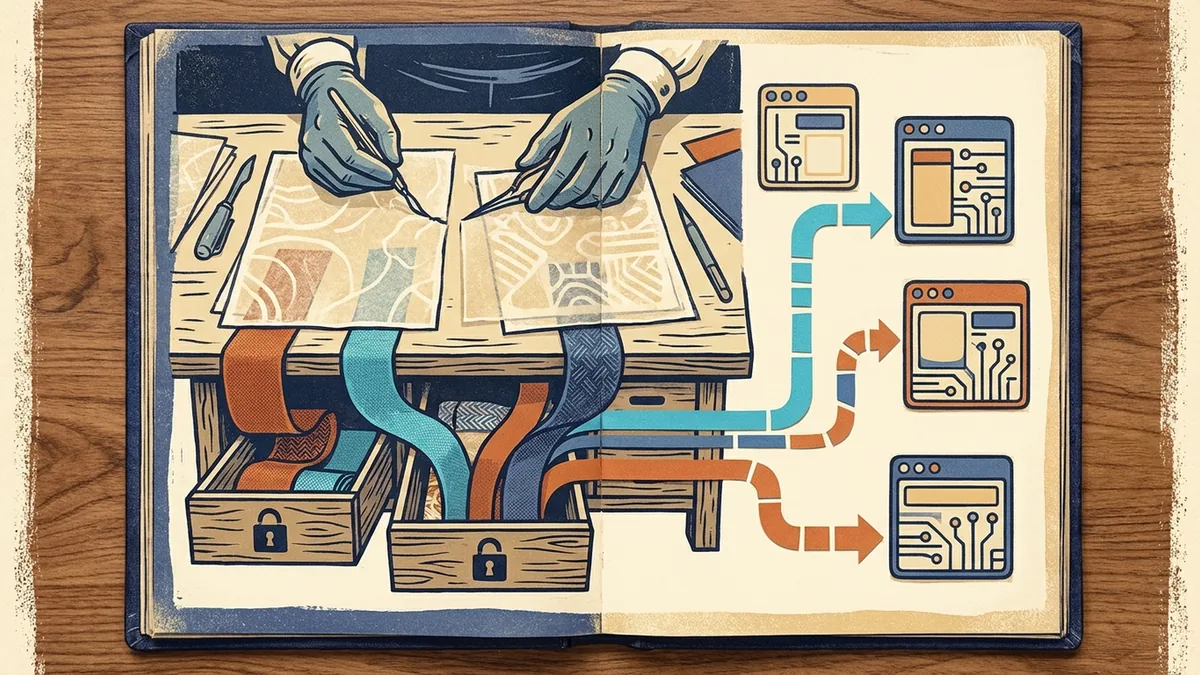
OpenClaw 2026.7.2 Pre-release Hardens State, Delivery, and MCP Apps
OpenClaw's latest pre-release is less about another dazzling agent demo and more about what happens after a database breaks, a gateway restarts, a message enters the system, or a conversation needs a clean alternate path.
OpenClaw Updates
2026.7.2 Makes Failure Recovery a Product Feature
The official OpenClaw 2026.7.2 release notes currently label the build as a pre-release, an important distinction for anyone operating a production gateway. Its headline work nevertheless targets production-grade failure modes: a quarantine store designed to survive damage to the primary database, crash-recoverable SQLite snapshots, crash-durable filesystem publication, schema-upgrade checks that reject data loss, and recovery from rollback-writer snapshots.
These mechanisms address different points in the same chain. A snapshot is useful only if its publication cannot be torn by a crash; a schema migration is safe only if the system recognizes a destructive transition; quarantined records matter only if corruption in the main store cannot erase the evidence needed for repair. Taken together, the release frames persisted agent state as an asset with a recovery lifecycle rather than a folder everyone hopes remains intact.
Accepted Messages Become Recoverable Work
The same release extends durable ingress and dead-letter recovery across Telegram, Signal, Slack, QQBot, Twitch, Synology Chat, Tlon, IRC, and Zalo User. The operational promise is specific: once a message has been accepted, a gateway restart or local crash should not silently vaporize it. That does not guarantee successful downstream execution, but it gives operators a recoverable record and a place to handle delivery failures deliberately.
This is the unglamorous boundary where an assistant becomes infrastructure. Model quality cannot compensate for an intake layer that loses work between acknowledgement and execution. Teams evaluating the pre-release should test forced gateway termination immediately after message acceptance, then confirm replay behavior, duplicate suppression, ordering, dead-letter visibility, and whether a human can distinguish “received” from “completed.”
The strongest 2026.7.2 story is not one individual feature; it is the emerging transaction boundary around agent work. State quarantine protects evidence, crash-safe publication protects snapshots, and durable ingress protects accepted instructions. Operators should now define their own recovery objective: which state must survive, how quickly it must return, and how replay avoids performing the same external action twice.
Branchable Sessions and MCP Apps Expand the Control Surface
Conversation rewind and branching now span web and native apps, including upstream Codex forks, branch-safe queued sends, stale-pane write rejection, and restored prompt images after a fork. This is more than an undo button. Branches let an operator preserve a trusted conversation while exploring a risky or speculative route without rewriting the original record. Stale-pane rejection also matters when several views can act on the same session: the interface must not let an old state overwrite a newer decision.
Interactive MCP Apps arrive alongside that branching model. The release notes describe ticketed applications with bound tools, resources, bounded context updates, channel-reply launch points, durable dashboards, sandbox hardening, and plugin declarations. Structured questions and approvals also spread across web, channels, macOS, and native apps. The combined direction is clear: OpenClaw is making agent decisions visible and interactive, but every new dashboard, ticket, approval queue, and bound tool becomes part of the authorization surface.
Security Practice
Separate Gateway Trust Boundaries Before Adding More Tools
The official OpenClaw gateway security guide says one gateway is a single trusted-operator boundary, not a hostile multi-tenant isolation layer. If mutually untrusted users or organizations share access, use separate gateways and preferably separate operating-system users or hosts. A session identifier routes work; it is not an authorization token.
The practical baseline is equally direct: keep the gateway on loopback with token authentication, pair or allowlist message senders, keep elevated tools off unless they are necessary, and run openclaw security audit --deep after configuration changes or before widening exposure. Triage open messaging plus enabled tools first, then public network exposure, remote browser control, permissions, and unapproved plugins.
Operator test: inventory every person who can reach the gateway, every credential its agents can use, and every channel that can introduce untrusted content. If those groups do not share one trust boundary, split the deployment before adding another capability.
Tool Spotlight
ClawHub's Unified Skill and Plugin Catalog
The official ClawHub repository documents a public registry for versioned text-based skills plus a native package catalog for code and bundle plugins. The CLI supports search, inspection before installation, pinning, updates, publishing, rename redirects, and canonical merges. Vector search helps discover capabilities without depending on an exact keyword.
For operators, clawhub inspect and pinning are the useful pair. Inspect the declared environment variables, binaries, install requirements, and behavior before installation; then pin a reviewed version so routine update commands cannot replace it unexpectedly. ClawHub says its security analysis compares declared runtime requirements with actual skill behavior, while medium findings remain visible and the suspicious filter is reserved for high-impact concerns.
Why it matters: a registry is not a substitute for code review, provenance checks, or least privilege. It is valuable because it creates a consistent inspection and versioning workflow. Treat the catalog as supply-chain metadata, not a magic safety stamp.
Community and Ecosystem
Portable Memory Is Becoming a Competitive Interface
Community projects are increasingly treating memory as an independent layer rather than a proprietary feature buried inside one agent. The GBrain project presents a retrieval and synthesis service that can connect to OpenClaw, Hermes, Claude Code, or Codex. Its documentation emphasizes source-backed synthesis, knowledge-graph traversal, gap analysis, local deployment options, and scoped access for company-brain use cases. Those are project claims, not an external certification, but the architecture reveals where builders see demand.
On the adjacent-agent side, the Nous Research Hermes Agent repository documents an OpenClaw migration path for persona files, memories, user context, skills, messaging settings, selected secrets, and workspace instructions. Migration does not make the two systems equivalent. It does make portability a visible product requirement: users increasingly expect to move accumulated operating context without rebuilding their agent identity from scratch.
The important ecosystem question is therefore not whether one memory engine stores more pages than another. It is whether provenance, permissions, freshness, conflict handling, deletion, and export remain legible as memory crosses tools. A portable archive with unclear access boundaries can move risk faster than insight. A well-scoped memory service can let specialized agents share durable context while preserving their execution boundaries.
Agent platforms are converging on a stack: recoverable event intake, branchable work sessions, governed tools, portable skills, and memory that survives the interface of the month. OpenClaw's advantage will depend on whether those layers share one coherent identity and audit model. Portability is useful; portable authority is dangerous. Export knowledge freely only when credentials, sender permissions, and execution rights remain deliberately non-portable.
What Operators Should Validate Before Promoting the Pre-release
A sensible canary is narrow and adversarial. Restore a damaged state snapshot into a disposable environment. Terminate the gateway between message acceptance and execution. Fork a session with a queued send, then attempt a write from a stale pane. Launch an MCP App with the smallest possible tool set. Finally, run the deep security audit and confirm that its findings match the deployment's actual trust assumptions.
OpenClaw 2026.7.2 is still marked pre-release at publication time, so the decision is not “upgrade everywhere” versus “ignore it.” The useful move is to turn its claims into acceptance tests. If recovery, replay, branch isolation, and authorization behave correctly under failure, operators gain evidence for promotion. If they do not, the canary has done its job before real conversations and credentials become the test data.
Need help with OpenClaw deployment?
SEN-X provides enterprise OpenClaw consulting — architecture, security hardening, custom skill development, and ongoing support.
Contact SEN-X →