OpenClaw Beta 7 Adds Meetings and Local Inference as Agent Vaults Redraw Security
OpenClaw's candidate lane now reaches video meetings, wrist controls, and in-process local models. Outside the core project, credential brokers and container-first agents are arguing that the safest secret is one an agent never receives.
OpenClaw Updates
Beta 7 Remains a Candidate, Not a Quiet Stable Promotion
The public OpenClaw v2026.7.2-beta.7 release page still labels the build a prerelease. That status matters because the feature set is unusually broad, spanning persistence, channels, sessions, native applications, models, meetings, and browser tools. OpenClaw's official release-channel documentation recommends stable for most users and describes beta as a candidate lane that can fall back to stable when the beta tag is absent or older.
For production operators, the honest posture is selective evaluation. A release candidate can be the right place to validate future workflows without becoming the package that handles every live message. Use a representative canary, export recovery evidence, and keep the rollback path boring. The larger the release surface, the less useful a single “it started successfully” check becomes.
Meetings and Realtime Talk Turn Conversation into Infrastructure
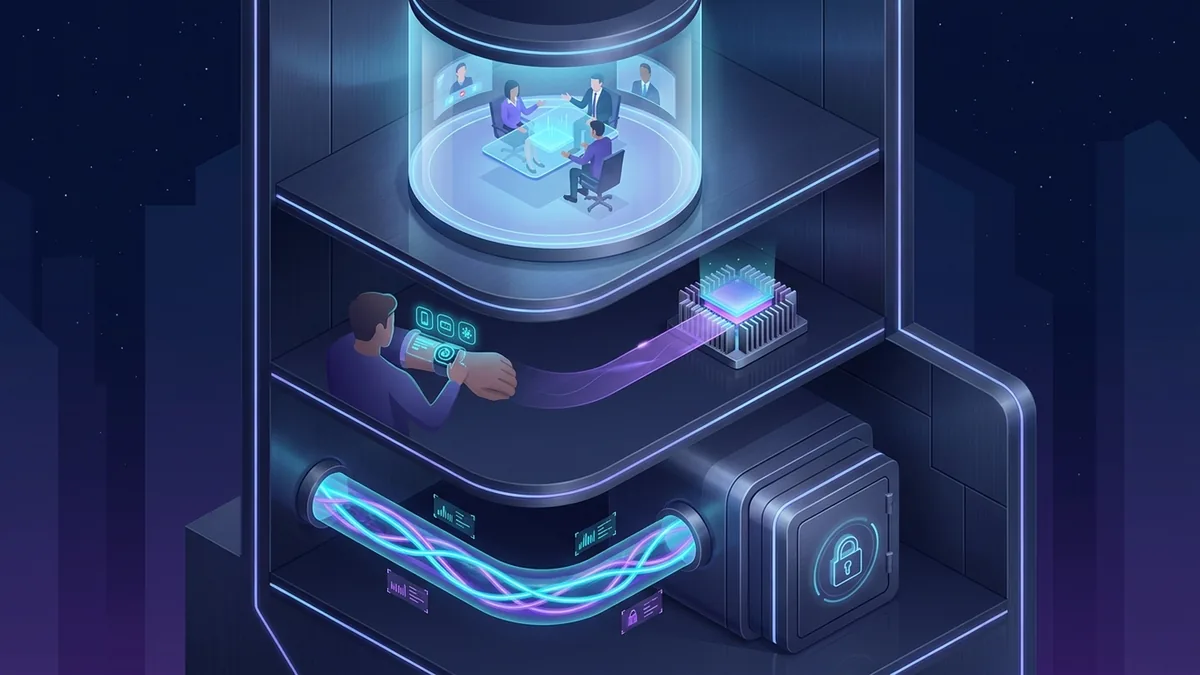
Beta 7 documents default-enabled meeting plugins for Teams, Zoom, and Google Meet, including meeting guests and durable transcript collection. Realtime Talk adds OpenAI and Gemini video support, but the release notes draw a firm authentication line: the live OpenAI path requires a supported OpenAI Platform API key and rejects a Codex OAuth fallback. That detail prevents a convenient subscription credential from being treated as a universal API entitlement.
Meeting participation changes the operational stakes. An agent that joins a call can encounter customer names, commercial plans, screen content, and decisions that were never intended for a general memory store. Durable transcripts are valuable only when retention, participant notice, storage scope, and downstream tool access are decided before the bot enters the room. “The plugin supports it” is not a recording policy.
Wear OS and Local Inference Push the Control Plane Outward
The same prerelease adds a phone-proxied Wear OS companion with agent, session, and model selection, realtime Talk controls, audio-reactive playback, and an instant-talk tile. Guided setup across browser, Linux, and macOS can detect local providers, offer downloadable models, import memory, and use a RAM-gated in-process llama.cpp/Gemma path. Together, these changes expand both where users can direct an agent and where model execution can happen.
Local inference can reduce dependency on a remote provider, but locality is not automatic containment. The host may still expose files, browser sessions, channel credentials, and network tools. Watch controls also compress consequential choices into a tiny interface. Operators should define which actions require a larger review surface and test that a stale wearable session cannot approve work for the wrong agent or Gateway.
Meetings, watches, and local models look like separate features, but they create one architectural problem: authority is moving farther from the desktop where administrators traditionally inspect it. Before promoting Beta 7, map each surface to an identity, credential set, retention policy, and approval route. The winning test is not whether Talk feels smooth; it is whether an operator can reconstruct who initiated an action, which runtime executed it, and what data persisted afterward.
Tool Spotlight
Agent Vault Brokers Credentials Without Handing Them to the Agent
Infisical's newly documented open-source Agent Vault credential broker sits between agents and outbound APIs. Instead of placing real credentials in the agent process, operators store them in the vault, give the agent dummy values, and route HTTP traffic through a proxy that injects authentication only on matching outbound requests. The project explicitly lists OpenClaw, Hermes, remote coding agents, and custom harnesses as supported use cases.
The useful controls go beyond substitution. Service rules can restrict destinations and endpoints, request logging creates an authenticated traffic record, external stores can back the vault, and strict deny mode rejects unmatched hosts rather than forwarding them as ordinary proxy traffic. The repository also publishes build-provenance verification instructions for release archives.
Why it matters: prompt injection cannot directly print a secret that never enters the agent's memory or environment. The design still requires care: Infisical recommends running the vault on a separate machine, keeping the credential-injection proxy private, and hardening remote management with TLS and network controls. A proxy on the same fully compromised host is plumbing, not a security boundary.
Security Practice
Broker Secrets, Then Deny Unmatched Egress
Start by inventorying every credential an agent can read today. Move high-impact tokens behind a broker, issue a distinct agent identity, and allow only the exact service hosts and endpoints the workflow needs. Turn on strict deny behavior for unmatched destinations, use short-lived scoped tokens for ephemeral workers, and review authenticated request logs for unexpected routes.
The official OpenClaw Gateway security guide complements that design: lock down inbound pairing and allowlists, reduce tool blast radius, avoid public Gateway exposure, and run openclaw security audit --deep after configuration changes. Inbound identity and outbound credentials are different control planes; hardening only one leaves the other available to prompt injection.
Community and Ecosystem
NanoClaw Makes Container Isolation Its Product Thesis
The community-built NanoClaw v2 repository presents a deliberately smaller alternative in which agent groups run inside Linux containers and receive only explicitly mounted directories. Its host routes inbound messages through SQLite-backed sessions, wakes the appropriate container, and later delivers outbound responses. Channels and alternative providers arrive through skills, keeping the default code path narrow.
NanoClaw also routes provider access through a credential-injection service so raw API keys do not enter containers. Those are project claims and design choices, not an independent security certification. Still, the competitive pressure is healthy: OpenClaw's application policies, sandbox controls, and audits now sit beside projects that make OS isolation and secret brokering the headline. Users can ask sharper questions about mounts, egress, shared memory, escape risk, and recovery instead of accepting “secure agent” as a complete specification.
ClawHub Is Evolving from Skill Shelf to Package Control Surface
The official ClawHub registry repository now describes one catalog for text-based skills, native code plugins, and bundle plugins. Operators can inspect before installation, pin local skills against overwrites, view trust and capability metadata, and use moderation hooks. Publishers declare required environment variables and binaries, while security analysis compares those declarations with observed skill behavior.
That matters more as agent runtimes gain meeting access and broader device reach. A skill is not just instructions; it can be a bridge between untrusted content and privileged tools. Inspection, version pinning, provenance, narrow runtime requirements, and an upgrade review are the minimum supply-chain workflow. Popularity and search ranking are discovery signals, not authorization decisions.
The ecosystem is converging on layered containment: a runtime policy decides which tools exist, a container limits the host view, a credential broker controls authenticated egress, and a registry records provenance and requirements. None replaces the others. OpenClaw teams should treat Agent Vault and NanoClaw as design prompts, not automatic migrations: test whether their current architecture can keep secrets out of prompts, deny unexpected destinations, and explain every installed capability.
What Operators Should Validate Next
Keep Beta 7 in a canary until meeting consent, transcript retention, wearable identity, local-model resource limits, and credential routing have explicit owners. For existing stable deployments, run the security audit, inventory secrets visible to agent processes, inspect installed skill provenance, and test an outbound request to an unapproved host. If that request succeeds with a production credential, the architecture is granting trust far beyond the task.
Need an OpenClaw security architecture that survives real operations?
SEN-X helps teams design agent boundaries, meeting governance, local inference, credential brokering, skill controls, and release canaries grounded in verifiable evidence.
Talk with SEN-X →