OpenClaw Enters the Sandbox-and-Agent-Company Era
The latest OpenClaw beta is arriving inside a wider architectural change: execution, egress policy, package trust, and multi-agent management are becoming separate products instead of one oversized assistant.
🧭 OpenClaw’s Operational Beta
2026.8.1 Beta 3 Packages Models, Backups, and Durable Ingress
The official OpenClaw 2026.8.1-beta.3 release record confirms support for GPT-5.6 Sol, Terra, Luna, and Ultra reasoning across OpenClaw and its Codex runtime. It also highlights verified SQLite backup and fresh-target restore commands, a Puppeteer-compatible relay for paired Chrome sessions, external Gateway lifecycle supervision, and shared durable ingress monitors for channel plugins.
The publication trail is unusually concrete for a beta. The project links its npm artifact, registry tarball, integrity digest, preflight workflow, core publication job, and official-plugin reconciliation. It reports that 89 official npm plugins were read back at the beta selector with complete tarball integrity metadata, while the matching Codex plugin carries a managed @openai/[email protected] runtime.
These items belong together. Backups protect state, durable ingress protects channel admission, restart handoff protects lifecycle ownership, and pinned runtime evidence protects reproducibility. None makes a pre-release production-ready by itself, but each gives a canary test something measurable beyond whether the demo answered a message.
The release’s most consequential feature is not another model name; it is recoverability becoming a first-class operator concern. A serious beta evaluation should create and verify a backup, restore only into a fresh target, interrupt a channel monitor, and confirm restart ownership. Capability without a practiced recovery path is still a prototype wearing a dashboard.
Remote Codex Execution Keeps Credentials at the Gateway
The official Codex harness documentation explains a bounded placement model for paired devices and cloud workers. Codex can execute against a managed workspace elsewhere, but model inference, provider authentication, and the session transcript remain Gateway-owned. The node connection receives neither provider credentials nor authenticated HTTP forwarding, and each remote attempt requires the approved command surface.
That separation is more useful than a vague “run anywhere” promise. Remote placement increases the machines an agent can touch, so it must also make refusal legible. The guide says disconnected attempts end visibly, do not resume the lost process, and do not fall back silently to Gateway-local or SSH execution. Operators get a failed attempt they can reason about instead of work quietly moving to a more privileged host.
🔒 Security Practice
Start with Denied Egress, Then Permit the Exact Method and Path
The NVIDIA OpenShell repository and policy walkthrough starts each sandbox with minimal outbound access. Its example then opens a read-only GitHub API rule that permits a GET request while a POST to create an issue remains denied. That is the right shape for an agent policy: destination alone is too broad when reads and mutations have different consequences.
For an OpenClaw worker, enumerate the files it needs, the binaries it may launch, and the HTTP operations required for the assigned task. Keep filesystem and process policy fixed when possible; hot-reload only narrow network or inference rules for a defined run. Review denied requests as evidence of missing design or hostile input, not as an invitation to allow the entire domain.
Practical rule: grant GET on this endpoint for this binary, not internet access for the agent.
🧰 Skill Spotlight: generate-sandbox-policy
OpenShell’s Policy-Authoring Skill
What it does: OpenShell documents an included generate-sandbox-policy skill that translates plain-language requirements or API documentation into declarative sandbox policy. The same repository exposes separate skills for CLI guidance, gateway diagnosis, inference troubleshooting, and security review.
Why it is useful: Policy authoring is tedious precisely where precision matters. A structured skill can identify needed hosts, methods, paths, processes, and filesystem mounts before an agent runs, making the proposed authority reviewable as a document rather than buried inside tool behavior.
Operator check: treat generated YAML as a proposal. Compare every permission with the task, test an expected allow and expected denial, and keep the smallest policy that passes both.
📦 ClawHub Adds More Brakes to the Package Layer
The ClawHub public registry documentation now describes one catalog for text skills, native code plugins, bundle plugins, and experimental whole-agent packages. The CLI can inspect packages before installation, expose family, capability, and trust metadata, pin a local skill against later updates, and resolve exact artifacts rather than treating every extension as an interchangeable folder.
Its security model also compares declared runtime requirements with observed skill behavior. Medium findings remain visible, while the suspicious filter is reserved for higher-impact concerns. That does not turn a marketplace badge into an audit, but it creates two practical controls operators can use immediately: inspect before installing, then pin the reviewed version until a deliberate upgrade review.
🧱 Community Projects Push Isolation in Different Directions
NanoClaw Makes the Container the Primary Boundary
The NanoClaw project repository presents a deliberately smaller assistant whose agents run in separate containers with access limited to explicitly mounted directories. Its documented credential route uses OneCLI’s Agent Vault so outbound requests receive authentication at a proxy layer rather than placing secrets inside the container filesystem.
NanoClaw is not merely a list of missing OpenClaw features. It represents a different optimization: make the codebase and isolation story easier to understand, then customize behavior through skills. The repository supports multiple messaging channels, scheduled work, memories, per-agent groups, and provider extensions, but its central claim is architectural restraint. Users still need to evaluate the implementation; containers narrow authority, not responsibility.
Paperclip Treats OpenClaw as an Employee Runtime
The Paperclip multi-agent orchestration repository places OpenClaw alongside Codex, Claude Code, CLI agents, and webhook bots beneath an organizational control plane. Its documented model includes goals, roles, budgets, atomic task checkout, approval stages, recurring routines, workspaces, activity records, and hard stops when an agent exhausts its assigned budget.
The interesting change is altitude. OpenClaw manages sessions, channels, tools, and execution policy; Paperclip asks which agent owns a task, how that work traces to a company objective, who approves it, and what it costs. The repository explicitly says a single-agent user probably does not need this machinery. That boundary is refreshing: orchestration should solve coordination, not decorate one assistant with an org chart.
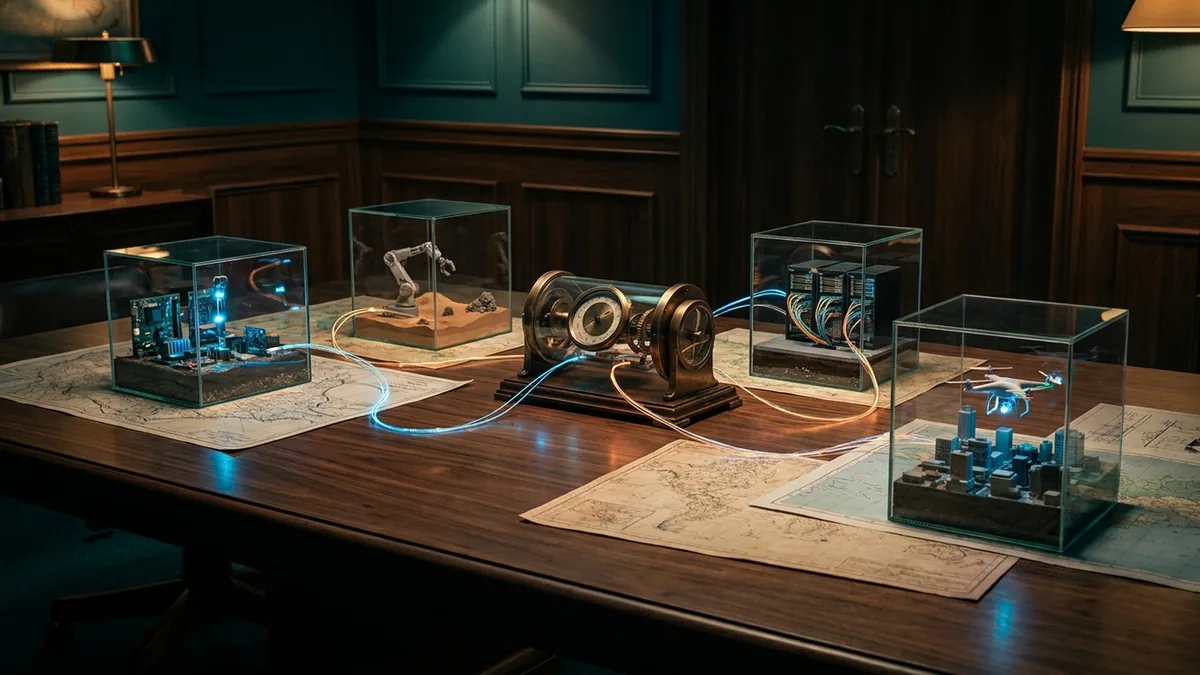
The emerging stack has four contracts: the assistant decides and communicates, the sandbox constrains execution, the registry governs extensions, and the company layer assigns accountable work. Combining them can be powerful, but every handoff is also a failure boundary. Buy or build each layer only when its authority, evidence, and shutdown behavior are explicit.
🌐 The Ecosystem’s New Test Is Composability
OpenShell, NanoClaw, ClawHub, and Paperclip are not interchangeable competitors. One supplies policy-enforced sandboxes, one explores a compact container-first assistant, one governs distributable capabilities, and one coordinates teams of heterogeneous agents. OpenClaw can participate at several seams, which is valuable only if identity, credentials, logs, and failure states survive the transitions intact.
The next credible agent demonstration should therefore show more than task completion. It should identify the runtime, display the active policy, prove which package version ran, trace the work to an owner and budget, deny one unauthorized action, and recover from an interrupted worker. The ecosystem has enough impressive agents. It now needs boring, inspectable contracts between them.
Need help with OpenClaw deployment?
SEN-X provides enterprise OpenClaw consulting — architecture, security hardening, custom skill development, and ongoing support.
Contact SEN-X →