OpenClaw 2026.8.1 Beta 3: Secrets, Codex, and Trust at Scale
The newest beta puts hard boundaries around credential egress and remote execution just as OpenClaw's maintainers explain why human trust signals must evolve for an agent-generated flood of contributions.
OpenClaw Updates
Beta 3 Makes Secret Destinations Part of Policy
The official OpenClaw 2026.8.1 beta 3 release record and publication evidence lead with support for the GPT-5.6 family, verified first-run setup, a Puppeteer-compatible browser relay, external Gateway supervision, SQLite backup and restore, and durable ingress monitors for channel plugins. The release record also documents the exact npm artifact, integrity metadata, and publication workflows, giving operators more than a changelog claim to validate.
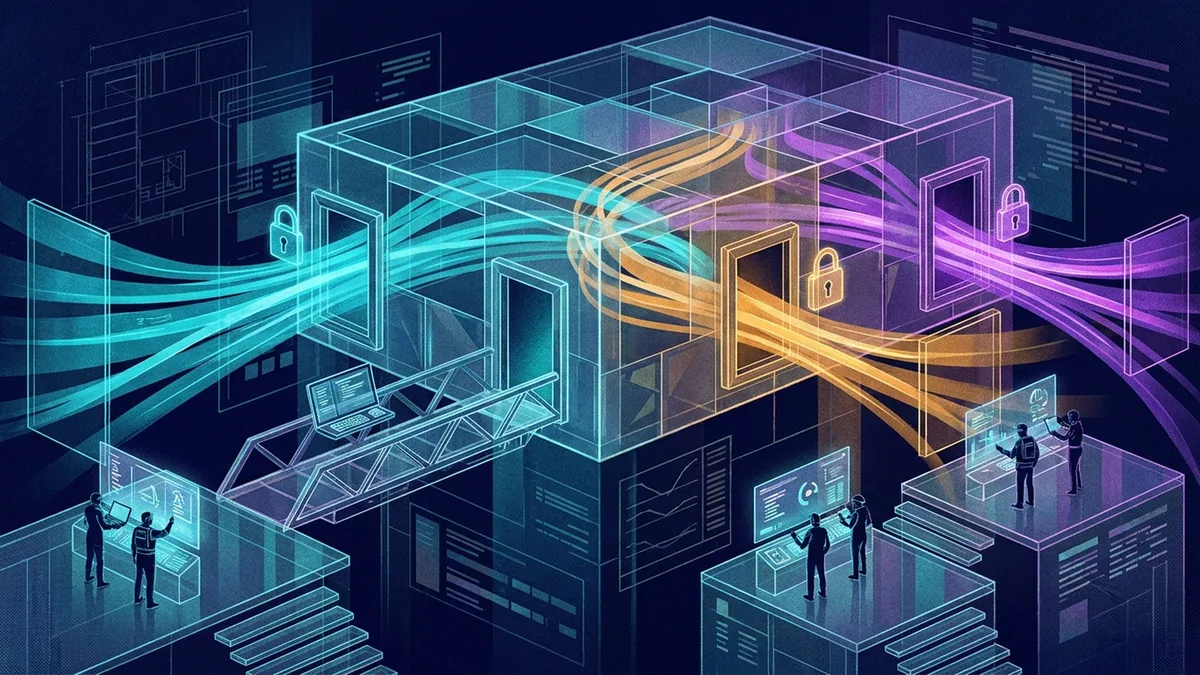
The deeper 2026.8.1 change is secret egress host binding. A credential stored in OpenClaw's shared secret system can be tied to exact HTTPS destination hosts across the CLI, Gateway RPC, and Control UI. If a placeholder is used against an unbound destination, substitution fails before plaintext leaves the boundary. That turns “this process may read a secret” into the narrower rule “this secret may travel only to these endpoints.”
Plugin installation gets a similar provenance distinction. Arbitrary executable sources require an explicit --force acknowledgement, while trusted ClawHub, bundled, official-catalog, and tracked-update paths remain smoother. This does not certify every trusted package as harmless; it makes the risk transition visible when an operator crosses from curated provenance into untracked executable code.
Destination binding is the release's most consequential idea because it constrains a credential after an agent gains access to it. Approval prompts and prompt defenses can reduce bad decisions, but neither guarantees where a token travels. Host-bound substitution creates a machine-enforced egress boundary. Operators should map each production secret to the smallest exact host set and treat any request for broad destinations as an architecture smell.
Codex Becomes a Placement-Aware Runtime
The current OpenClaw Codex harness documentation describes a clean division of labor: Codex owns native threads, tool continuation, compaction, and app-server execution, while OpenClaw retains channels, model selection, approvals, media delivery, dynamic tools, and the visible transcript. Remote app-servers can run away from the Gateway, with bounded attachment transfer that rejects symlinks and enforces size limits.
Execution location is explicit rather than opportunistic. Native shell work stays on the Codex app-server host, paired-device commands go through node policy and approval, and Gateway execution is withheld whenever sandboxing or tool restrictions would make it a bypass. For remote Codex placement, the documentation warns that workspace selection is not a sandbox: the node process still has the operating-system account's permissions.
Tool Spotlight: Official Codex Harness
One Session Model, Several Execution Surfaces
What it enables: OpenClaw can route an embedded agent turn through the official Codex app-server while preserving OpenClaw's channel and policy layer. Sessions can remain Gateway-local, use a paired device, or run on an eligible cloud worker without treating every host as interchangeable.
Operational catch: Pairing and an allowed command do not create least privilege by themselves. The documentation advises a separate low-privilege OS account when isolation matters, and rejects authenticated HTTP forwarding to remote nodes so provider and cloud credentials stay Gateway-owned.
Best use: Choose placement for data locality or compute needs, then test cancellation, credential absence, filesystem scope, and reconciliation. A remote session is only trustworthy when its failure path is as explicit as its start path.
Security Practice
Separate People, Then Scope Tools
The official OpenClaw Gateway security model and audit guidance are blunt: one Gateway is a trusted personal-assistant boundary, not hostile multi-tenant isolation. If users or organizations do not trust one another, run separate Gateways and preferably separate OS accounts or hosts.
After any configuration change or before exposing a network surface, run openclaw security audit --deep. Triage open inbound access with tools first, then public exposure, browser control, local permissions, and plugin provenance. The useful mental model is identity first, action scope second, and model strength last. Assume content can manipulate the model; make that manipulation land inside a narrow blast radius.
Community and Ecosystem
OpenClaw's Maintainers Redefine Contribution Trust
A new GitHub interview with OpenClaw's maintainers about growth and security reports roughly 388,000 stars, 81,000 forks, and more than 80,000 commits as of August 26. More important than the scale is the resulting review problem: automated “software factories” can generate hundreds of submissions, so contribution counts and merge badges no longer function as reliable trust signals.
The maintainers say stronger evidence includes agent transcripts, screenshots, tests, and an explanation showing that the contributor understood how a feature interacts with the rest of the project. They also describe duplicate pull requests used to manufacture reputation and a dependency review prompted by recent supply-chain attacks. The lesson is not that agent-authored code is disqualified; it is that cheap code production raises the value of traceable reasoning and demonstrated verification.
When code becomes abundant, review attention becomes the scarce asset. Projects should stop rewarding submission volume and require evidence proportional to blast radius: a concise rationale, focused diff, reproducible test, and visual proof where relevant. Agent transcripts can help, but only as supporting evidence. The decisive question remains whether a maintainer can understand, reproduce, and safely own the change after the contributor disappears.
Paperclip Treats OpenClaw as an Agent Employee
The community-built Paperclip agent-orchestration repository and product specification lists OpenClaw alongside Codex, Claude Code, CLI agents, and HTTP or webhook bots. Its pitch is organizational rather than conversational: goals, roles, budgets, scheduled heartbeats, approvals, worktrees, and an audit trail around a mixed team of agents.
That framing is useful ecosystem evidence even without endorsing the implementation. OpenClaw's messaging and automation reach makes it a plausible worker inside a larger control plane, while Paperclip's emphasis on atomic checkout, budget stops, and durable task state reflects the problems teams hit after the first successful demo. The emerging category is less “best chatbot” than “which operating system can supervise heterogeneous workers without losing ownership?”
Local Agents Push Toward Always-On Infrastructure
NVIDIA's rolling August local AI and intelligent-agent ecosystem briefing highlights Perplexity's Portable Computer for DGX Spark, including local workflows, connections to common work applications, and switching between local and cloud models. NVIDIA positions the hardware for continuous agent operation and says broader RTX support is planned.
For OpenClaw operators, the adjacent signal is straightforward: local inference is moving from a privacy experiment toward a placement option inside long-running agent systems. The hard questions stay operational—power, updates, model routing, secrets, and recovery—not merely tokens per second. A local model may keep data on the box, but the agent's connected tools still determine the real security boundary.
Need help with OpenClaw deployment?
SEN-X provides enterprise OpenClaw consulting — architecture, security hardening, custom skill development, and ongoing support.
Contact SEN-X →