OpenClaw Brings GPT Live to Meetings as Shared Browsers Redefine the Handoff
The latest stable release makes collaboration less like passing instructions over a wall: people can speak with an agent during live calls, work on the same managed browser page, and assemble specialist teams—while new validation and governance patterns clarify where trust must stop.
GPT Live Moves from Talk Mode into Working Conversations
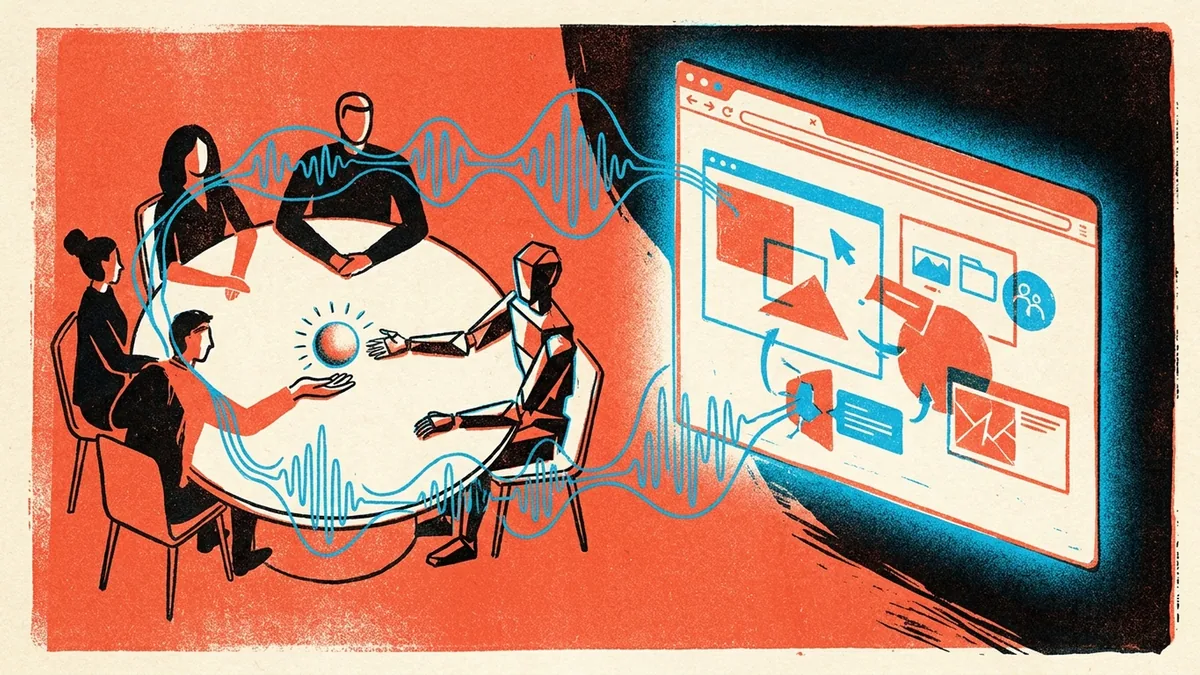
The official OpenClaw 2026.9.5 release notes place GPT Live inside supported Meet, Teams and Zoom sessions as well as phone calls. Participants can speak while the model responds, and Live may consult the connected OpenClaw agent during the exchange. Operators must select the mode for meetings and calls; unpinned Talk sessions can choose it from configured OpenAI access.
This is not a universal voice replacement. The release documents Live as audio-only, points camera-dependent work to gpt-realtime-2.1, and says custom Voice Call functions plus host-controlled wake-name and forced-consult modes are unavailable. Meetings require supported isolated audio capture and current Gateway and node versions. Those constraints turn an impressive demo into a deployable feature boundary: teams can know exactly which interaction mode they are approving.
A Browser Page Becomes Shared Working State
The new shared Browser dashboard workflow lets a person and an agent operate the same page in a local OpenClaw-managed profile. A human can change filters, add a note or navigate an application, then ask the agent to continue from that visible state. The interaction no longer depends on translating every click into prose or hoping a screenshot represents the current page.
The ownership limits are equally important. The shared page uses the managed profile’s login state, not cookies from a personal phone or laptop. Remote profiles, attached personal browsers and paired-node browsers do not qualify. Stopping closes the tab and discards unsaved page state; resuming reopens the saved URL. It is collaboration through an intentionally bounded browser, not silent inheritance of somebody’s everyday session.
Voice and browser sharing solve the same operational problem from opposite ends. GPT Live reduces the lag between a meeting and agent assistance; the shared dashboard preserves the exact page state that words often lose. The winning pattern is not maximum autonomy. It is a legible handoff in which the human can see the surface, the agent receives only the intended context, and either side can stop cleanly.
Guided Specialists Make Team Design a Product Feature
OpenClaw’s setup flow can now propose a chief of staff, researcher, writer and reviewer as a small team, or create one specialist at a time. The proposal requires approval before creation, remembers the selected coordinator during recovery, and supports an offline path where AI access remains unconfigured. If setup stops halfway, the release directs operators to inspect the agent list and repair the incomplete roster rather than blindly create duplicates.
That matters because multi-agent design is usually hidden in configuration files or orchestration code. Exposing roles through onboarding makes delegation accessible, but it also risks encouraging teams that look organized without having evidence boundaries. A researcher and reviewer are useful only when their sources, acceptance criteria and authority are distinct; four personalities sharing the same assumptions merely produce a committee-shaped echo.
Security Practice: Audit Reachability Before Debating Model Risk
Fix Open Ingress and Shared Context First
OpenClaw’s security-audit guide prioritizes open messaging surfaces with enabled tools, public network exposure, remote browser control, local file permissions and unallowlisted plugins. Run the audit after configuration changes and before exposing a new network surface; use --deep when a live Gateway probe is appropriate. The documented --fix scope is deliberately narrow, so its success is not a substitute for reviewing remaining findings.
- Keep direct messages on pairing or explicit allowlists unless public access is an intentional product decision.
- For multi-user inboxes, use per-channel-and-peer session isolation so one sender’s context does not bleed into another’s conversation.
- Treat browser control as operator access and keep remote endpoints private, authenticated and deliberately paired.
- Review plugin allowlists and effective tool permissions after every extension change.
The separate access-control reference distinguishes trigger authorization from context visibility. That distinction is practical: blocking a sender from invoking the agent does not automatically remove their quoted text or thread history from model context. Configure both boundaries for the trust model you actually operate.
Skill Spotlight: behavior-validator
Test What the User Can Observe
What it does: The official agent-skills repository’s behavior-validator skill specification defines a source-blind workflow for checking an application, CLI, API or generated artifact against a written behavior contract. It prohibits source, diff and implementation inspection during validation, keeping evidence focused on the surface a user or operator can actually exercise.
Why it is useful: Code review can prove that an implementation looks reasonable without proving that a button works, state persists or a CLI performs the promised action. The skill calls for varied fixtures, retries, invalid inputs and persistence checks, then reports every contract clause as pass, fail, blocked or out of scope. That is a clean companion to code-aware review, not a replacement for it.
Operational caution: Source blindness must be real. Use an isolated validation workspace, capture only redacted evidence, and stop if access to implementation internals becomes necessary. Otherwise the tester may unconsciously explain away the very behavior it was meant to challenge.
Agent Governance Is Moving to the Moment of Action
An adjacent ecosystem signal arrived September 22: Lumos announced MCP Governance for Claude Code and Codex. The company says its product evaluates permissions when an agent attempts an action and blocks operations disallowed by policy. This is a vendor announcement, not an independent effectiveness test, but its framing is useful: inventory tells security teams an agent exists; runtime control addresses what that agent is trying to do now.
OpenClaw’s shared browser, voice consultation and guided agent teams make that concern concrete. Each capability shortens the distance between intent and execution, so periodic reviews alone become less informative. Teams need authenticated actors, narrowly scoped tools, observable decisions and an enforceable boundary before a call, click or tool invocation changes external state. The broader market is beginning to treat agent permissioning as an execution-plane problem rather than a spreadsheet exercise.
The most consequential OpenClaw story this week is not one feature; it is the convergence of richer collaboration with sharper boundaries. Shared state makes agents more useful because less context is lost. Runtime checks make that proximity tolerable because authority can still be constrained. Buyers should evaluate both halves together: a fluid interface without enforceable policy is reckless, while policy without usable collaboration becomes shelfware.
Need help with OpenClaw deployment?
SEN-X provides enterprise OpenClaw consulting — architecture, security hardening, custom skill development, and ongoing support.
Contact SEN-X →