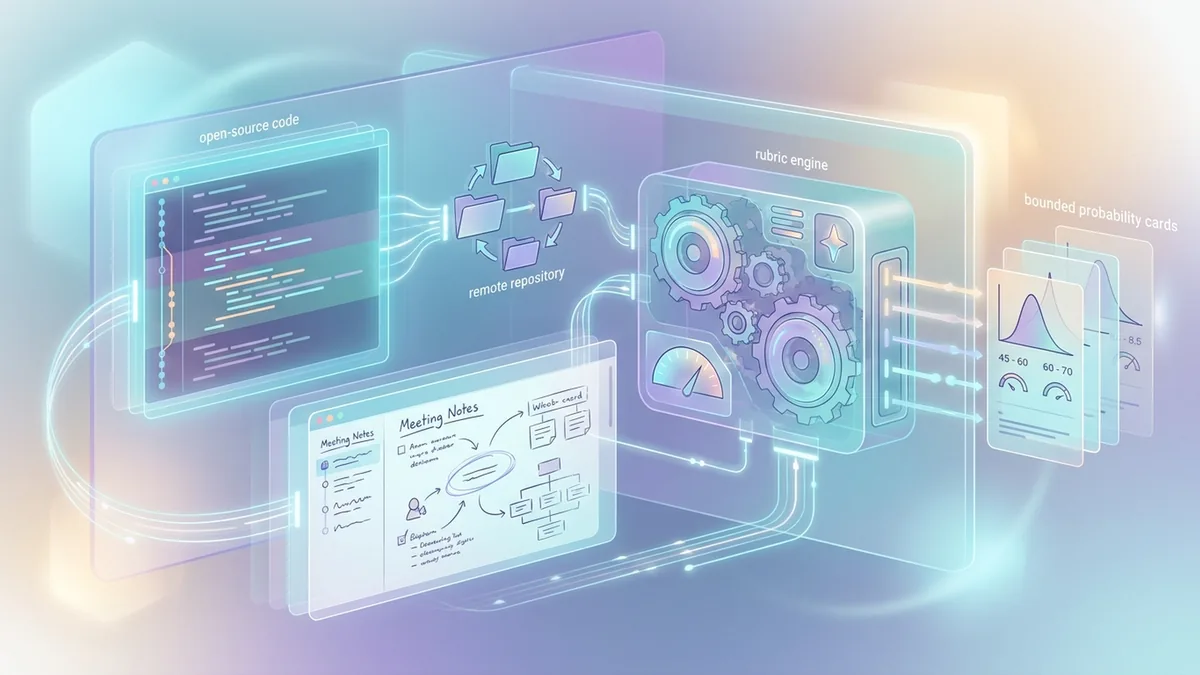
OpenClaw Connects GitHub Evidence, Remote Workspaces, Live Notes and Typed Decisions
This repaired September 28 edition examines OpenClaw developments available through September 27: public GitHub evidence beside chat, remote workspace context with explicit placement, live notes that remain provisional until review, and decision models that keep typed judgments separate from conversation and authority.
The GitHub Reader Brings Public Evidence Beside the Conversation
OpenClaw 2026.9.6 introduced a GitHub reader for public discussions and diffs, according to the official release notes. The value is not simply convenience. Review quality improves when an agent can connect a claim to the exact issue, pull request or code change without reconstructing it from screenshots and pasted fragments.
A reader is still not an authority to merge, comment or modify a repository. Public source content also remains untrusted input: issue bodies and comments can contain misleading instructions, stale assumptions or deliberate prompt injection. The safe pattern is read, attribute and reason—then use separately authorized write tools only when the operator has requested an external action.
The versioned GitHub release record for 2026.9.6 also links the human-formatted notes to a plain Markdown changelog. That gives people and tools two representations of the same release while preserving a source commit and package record.
Require every code-review claim to name the source object and revision it inspected. Treat issue prose as evidence supplied by a participant, not as executable instructions. Separate the read path from the write path in tool policy, and make the final acceptance review compare the proposed change against tests and the current branch tip rather than trusting a summary.
Remote Workspaces Gain Context Without Pretending Location Is Authority
The release adds Files, Memory and Skills to remote workspaces. The Control UI sessions documentation explains that session placement records the project, checkout mode and base branch, while workspace preparation can continue after the session is accepted. If cloning or setup fails, the original session retains the failure summary and can retry after the operator repairs the reported condition.
This matters because remote context has two dimensions: where files physically live and which workspace remains authoritative for the agent. A session title, recent-project entry or remembered folder does not grant access. The Gateway and execution environment still enforce the actual path, identity and tool policy.
Remote skills need the same provenance discipline. A skill may describe the correct procedure yet refer to scripts and assets on a different machine. Operators should verify that the selected session and skill execution target agree before allowing a mutating command.
At the start of remote work, record the repository, full commit, branch or detached state, working directory and execution host. Recheck them immediately before a push, deployment or destructive tool call. A friendly project name in the UI is navigation; it is not cryptographic proof that the command is running against the intended checkout.
Live Meeting Notes Become an Evolving Artifact
The OpenClaw release index highlights live meeting notes among the 2026.9.6 changes. The detailed release describes notes that update while capture continues. That turns meeting output from a one-time post-call summary into an evolving operational artifact.
Live notes are useful for surfacing decisions and unresolved questions before the call ends, but their provisional nature must stay visible. Speech recognition can change earlier text as more context arrives; speaker attribution can be uncertain; and a generated action item may not reflect an accepted commitment. The final record should distinguish transcript evidence, model synthesis and human-confirmed decisions.
Teams should also define retention and visibility before enabling capture. A meeting may mix routine planning with personal data, customer confidentiality or legal advice. Searchable notes multiply the audience and lifespan of statements that participants may have understood as ephemeral.
Use a three-state note model: live draft, reviewed record and accepted actions. Allow participants to see what is being captured, identify uncertain speaker or wording segments, and confirm owners before tasks leave the meeting. Keep raw transcript access narrower than the approved summary, and apply the organization's retention policy to both.
Decision Models Separate Typed Judgment From Conversation
The decision-model documentation defines a dedicated role for bounded choices, scores and Boolean probabilities. A decision request carries explicit evidence and a rubric; the result preserves distributions and provider provenance. It does not generate an explanation, inherit ambient conversation or grant permission to act.
That boundary is excellent systems design. A chat model can explore a messy problem, while a decision model evaluates a focused state against observable criteria. The shared API does not make providers interchangeable, and the documentation explicitly warns that hosted evidence leaves the system for the selected provider while local options have their own setup requirements.
The model-selection reference keeps Decision separate from Primary, Utility, Image, PDF and media-generation roles. An unset decision model leaves the capability off; there is no silent fallback to the conversational model. This prevents a missing classifier from becoming an unlogged judgment by a different system.
Tool spotlight: decision_evaluate
The core tool accepts shared state and a map of typed questions. Each question sees the same evidence and cannot depend on another answer in the same batch. Useful applications include routing, urgency scoring and policy predicates. The rubric should carry observable anchors and a version; the caller still owns the decision threshold and any resulting action.
Different Model Roles Need Different Acceptance Tests
Release 2026.9.6 added support for additional chat and decision choices, but a longer picker is not the architectural achievement. The important move is role separation. A utility model can create short titles; a primary model can reason and use tools; a decision model can emit a typed score; an image model can inspect visual input. Each role has different data exposure, failure modes and evidence requirements.
This repaired September 28 edition covers OpenClaw developments available through September 27. The platform's direction is toward explicit provenance: which repository object was read, which workspace executed, whether meeting notes are provisional, and which model produced a bounded judgment. Operators should preserve those labels all the way into business workflows rather than collapsing them into a generic claim that “the AI decided.”
Need help with OpenClaw deployment?
SEN-X provides enterprise OpenClaw consulting — architecture, security hardening, custom skill development, and ongoing support.
Contact SEN-X →