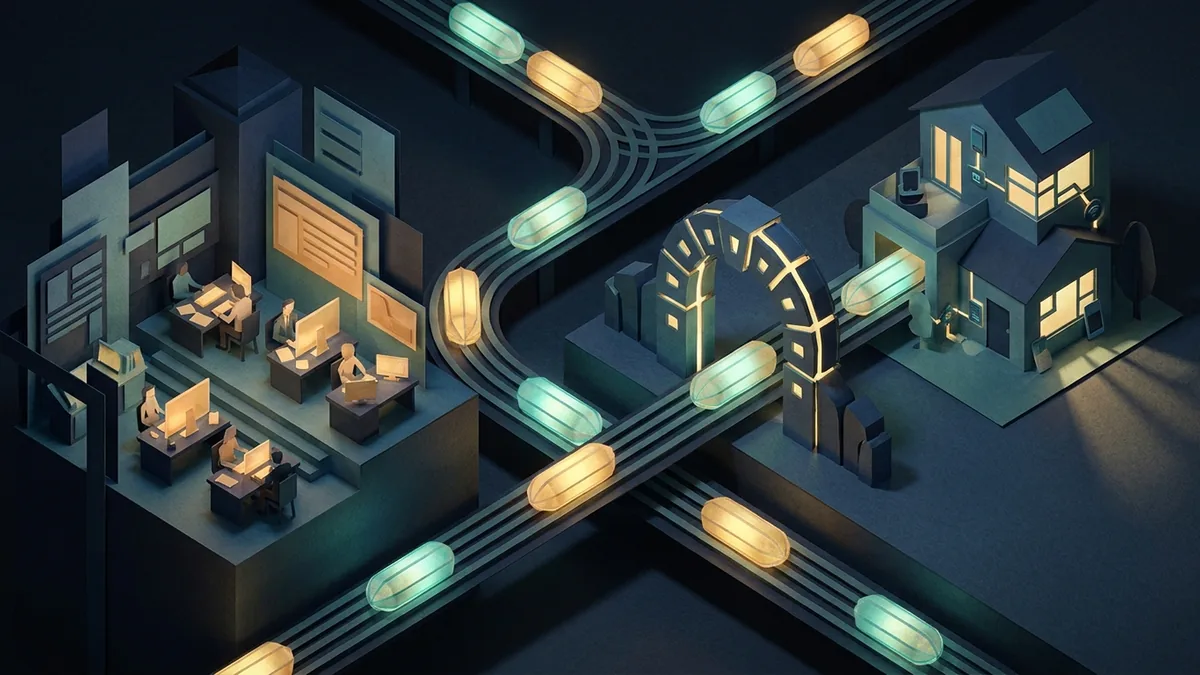
OpenClaw 2026.9.8 Repairs Agent Replies as MCP Reaches the Smart Home
The latest stable patch repairs the contracts that keep multi-agent work moving, while a major open-source home platform turns MCP setup from a documentation hunt into a visible control.
Agent-to-Agent Work Gets Its Delivery Contract Back
The official OpenClaw 2026.9.8 release notes describe a compact reliability release: 43 pull requests, 12 direct commits and eight contributors. Its most consequential fix is deceptively simple. When one agent requests help from another, the result now returns to the requester exactly once. Work initiated inside OpenClaw must either produce a result or remain active instead of disappearing into a silent terminal state.
That behavior closes a nasty orchestration gap. A delegated task can succeed technically yet still fail operationally if the parent never receives the outcome, receives it twice, or mistakes silence for completion. Custom workflows must explicitly process returned results and ask for follow-up messages; legacy suppression markers no longer hide replies. The change gives workflow authors a cleaner invariant: accepted work has a visible completion path.
Messaging recovery also improves after reloads and computer wake. The patch addresses a case reported with Matrix where a channel appeared connected but could no longer send. Telegram receives safer cleanup for confirmed-empty legacy files and protection against stale preview edits from work that has already been replaced. These fixes are small individually, but together they reduce the distance between a green connection indicator and an actually deliverable reply.
Multi-agent systems should be judged by delivery semantics, not by how many workers they can spawn. “Exactly once” is a useful target for the result notification, but operators still need idempotent downstream actions because networks and external services can fail after an action succeeds. Test delegation with a side-effect-free fixture, interrupt the requester, reconnect the channel, and confirm one durable result reaches the correct conversation.
Update Recovery Preserves the System You Intended to Run
Version 2026.9.8 makes repair work less destructive. Doctor now preserves allowed and enabled plugins while repairing an update, can finish pending upgrade confirmations, and clears warnings for work already completed. Windows file-replacement retries leave the installed package in place if locked files remain unavailable; npm updates on macOS handle alternate paths to the same installation. Database maintenance retries brief contention instead of treating every busy moment as corruption.
The signed GitHub release record for v2026.9.8 supplies a verified tag, release commit and package integrity value, while also recording release exceptions: Telegram integration checks were waived and the Android APK was skipped because its version train lagged. That is valuable evidence, not a scandal. A transparent exception lets operators decide whether the untested surface intersects their deployment.
Startup and shutdown paths receive the same treatment. OpenClaw prevents two processes from sharing saved data, avoids a Windows cache-path stall, lets shutdown complete when memory synchronization has nothing to write, and allows active work to finish across some connection-setting changes. Authentication mode and listener changes still require restart. The practical lesson is to distinguish hot-reloadable policy from changes that redefine the connection boundary.
Tool Spotlight: Denser Codex Fleets, Safer Skill Refreshes
Runtime efficiency without pretending sessions are free
The 2026.9.8 notes say OpenClaw now delays a Codex conversation-list background process until that list is requested, shares compatible settings, and caps memory used to track saved shell environments. Running many native Codex agents should therefore duplicate less supporting state. Anthropic-backed conversations also stop finishing early when background commands, workflows or other agents still have results to collect.
Skills copied from a read-only installation can now refresh inside sandboxed workspaces and Claude CLI sessions on Unix-like systems. That sounds like filesystem housekeeping, but stale skill copies are a governance bug: operators may believe an update is active while a workspace keeps executing an older procedure. Refreshability improves consistency; it does not waive review of what changed.
The official Agents API harness guide provides the wider context for execution choices. Hosted sessions can run code and exchange files without a separately provisioned machine, while self-hosted executors remain session-scoped and may share a filesystem. Separate sessions are not automatic credential or storage isolation, so density gains should never be mistaken for a security boundary.
Security Practice: Split Trust Boundaries Before Adding Tools
One Gateway is one trust boundary, not a hostile multi-tenant wall
The OpenClaw security guidance recommends separate Gateways and credentials—ideally separate operating-system users or hosts—when users do not trust one another. A normal host installation binds the Gateway to loopback, unknown direct-message senders usually face pairing, and group access is allowlisted. Containers are a documented exception because their default bind is exposed and must be paired with authentication.
- Run
openclaw security auditafter widening network access, installing executable plugins, or changing channel policy. - Keep direct-message pairing and narrow group allowlists unless a broader audience is an explicit requirement.
- Restrict cross-provider messaging when an agent should not send beyond its current provider or conversation.
- Separate mutually untrusted users before adding shared credentials, browser control or host execution.
The patch also fixes redaction of secrets in long, unusually formatted Bun log entries and makes local HTTPS checks honor managed proxy settings while verifying the configured certificate on every connection. Those are welcome defenses. They do not make logs a safe place for credentials or turn a shared Gateway into tenant isolation.
Home Assistant Makes MCP a First-Class Smart-Home Control
The Home Assistant 2026.10 release announcement moves Model Context Protocol setup into the renamed AI settings page. A visible MCP card can enable the server and present copyable connection URLs. New setups expose the platform’s available capabilities, including later additions, and limit connections to administrator accounts by default; both choices can be changed without removing and rebuilding the integration.
Discovery now works in the opposite direction too. Applications that publish their own MCP server can be detected by Home Assistant’s MCP integration and connected after confirmation. The release also exposes KNX tools for inspecting project structure and telegram history, decoding values, and reading or writing the bus. That last capability deserves deliberate scoping: convenient discovery lowers setup friction, but physical-world writes raise the cost of a mistaken authorization.
This is meaningful ecosystem evidence because MCP is moving from developer tooling into household infrastructure. The useful advance is not merely another compatible server; it is a product interface that shows whether the server is enabled, which URL to use, who may connect and what becomes exposed. Agent platforms should copy that operational clarity rather than treating a transport definition as the entire security model.
One-click MCP is excellent product design and potentially dangerous permission design. Home automation mixes low-stakes queries with doors, alarms, energy systems and presence data. Start with read-only entities, keep administrator access explicit, and require confirmation for consequential writes. The winning smart-home agent will not be the one with the longest tool list; it will make capability boundaries obvious before the first command runs.
The Pattern: Reliability Is Becoming a Product Feature
OpenClaw’s reply routing, update recovery, background-result collection, secret redaction and skill refreshes all make invisible state more legible. Home Assistant’s MCP controls do the same at an ecosystem edge. Both projects are learning that agents become useful when users can see who may connect, where work runs, whether results were delivered and which authority survives an update.
That is a more important milestone than another spectacular demo. The next generation of agent infrastructure will be evaluated during wake-from-sleep, partial upgrade, delegated failure and permission review—not only during the happy path. Version 2026.9.8 is a maintenance release, but maintenance is exactly where a platform proves whether its abstractions are real.
Need help with OpenClaw deployment?
SEN-X provides enterprise OpenClaw consulting — architecture, security hardening, custom skill development, and ongoing support.
Contact SEN-X →